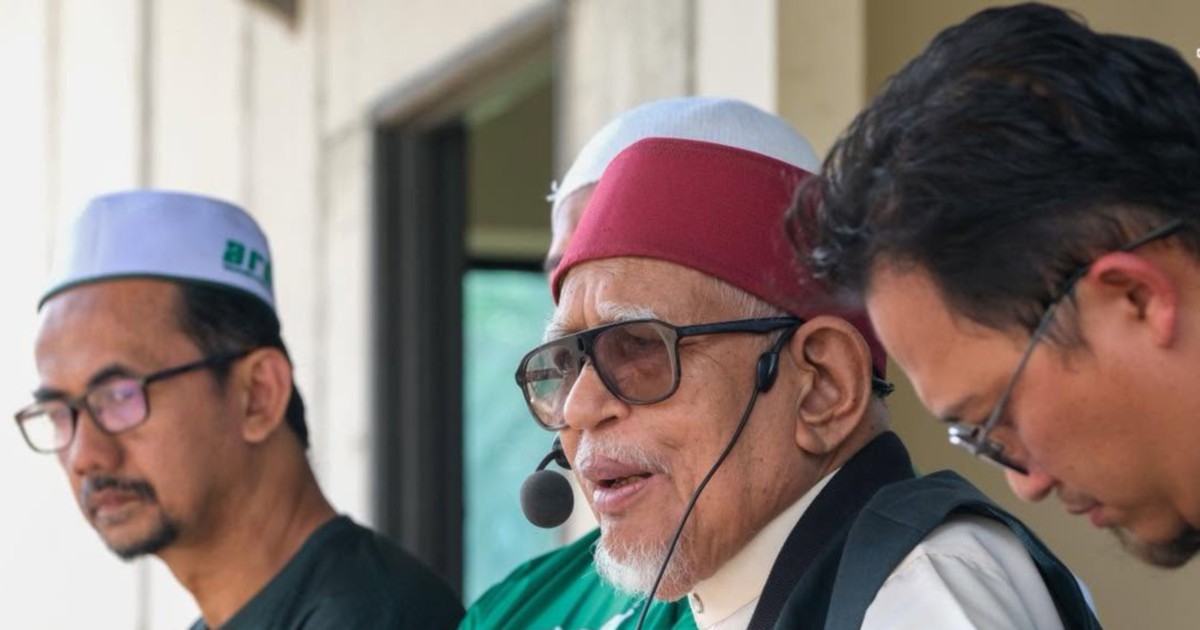
PAS president Tan Sri Abdul Hadi Awang has articulated a vision for Malaysian politics centred on building a stronger alliance that transcends the traditional Malay-Muslim bloc boundaries while maintaining its core identity. His call for electoral support behind a political structure uniting PAS, Umno, and what he characterised as "non-extreme" non-Muslim parties including MCA and MIC signals a recalibration of coalition-building strategies heading into future electoral contests. The appeal represents an attempt to broaden the appeal of the Malay-Muslim political movement without diluting its foundational principles, a delicate balance that has long preoccupied Malaysian political architects.
The PAS leader framed this political arrangement as part of a larger salvage mission for the nation, suggesting that the stability and direction of Malaysia itself hinges upon the ability of these disparate political forces to operate within a unified framework. This rhetorical positioning elevates the discussion beyond conventional party politics and competition, instead casting coalition-building as a patriotic endeavour essential to addressing the country's challenges. By connecting electoral cooperation to national welfare, Hadi sought to justify cooperation across communal and ideological boundaries that might otherwise appear contradictory given historical tensions and competing political agendas.
The emphasis on "non-extreme" partners deserves particular scrutiny, as it establishes an implicit boundary for acceptable collaboration. This characterisation appears designed to distinguish MCA and MIC as moderate, pragmatic political entities willing to work within a framework led by Malay-Muslim parties, contrasting them implicitly with other non-Bumiputera political actors who might be perceived as more ideologically rigid or confrontational. For MCA and MIC, the terminology carries both an opportunity and a potential liability—while it opens avenues for meaningful political participation and ministerial representation, it simultaneously pegs them within parameters defined by their larger coalition partners.
The strategic logic underlying this formulation reflects ongoing calculations about political mathematics in Malaysia's multiethnic democracy. PAS and Umno, as the dominant Malay-Muslim parties, possess substantial grassroots mobilisation capacity and territorial representation, particularly in rural constituencies. However, securing parliamentary majorities and commanding decisive mandates requires bridging ethnic and religious divides, necessitating partnerships with non-Muslim political entities that can deliver votes and constituencies in urban and mixed areas. MCA historically represents significant portions of the Chinese electorate, while MIC maintains influence within Tamil and broader Indian community constituencies, making both parties valuable coalition partners despite declining electoral fortunes.
The call for unity also emerges against a backdrop of fragmented Malaysian politics. The opposition coalition has demonstrated capacity to mount credible electoral challenges, particularly when presenting a united front capable of appealing across communal lines. PAS's overture toward broader cooperation suggests recognition that compartmentalised political movements face disadvantages in a system where coalition strength determines executive formation and legislative outcomes. By presenting Umno, PAS, MCA, and MIC as components of a cohesive political force directed toward national salvation, Hadi attempted to reframe what might otherwise appear as self-interested political consolidation as a higher calling.
The articulation of this coalition formula also hints at internal political positioning within the Malay-Muslim establishment. Relations between PAS and Umno have historically oscillated between cooperation and competition, with both parties vying for support within overlapping constituencies and ideological spaces. Hadi's emphasis on partnership rather than rivalry suggests current calculations favour unified operations, at least in the medium term. Whether this reflects tactical alignment, ideological convergence, or simply pragmatic recognition of mutual electoral interests remains an open question, but the public articulation signals a commitment to presenting a consolidated front to voters.
For Malaysian politics at the national level, acceptance of this coalition model would represent continuity in certain respects while introducing modifications to established power-sharing arrangements. The continued involvement of MCA and MIC reflects historical patterns wherein major coalitions require non-Bumiputera components to achieve governing majorities. However, the explicitly stated parameters around "non-extreme" partners might presage shifts in the distribution of power or ministerial positions within such an arrangement, potentially affecting how these parties negotiate their roles and influence within any governing coalition.
The implications extend across Southeast Asia's broader political landscape, where Malaysian coalition dynamics influence regional political discourse and cross-border dynamics. How different ethnic and religious communities respond to this unity proposal will signal whether audiences view such arrangements as genuinely inclusive frameworks or as strategic mechanisms designed to consolidate particular political movements. Successful implementation would demonstrate that majoritarian political forces can accommodate minority parties within meaningful partnerships; failure or rejection would suggest persistent structural tensions in Malaysian communal politics.
Hadi's appeal also carries significance for how religious and secular concerns intersect within Malaysian political organising. PAS has long occupied the space between Islamic governance advocacy and democratic pluralism, and this call for broad cooperation requires navigating both constituencies simultaneously. The "non-extreme" qualifier appears designed to reassure PAS supporters that coalition partners share fundamental commitments to preserving Malay-Muslim political primacy while simultaneously suggesting to non-Muslim voters that substantive participation and influence remain available within the framework proposed.

