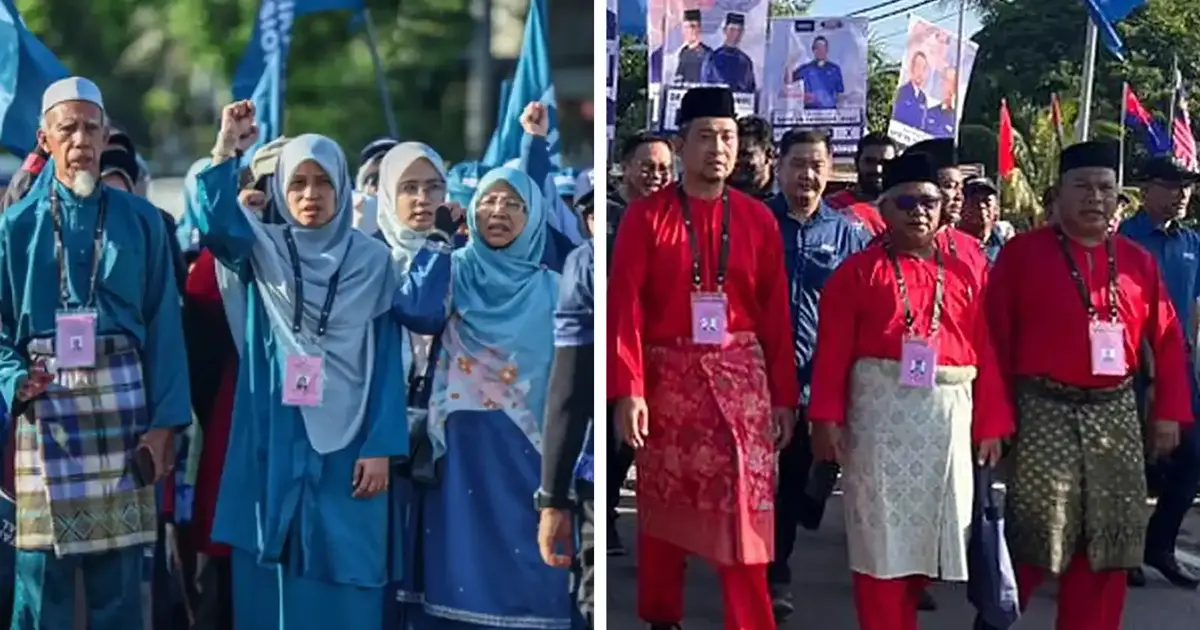
The internal rupture within Perikatan Nasional, particularly between its two dominant players PAS and Bersatu, threatens to become a significant liability during campaigning for the Johor state election, with observers warning that a visibly disunited front could damage the coalition's ability to attract voter support across key constituencies.
Political analysts monitoring coalition mechanics argue that sustained public disagreements and competing campaign narratives from partner parties inevitably signal weakness to the electorate. When voters encounter contradictory messaging or evidence of internal friction, they begin to question whether a coalition possesses the unified direction and competent governance necessary to effectively manage state administration and deliver policy outcomes. This dynamic proves particularly consequential in Johor, Malaysia's second-largest state by population, where swing voters in competitive districts often determine electoral outcomes.
The structural problem facing Perikatan Nasional stems from deepening ideological and strategic divergences between PAS, an Islamist party with strong grassroots organisation in rural and semi-urban areas, and Bersatu, a faction-based party drawing support from former ruling coalition members and urban middle-class voters. These parties field competing candidates in numerous constituencies, effectively cannibalising each other's vote share rather than consolidating opposition strength. Campaign messaging becomes fragmented when PAS emphasises Islamic governance and religious credentials while Bersatu simultaneously positions itself as a modernisation-focused party with secular appeal, leaving undecided voters confused about the coalition's actual priorities and direction.
Historical precedent from previous Malaysian elections demonstrates that coalition fragmentation typically depresses turnout among supporters who become disillusioned by visible disunity. When coalition members openly criticise each other's campaign strategies or organisational competence, loyal voters question whether their support contributes meaningfully to genuine political change, or instead merely perpetuates factional squabbling among elite political actors. This psychological disconnect proves especially damaging among younger and first-time voters, demographics typically less ideologically committed to specific parties and more sensitive to perceptions of organisational credibility.
The Johor election context amplifies these vulnerabilities because the state has traditionally oscillated between ruling coalitions, reflecting a sophisticated electorate responsive to changing political tides. Johor voters have demonstrated willingness to shift allegiance based on perceived competence, leadership quality, and party unity. A fractious Perikatan Nasional coalition directly contradicts the unified governance narrative essential for persuading pragmatic voters that change serves their material interests. Campaign effectiveness in Johor depends heavily on presenting a convincing picture of internal harmony, clear strategic vision, and institutional readiness to govern.
PAS and Bersatu's separate campaign operations also create resource inefficiencies that disadvantage them against better-coordinated opponents. Divided campaign structures mean duplicated administrative costs, overlapping volunteer recruitment efforts, and missed opportunities for consolidated voter outreach. Rather than channelling combined resources into strategic marginal constituencies, the coalition dissipates energy across internal competition. Sophisticated campaign managers within opposing coalitions can exploit these inefficiencies by targeting specific PAS or Bersatu constituencies where coalition support appears weakest, further exacerbating divisions.
Analysts also highlight that fragmented coalitions struggle to build coherent policy platforms that resonate across diverse voter constituencies. Johor's economy encompasses port operations, manufacturing, agriculture, technology sectors, and tourism, requiring nuanced policy responses tailored to different interests. A divided coalition struggles to articulate integrated economic development strategies, instead offering conflicting priorities that suggest internal disagreement about state governance fundamentals. Business-oriented voters particularly value predictability and strategic clarity, both undermined by visible coalition discord.
The media environment surrounding coalition divisions amplifies perceptual damage to voter confidence. Contemporary Malaysian political coverage extensively documents intraparty disagreements and coalition friction, meaning voter exposure to signs of disunity extends far beyond campaign rallies and direct messaging. Social media amplification ensures that internal criticisms circulate rapidly among potential swing voters who might otherwise remain unaware of coalition tensions. This information environment means that even private disagreements between PAS and Bersatu leadership quickly become public knowledge influencing voter calculations.
Moreover, a fractured Perikatan Nasional potentially pushes undecided Johor voters toward ruling coalition candidates perceived as more stable and unified. Malaysian voters facing genuine uncertainty often default toward supporting incumbency when opposition alternatives appear disorganised or internally conflicted. The Johor election thus becomes a test case for whether coalition disunity proves electorally fatal or whether either PAS or Bersatu can overcome broader coalition weaknesses through individual party strength and local organisation.
For Perikatan Nasional to successfully compete in Johor, analysts suggest the coalition requires immediate structural reforms addressing the underlying sources of PAS-Bersatu friction. Without credible reunification signals, the coalition risks translating internal divisions into electoral losses that strengthen ruling coalitions and marginalise alternative political options. The stakes extend beyond Johor's state administration into broader implications for opposition coalition viability across Malaysia, as successful electoral models from one state typically influence national political calculations.

