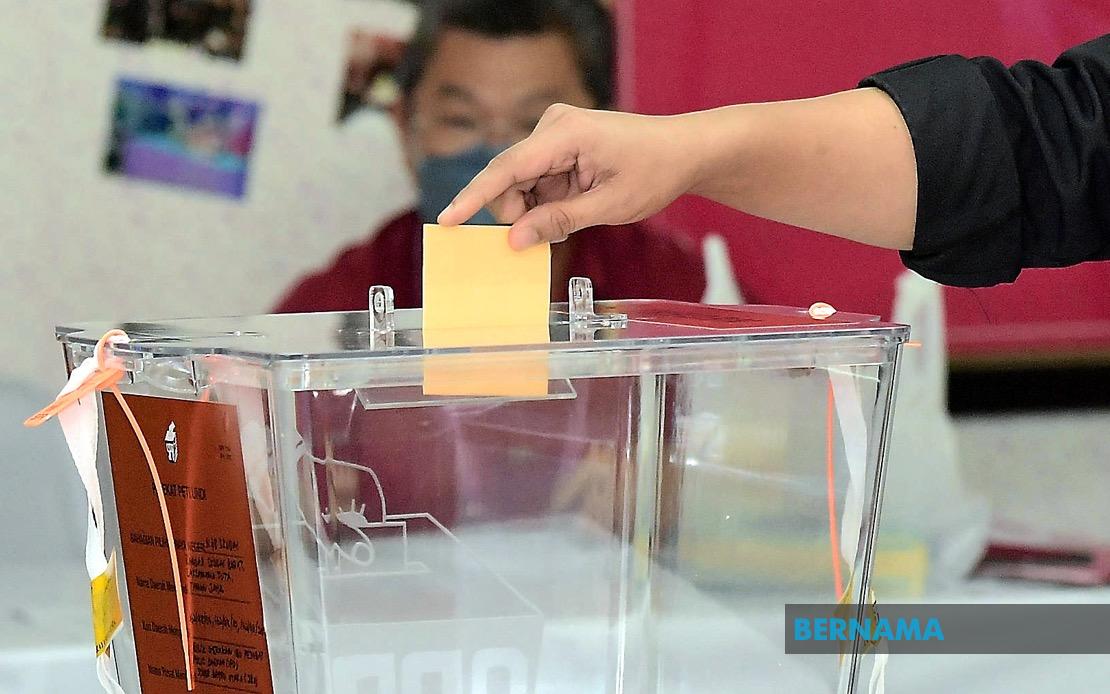
The Johor state election held on July 11 delivered a decisive victory to Barisan Nasional, which claimed 29 of the 56 available state seats and thus secured the mandate to form the next state government. The result prompted measured responses from coalition partners and opposition groups, each interpreting the mandate through the lens of their own political positioning ahead of the anticipated 16th General Election. Johor PAS commissioner Datuk Dr Mahfodz Mohamed issued a statement accepting the electorate's decision with equanimity, framing the outcome not as a setback for Perikatan Nasional but as a reflection of voters' preference for BN's governance agenda under the re-elected Menteri Besar Datuk Onn Hafiz Ghazi.
The scale of BN's victory underscores the coalition's enduring organisational strength and capacity to mobilise voters in Malaysia's second-largest state by population. Securing 29 seats represents a commanding position that allowed BN to govern without coalition support, marking a consolidation of the political recovery the coalition has experienced since its historic 2018 defeat at the federal level. For observers tracking Malaysia's political trajectory, the Johor result demonstrates that despite fragmentation at the national level, BN retains significant grassroots appeal and institutional advantages in state-level contests. The victory also signals voter confidence in continuity, with the retention of Onn Hafiz as Menteri Besar providing administrative stability that many constituencies evidently valued.
PAS's dignified acceptance of the result, articulated through Dr Mahfodz's statement, reflects the Islamic party's strategic positioning within Perikatan Nasional. Rather than dwelling on the coalition's inability to displace BN, PAS framed the election as an opportunity to reinforce its commitment to the broader Perikatan agenda of religious stewardship, racial harmony, and public welfare. This messaging carries particular resonance in Johor, where PAS has cultivated significant grassroots support across both urban and rural constituencies. By pledging continued strengthening of Perikatan Nasional, PAS signalled that it views the Johor election as a single engagement in a longer campaign cycle culminating in the 16th General Election, where the party hopes to secure greater electoral returns at the federal level.
Bersatu's response proved more measured and introspective. Party secretary-general Datuk Seri Mohamed Azmin Ali announced that the party would undertake a thorough diagnostic examination of its electoral performance, examining which strategies had proven effective and which required revision. This language suggested a party grappling with its own positioning and seeking to understand how best to allocate resources and messaging for the general election contest. Bersatu's performance in Johor appears to have disappointed its leadership, prompting the kind of strategic recalibration that typically follows unexpectedly poor results. The party's choice to focus on forward-looking analysis rather than blame-shifting or excuses indicated a mature institutional approach, though it also implied that senior leadership recognised significant gaps between their expectations and the actual voter response.
The most striking feature of the post-election landscape was the complete collapse of Bersama, the newly formed party led by Datuk Seri Rafizi Ramli, which fielded 15 candidates and lost every deposit. In Malaysian electoral law, candidates who fail to secure one-sixth of the votes in their constituency forfeit their election deposit, a provision designed to discourage frivolous candidacies. That Bersama's entire slate suffered this fate indicated that voters either knew little about the nascent party or actively rejected its message. Rafizi's subsequent Facebook statement exhibited both humility and defiance, acknowledging the unfavourable outcome while framing the experience as a learning opportunity for an organisation established merely 52 days before the election.
Rafizi's public response to Bersama's poor showing revealed the emotional and political challenges facing new political entrants in Malaysia's competitive environment. The party leader's acknowledgment that every candidate lost their deposit represented a sobering introduction to electoral reality, yet his framing of this disaster as valuable experience suggested psychological resilience and a commitment to long-term party-building rather than short-term electoral success. Bersama's complete failure to capture even a single seat, and its inability to retain candidates' deposits, highlighted the substantial barriers to entry that new parties encounter when confronting entrenched competitors with organisational machinery and name recognition. For Malaysian voters unfamiliar with Bersama's policy platform or leadership, the party remained essentially invisible despite fielding a full slate of candidates.
The broader electoral landscape revealed by the Johor election showed Pakatan Harapan managing to win only two seats, a disappointing result for the main opposition coalition that had governed the state between 2018 and 2020. This performance suggested that PH's support base had fractured or mobilised less effectively than in previous contests. The complete failure of other contenders—MUDA, Parti Orang Asli Malaysia, Parti Sosialis Malaysia, and independent candidates—to win any seats highlighted the extreme difficulty of mounting successful challenges to the major coalitions outside their established strongholds. Malaysia's electoral system, combined with voter behaviour patterns that tend toward consolidation around established parties, creates substantial obstacles for splinter movements and insurgent candidates.
For Malaysian political observers, the Johor election outcome carried implications extending well beyond the state's borders. The comfortable BN victory suggested that the coalition's broader recovery at the national level rested on firmer foundations than merely transient voter sentiment. In a federal system where state elections serve as leading indicators of national mood, Johor's result pointed toward potential difficulties for opposition coalitions in upcoming electoral contests, whether at the state or national level. The complete lack of electoral traction for Bersama indicated that voters, despite possible dissatisfaction with established alternatives, were not yet willing to experiment with entirely new political vehicles launched with minimal organisational infrastructure.
The strategic implications for Perikatan Nasional's general election planning became evident in PAS's post-election messaging. Rather than recrimination or defensive posturing, the Islamic party's leadership chose to frame the election within the context of long-term coalition building and the forthcoming GE16 campaign. This suggested that PN's partners recognised the Johor result as neither catastrophic nor particularly encouraging, but rather as a data point informing future strategy. Bersatu's commitment to comprehensive review indicated similar pragmatism, with the party seeking to extract lessons from its Johor showing that might improve its national performance. For Perikatan Nasional as a whole, the election demonstrated that while they retained capacity to exercise influence in some constituencies and to attract voter support in specific demographics, they lacked the overall organisational reach needed to displace BN across most of Johor.
The performance of smaller parties and independent candidates across Johor's 56 constituencies illustrated the consolidation trend in Malaysian electoral politics. When voters make choices in state elections, they increasingly appear to be selecting between the major coalitions rather than entertaining alternatives at the margins. This pattern carries profound implications for Malaysian democracy, suggesting that the political space available to smaller parties and new entrants has contracted substantially. The inability of any independent candidate or minor party to capture even a single seat in a state with Johor's size and diversity indicated that Malaysian electoral politics had entered a phase of bipolarity or tripolarity at most, with established coalitions capable of maintaining near-total control of available legislative seats. For citizens seeking alternative political voices or policy directions outside those offered by BN, PN, and PH, the electoral system appeared to offer limited recourse.
Moving forward, the Johor election results will inform political strategy across all major coalitions as they prepare for the 16th General Election. The comfortable BN majority will embolden the coalition's federal leadership and provide resources and momentum for national campaigning. Perikatan Nasional's measured responses indicate recognition that while they retain political relevance, they require significant strategic adjustment to improve upon their Johor performance. Bersama's complete failure suggests that voters are not yet prepared to support entirely new political movements, regardless of their leadership or policy propositions. For Malaysian politics broadly, the Johor election reinforced patterns of institutional consolidation and mainstream coalition dominance that will likely shape electoral contests for years to come.

