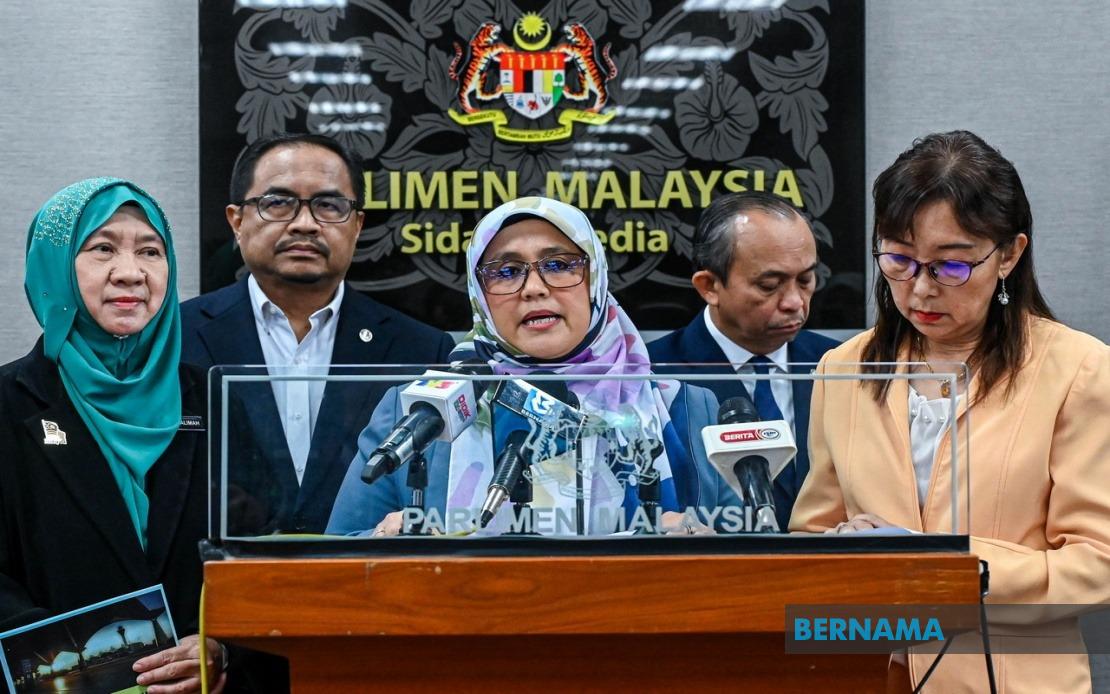
Parliament's Public Accounts Committee has moved to protect Malaysia's strategic stake in Malaysia Airports Holdings Bhd (MAHB), recommending that domestic institutional investors retain a combined minimum ownership of 70 per cent as the airport operator navigates evolving corporate structures. The directive, announced by PAC chairman Datuk Mas Ermieyati Samsudin, signals legislative concern about maintaining sovereign control over one of Southeast Asia's busiest aviation hubs amid broader shifts in the company's shareholding composition.
The recommendation centres on preserving the joint stake held by Khazanah Nasional Bhd, the government's investment arm, and the Employees Provident Fund, Malaysia's largest pension fund. By anchoring domestic institutional ownership at 70 per cent, the PAC seeks to establish a floor beneath which foreign or private sector influence cannot erode the government's ability to shape strategic direction at MAHB. This threshold reflects international practice, where major airports often remain majority state-controlled to ensure alignment with national development priorities and security imperatives.
Beyond the ownership safeguard, the PAC has articulated a comprehensive governance framework intended to embed transparency and stakeholder consultation into MAHB's decision-making architecture. Any prospective alterations to the company's equity structure or disposal of core assets must now traverse a Cabinet approval process designed to ensure public interest scrutiny. This institutional layer aims to prevent the kind of opaque transactions that have periodically sparked public controversy around major infrastructure privatisations in Malaysia and the region.
The committee's emphasis on multi-agency coordination reflects recognition that MAHB does not operate in isolation but sits at the nexus of finance, transport, tourism, investment, and national security policy. By mandating integrated collaboration with the Ministry of Finance, Ministry of Transport, Ministry of Tourism Arts and Culture, Ministry of Investment Trade and Industry, the National Security Council, and the Ministry of Communications, the PAC seeks to align airport development with broader national objectives rather than allowing the company to pursue purely commercial trajectories that might conflict with strategic priorities.
Operational efficiency and infrastructure planning emerged as secondary but significant concerns. The PAC urged MAHB to establish regular consultation mechanisms with major airlines, particularly Malaysian carriers, to ensure that costly infrastructure projects like terminal expansions, baggage handling systems, and the proposed Aerotrain replacement genuinely reflect the sector's needs rather than representing speculative investments. This departure from top-down infrastructure planning acknowledges that airport operators and their customers often inhabit asymmetric information environments, where technical expertise from users can prevent costly misalignments.
Transparency requirements extending beyond delisting constitute another noteworthy dimension. MAHB must continue publishing operational performance data and key performance indicators for public access even after transitioning from listed company status, a provision that preserves accountability channels despite the reduction in stock exchange disclosure obligations. This move responds to the legitimate public interest in monitoring critical infrastructure performance, particularly given MAHB's role in facilitating passenger flows, cargo movement, and economic connectivity across Malaysia and the region.
The PAC further directed that progress reports on major capital projects be submitted regularly to the Finance Ministry and Transport Ministry for subsequent tabling in the Dewan Rakyat, embedding parliamentary oversight into infrastructure execution cycles. Projects including the Aerotrain replacement and baggage handling system upgrades represent substantial capital commitments with long-term operational consequences, justifying this enhanced monitoring architecture. The requirement ensures that cost overruns, scheduling delays, or technical deficiencies cannot accumulate in opacity but instead face periodic parliamentary examination.
Procurement integrity and competitive dynamics command attention in PAC recommendations that call for tightened contractor screening in collaboration with the Malaysian Anti-Corruption Commission and the Malaysia Competition Commission. This reflects documented concerns about cartel formation and quality degradation in major infrastructure contracts, problems that have periodically affected Malaysian megaprojects. By institutionalising anticorruption and competition safeguards at the MAHB procurement stage, the committee seeks to prevent the kind of cost inflation and quality compromises that have historically beset large-scale airport modernisation programmes.
For Malaysian travellers and businesses reliant on airport services, these recommendations carry practical significance. MAHB operates the Kuala Lumpur International Airport complex, which handles millions of passengers annually and serves as a critical logistics hub for regional e-commerce and cargo operations. Maintaining strategic national ownership ensures that regulatory and investment decisions can prioritise connectivity, affordability, and service standards alongside commercial returns, a balance that might shift if foreign strategic investors accumulated controlling stakes.
The PAC framework also carries implications for broader Asian aviation infrastructure governance. As regional airports increasingly navigate partnerships with foreign operators and private equity investors, maintaining domestic ownership thresholds while improving transparency and stakeholder consultation offers a middle path between isolationism and untrammelled commercialisation. The approach acknowledges that infrastructure serving hundreds of thousands of daily passengers warrants governance structures that embed multiple stakeholder interests beyond pure shareholder value maximisation.
Implementation of these recommendations will require coordination across government agencies and potentially amendment of MAHB's constitutional documents and shareholder agreements. The extent to which management embraces the consultation and transparency imperatives will partly determine whether these recommendations translate into genuine operational changes or remain formally endorsed principles lacking substantive effect. Forthcoming annual reports and capital expenditure decisions will provide early indication of institutional willingness to internalise the PAC's governance vision.

