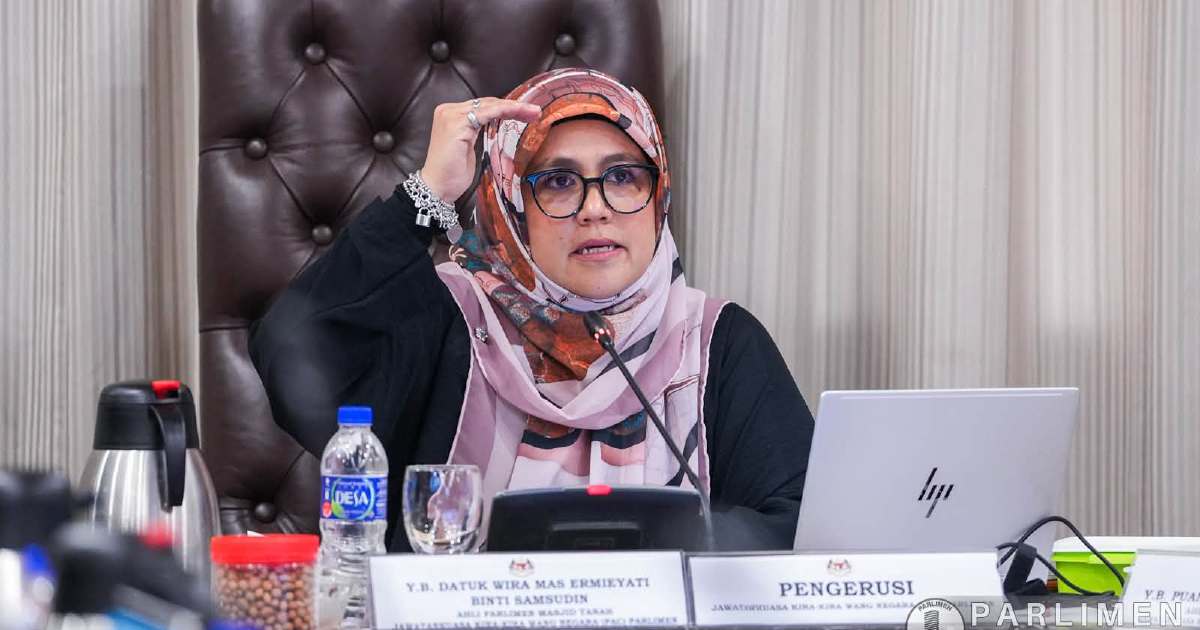
Parliament's Public Accounts Committee has taken the significant step of unanimously endorsing a formal probe into systemic weaknesses affecting Lembaga Tabung Haji, the government-linked entity responsible for managing savings and financing pilgrimage for Muslim Malaysians. The unanimous decision signals cross-party consensus on the need for parliamentary scrutiny of the institution's operational and financial management.
The PAC's move represents an escalation in oversight of TH, which has faced mounting public criticism regarding its investment decisions and governance practices. By initiating formal proceedings, the committee is exercising its constitutional responsibility to examine how public institutions deploy resources and manage stakeholder interests. The breadth of the inquiry—encompassing governance structures, financial controls, and investment strategies—suggests the committee recognises systemic rather than isolated failures requiring examination.
Tabung Haji's investment portfolio has attracted particular attention in recent years as the institution sought higher returns to support its expanded operations. The inclusion of investment weaknesses in the PAC's mandate indicates concern about the adequacy of risk management frameworks and decision-making processes governing asset allocation. For the roughly three million Malaysians with accounts holding deposits worth billions of ringgit, clarity on how TH deploys their savings remains a critical governance matter.
The financial dimension of the inquiry carries implications for depositors who rely on TH's stability and performance. Questions about financial management practices, internal controls, and reporting mechanisms will likely feature prominently as the PAC examines how the institution maintains fiduciary responsibility. The committee's investigation will provide an opportunity to assess whether existing financial safeguards adequately protect contributors' interests and whether management has maintained appropriate transparency with stakeholders.
Governance structures at TH will form another focal point for the investigation. Parliamentary oversight of board composition, executive accountability mechanisms, and decision-making processes serves an important function in ensuring institutional leadership operates within appropriate checks and balances. The PAC's examination of governance arrangements will address whether existing frameworks provide sufficient independent scrutiny of management decisions and adequate protection against conflicts of interest.
For Malaysian and regional observers, the PAC's decision underscores the importance of parliamentary accountability mechanisms in monitoring government-linked companies. Southeast Asia's institutional landscape includes numerous sovereign wealth funds and government-backed entities managing citizen resources, making governance standards at institutions like TH relevant beyond Malaysia's borders. Strengthened oversight practices could establish useful benchmarks for how elected representatives engage with state-controlled bodies managing public wealth.
The unanimous nature of the PAC vote carries political weight, suggesting that concerns about TH's governance transcend partisan divisions. This consensus approach typically strengthens the legitimacy of committee findings and increases likelihood that recommendations receive implementation support across government. When Parliament's opposition and ruling parties align on institutional accountability, the resulting scrutiny often prompts more responsive organisational change than politically fractious investigations.
The inquiry's scope encompasses questions about strategic decision-making in recent years, including major investment moves and operational expansions that may warrant examination. Committee members will likely seek detailed explanations of investment rationale, risk assessment processes, and whether decisions received appropriate board and shareholder approval. Examination of internal governance documentation and decision-making records will illuminate how leadership arrived at critical strategic choices.
For TH management and the Ministry of Religion, which oversees the institution, the PAC inquiry creates both accountability expectations and an opportunity to demonstrate responsiveness to parliamentary concerns. Constructive engagement with the committee's investigation and willingness to implement recommendations can help restore stakeholder confidence. The inquiry process itself may highlight areas requiring management attention or policy-level reforms that leadership can address proactively.
The investment component of the investigation holds particular relevance given TH's need to generate competitive returns on depositor funds. In an environment of low global interest rates and volatile markets, investment strategies face inherent tensions between growth objectives and capital preservation. The PAC's examination will assess whether TH's approach reflects appropriate risk tolerance for an institution managing citizen savings rather than speculative capital, and whether governance structures ensured investment decisions received proper scrutiny.
As the committee commences proceedings, the investigation's ultimate value will depend on the thoroughness of examination and the extent to which findings lead to concrete improvements. Parliamentary inquiries into institutional governance serve democratic accountability functions, but their effectiveness requires both rigorous fact-finding and meaningful implementation of recommendations. TH depositors and the Malaysian public will be watching whether the PAC's investigation produces insights that strengthen the institution's management and restore confidence in how it handles the considerable resources entrusted to its care.
The timing of the PAC's decision reflects broader questioning about governance standards in Malaysia's state-linked corporate sector. As the economy evolves and demands on government-backed institutions expand, ensuring robust internal controls and external oversight becomes increasingly important. The TH investigation may catalyse similar examinations of other significant state entities, contributing to strengthened institutional accountability across government-linked companies in Malaysia.

