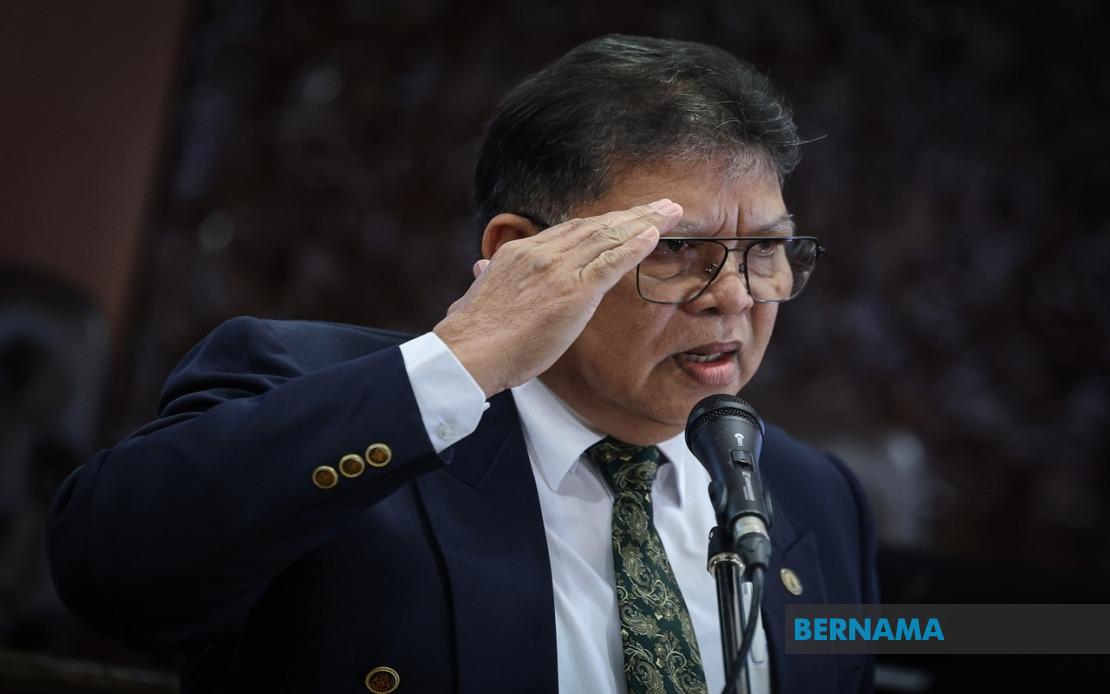
Dewan Rakyat Speaker Tan Sri Johari Abdul has called for Malaysia to adopt proportional representation, framing the electoral reform as essential to preserving minority representation in Parliament and preparing the nation for significant demographic changes ahead. Speaking at the Harmony Symposium held at the Parliament building in Kuala Lumpur on June 26, Johari articulated a forward-looking vision of electoral reform grounded in demographic necessity rather than immediate political advantage.
The rationale underpinning his proposal centres on demographic projections suggesting that Bumiputera Malays will constitute 77 per cent of Malaysia's population by 2050. This shifting demographic composition raises fundamental questions about the viability of Malaysia's current first-past-the-post electoral system in guaranteeing minority access to parliamentary representation. Johari highlighted the logical problem inherent in the existing framework: under conventional constituency-based voting, minority communities that lack territorial concentration will find it increasingly difficult to command electoral majorities in any individual seat, thereby reducing their prospects of securing parliamentary representation through conventional means.
Johari's concern transcends abstract constitutional theory. He articulated the real-world implications of minority political marginalisation, suggesting that silenced voices at Westminster translate into governance challenges and social friction at ground level. The Speaker's framing positions proportional representation not as a demand from any particular community but as a prudent institutional safeguard for Malaysia's long-term social cohesion. By ensuring that minority perspectives remain represented in parliamentary debates and legislative processes, proportional representation could theoretically strengthen Malaysia's capacity to address grievances before they crystallise into broader communal tensions.
The proposal signals a subtle but important reorientation of Malaysia's political discourse. Rather than debating ethnicity and representation through the lens of immediate electoral advantage or zero-sum competition, Johari advocates anchoring these discussions within temporal and demographic realities. His remarks at the symposium explicitly encouraged stakeholders to transcend present-day controversies and instead contemplate Malaysia's trajectory across the next five to 100 years. This extended timeframe acknowledges that institutional design decisions made today will shape the country's political architecture for generations to come.
Contextualising his argument within Malaysia's extraordinary ethnic and cultural plurality proved crucial to Johari's rhetorical strategy. He emphasised that the nation encompasses 77 distinct ethnic groups, each contributing to Malaysia's social texture and requiring functional representation mechanisms. The Speaker's invocation of this diversity underscores that minority representation concerns extend beyond the traditionally prominent Chinese and Indian communities to encompass smaller ethnic groups whose voices might otherwise prove entirely inaudible within conventional electoral structures.
The symposium itself represented a significant institutional development in Malaysia's approach to intercommunal harmony. Organised jointly by the Dewan Rakyat and the Malaysia Cross-Party Parliamentary Group on Racial and Religious Harmony, known by its acronym KRPPM-KKA, the event brought substantive discussion of these sensitive issues directly into Parliament's physical and symbolic space. By hosting such discussions within the legislative chamber, organisers deliberately positioned parliamentary democracy itself as the appropriate venue for negotiating Malaysia's plural identity.
Syahredzan Johan, chairman of KRPPM-KKA and Member of Parliament for Bangi, articulated the broader institutional ambitions animating the symposium. The cross-party group aims to translate broad consensus on racial and religious harmony into concrete policy recommendations and practical mechanisms that Parliament and government ministries can operationalise. This emphasis on moving from rhetorical commitment to institutional reform reflects recognition that good intentions require structural embedding to produce real change in governance practices and legislative outcomes.
The ambitions articulated by Syahredzan extend beyond Parliament to encompass civil society, educational institutions, and the broader governmental apparatus. This multi-institutional approach acknowledges that sustainable racial and religious harmony cannot be engineered through legislative fiat alone but requires coordinated effort across multiple domains of Malaysian society. Educational institutions, for instance, can cultivate intercultural understanding in younger generations, while civil society organisations can nurture grassroots cooperation that transcends traditional communal boundaries.
Proportional representation reform, however, remains institutionally complex and politically contentious in the Malaysian context. The current first-past-the-post system, inherited from British colonial governance, has structured Malaysian politics for over six decades and generated entrenched interests across all political parties and constituencies. Implementing proportional representation would require constitutional amendment, necessitating cross-party consensus and potentially triggering disputes regarding threshold percentages, seat allocation formulas, and the relationship between proportional and geographic representation.
For Southeast Asia more broadly, Malaysia's debate over proportional representation assumes relevance as the region grapples with balancing majoritarian democracy with minority protection. Several regional democracies have contemplated or implemented electoral reforms addressing similar concerns, though each confronts unique constitutional, historical, and social constraints. Malaysia's particular challenge lies in reconciling its constitutional framework's extensive enumeration of Bumiputera and Malay-Muslim privileges with democratic principles of equal political representation.
Johari's proposal also reflects evolving thinking among Malaysia's political elite regarding the relationship between electoral systems and social stability. Rather than viewing proportional representation as merely technical institutional choice, he positions it as crucial infrastructure for preserving national cohesion during a period of substantial demographic transformation. This framing potentially opens space for cross-party dialogue by suggesting that electoral reform serves the interests of all communities in maintaining functional democratic institutions capable of processing diverse interests and grievances.
The proposal's reception across Malaysia's political spectrum will likely prove telling regarding the country's receptiveness to fundamental electoral reform. While Johari's stature as Speaker lends considerable weight to his advocacy, substantial political obstacles remain before proportional representation could transition from parliamentary discussion to constitutional amendment and implementation.

