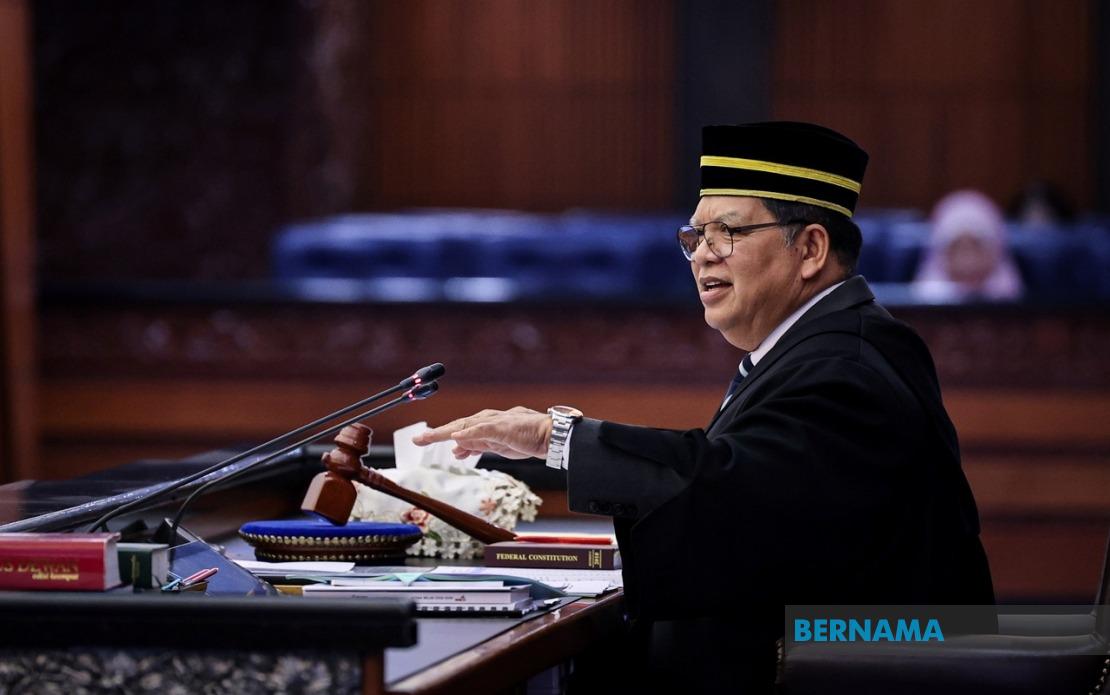
Parliament's second meeting of the current term wound down on July 16 following a 16-day sitting that began in late June, with legislators advancing a substantial legislative agenda across multiple policy domains. Dewan Rakyat Speaker Tan Sri Dr Johari Abdul used his closing remarks to underscore the productivity of the session, which saw sustained parliamentary activity dedicated to refining and enacting governance frameworks across several critical sectors.
The legislative package that gained approval reflects government priorities in transport safety, child protection, and digital regulation. The Road Transport (Amendment) Bill 2026 strengthens provisions governing commercial and private vehicles, while the Sexual Offences Against Children (Amendment) Bill 2026 toughens penalties and protective measures for minors facing exploitation. The Cybercrimes Bill 2026 addresses an increasingly urgent policy gap as digital offences have proliferated across Southeast Asia, positioning Malaysia alongside regional peers in establishing contemporary legal safeguards for online conduct and cybersecurity infrastructure.
Commercial and regulatory legislation also featured prominently in the parliamentary calendar. Twin amendments to competition law—the Competition (Amendment) Bill 2026 and the Competition Commission (Amendment) Bill 2026—reshape how Malaysia's competition authority enforces antitrust provisions and consumer protection standards. These measures carry implications for businesses operating across the region, as Malaysia's competition framework influences corporate behaviour in a market-integrated ASEAN environment. The Control of Padi and Rice (Amendment) Bill 2026 reflects ongoing adjustments to agricultural commodity management, a sector of persistent concern for food security and rural livelihoods across the region.
Additional bills addressed institutional and social governance needs. The Witness Protection (Amendment) Bill 2026 enhances safeguards for individuals testifying in legal proceedings, particularly crucial in cases involving organised crime and financial misconduct. The Social Work Profession Bill 2026 formally regulates the social work sector, establishing professional standards and qualification requirements that align Malaysia with international best practices in human services delivery. These amendments signal commitment to strengthening institutional capacity in law enforcement and social welfare provision.
The communications and digital sector received targeted legislative attention through amendments affecting both telecommunications policy and the regulatory authority overseeing it. The Communications and Multimedia (Amendment) Bill 2026 and the Malaysian Communications and Multimedia Commission (Amendment) Bill 2026 modernise regulatory frameworks governing an industry experiencing rapid technological disruption. The National Trust Fund Bill 2026 and Statistics Bill 2026 round out the legislative programme by establishing mechanisms for public asset management and national data governance respectively.
Beyond legislation, the session encompassed broader parliamentary activity intended to strengthen oversight functions. Three ministerial briefings and six presentations by Select Committee chairs on investigative findings provided opportunities for members to interrogate executive performance and scrutinise government agencies. These sessions form part of Parliament's traditional accountability mechanisms, though their effectiveness in driving actual policy change remains subject to ongoing debate among Malaysian political observers.
Speaker Johari also initiated a health screening initiative targeting all 222 members of the Dewan Rakyat, requesting completion by October 30. This directive carries symbolic and practical weight: with a general election anticipated in the medium term, the speaker's emphasis on legislator wellness and medical documentation suggests awareness that campaign seasons impose substantial physical and mental demands on politicians. His exhortation to members to maintain health during the upcoming campaign period reflected recognition that parliamentary work will soon yield to electoral activity, with MPs transitioning from legislative to constituency-focused operations.
The parliamentary session further featured discussion of the 2024 Annual Report from the Human Rights Commission of Malaysia (SUHAKAM), enabling structured parliamentary engagement with Malaysia's independent human rights institution. Such motions provide formal venues for discussing rights-related issues, though their impact on actual policy implementation depends on government responsiveness to recommendations emerging from these debates.
Parliament's adjournment to an unspecified future date reflects Malaysia's flexible parliamentary calendar, with sittings scheduled around government legislative priorities and political considerations. Speaker Johari's concluding remarks extended gratitude to members, government officials, parliamentary staff, and media representatives, acknowledging the diverse stakeholders involved in legislative operations. This ceremonial aspect of parliamentary procedure underscores the institutional nature of Malaysia's Westminster-derived system, where formal recognition of participants' contributions reinforces collective ownership of legislative outcomes.
The successful passage of 13 bills within the 16-day sitting demonstrates parliamentary capacity to process substantial legislative volume, though observers note that quantity does not necessarily reflect quality of deliberation or depth of scrutiny. Malaysian legislators must increasingly balance expeditious passage of government-backed legislation with adequate time for detailed examination, a tension that affects parliaments across the Commonwealth and beyond.
Looking forward, the adjournment marks a transitional moment in Malaysia's political calendar. With an election anticipated within the coming year, this parliamentary session may represent one of the final extended sittings before the dissolution of Parliament and commencement of campaigning. The legislative achievements of this session thus establish the baseline of government accomplishments that ruling coalitions will defend during electoral competition, while opposition members will utilise bill passages to critique what they characterise as insufficient or misdirected policy initiatives.

