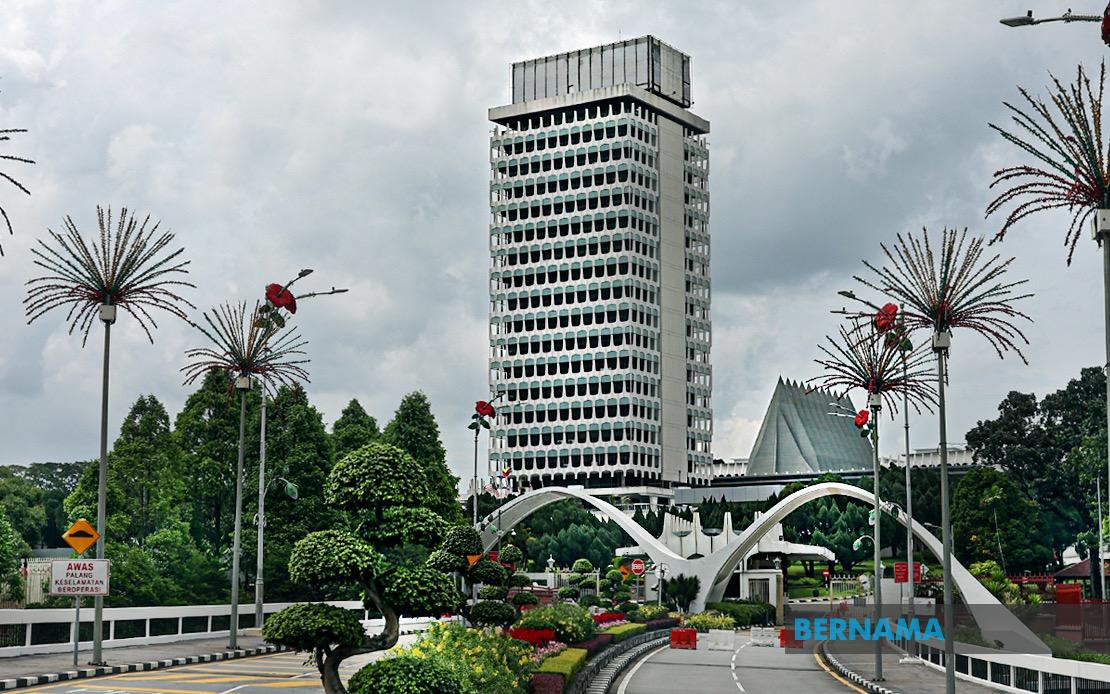
Malaysia's parliamentary representatives will use today's sitting of the Dewan Rakyat to scrutinise the government's position on a Memorandum of Understanding between the United States and Iran aimed at resolving military hostilities in West Asia. The discussion reflects growing parliamentary interest in how Malaysia navigates its foreign policy amid significant geopolitical shifts in a region where the country maintains substantial strategic and commercial interests.
The morning session, beginning at 10 am, will feature several substantive questions addressing Malaysia's regional diplomacy and domestic economic priorities. Datuk Mohd Isam Mohd Isa, representing the Tampin constituency for Barisan Nasional, will direct questions to the Foreign Minister about Malaysia's official stance on the US-Iran accord and what concrete measures the government intends to pursue in support of sustained regional stability. This line of inquiry underscores parliamentary desire to understand how Malaysia plans to leverage its position to contribute meaningfully to Middle Eastern peace efforts, particularly given the potential implications for trade routes, investment, and broader Southeast Asian security architecture.
The question of regional stability carries particular weight for Malaysia, which relies heavily on unimpeded maritime commerce through the Strait of Malacca and maintains diplomatic relations across ideological divides. Any escalation of US-Iran tensions directly threatens Malaysian shipping interests and complicates the country's balancing act between Western and non-Western powers. Parliamentary oversight of foreign ministry responses ensures public accountability for Malaysia's diplomatic choices during periods of international turbulence.
Turning to domestic economic matters, Datuk Rosol Wahid from Perikatan Nasional's Hulu Terengganu division will interrogate the Home Ministry on the MADANI Mart initiative, a government programme designed to make essential goods more affordable to ordinary Malaysians. His questions will focus on how many retail outlets currently operate under the scheme, what number of applications from potential entrepreneurs remain pending, and what the total participant base now encompasses. This inquiry reflects parliamentary scrutiny of a flagship government initiative intended to address cost-of-living pressures that have dominated Malaysian public discourse.
The MADANI Mart programme represents a significant attempt by the government to demonstrate responsiveness to widespread complaints about rising prices for food, household staples, and daily necessities. By requesting detailed implementation metrics, Rosol Wahid provides a mechanism through which parliament can verify whether the initiative is delivering promised outcomes or encountering operational obstacles. The number of active outlets and approved entrepreneurs will indicate whether the scheme is gaining genuine traction or remains marginal in scope.
A separate parliamentary question from Khoo Poay Tiong, a Pakatan Harapan member representing Kota Melaka, will examine the government's response to escalating synthetic drug abuse, specifically requesting statistics on addiction cases since 2023 and policy approaches to counter rising consumption. The query particularly highlights concern about fentanyl, a potent synthetic opioid that has triggered public health crises in multiple countries and represents an emerging threat to Malaysian communities. This line of questioning permits parliament to assess whether existing enforcement, rehabilitation, and prevention strategies adequately address evolving drug market dynamics.
Fentanyl's emergence in Malaysian drug markets presents a qualitatively different challenge compared to traditional opioids, given its extreme potency and capacity to cause rapid overdose. Parliamentary demand for quantified data on addiction cases and strategic responses ensures that public resources devoted to drug control keep pace with changing threat profiles and that prevention messaging reaches vulnerable populations before fentanyl becomes entrenched in local supply networks.
Datak Seri Hamzah Zainudin, speaking for Perikatan Nasional's Larut constituency, will pose questions regarding implementation of the Agreement on Reciprocal Trade between Malaysia and the United States. This bilateral trade arrangement carries substantial implications for Malaysian manufacturing, agriculture, and service sectors, making parliamentary oversight of implementation progress essential for protecting national economic interests. Detailed questions about the agreement's operational status permit legislators to identify any obstacles to realising promised trade benefits or address asymmetries that might disadvantage Malaysian exporters.
The reciprocal trade agreement with the United States represents a significant commercial commitment requiring coordination across multiple government agencies and private sector participants. Parliamentary inquiry into implementation progress provides early warning of complications and creates space for policy adjustment before problems compound. For a country like Malaysia, where bilateral trade relationships substantially influence employment and investment patterns, parliamentary diligence regarding such agreements serves vital economic oversight functions.
Beyond question time, the sitting will advance three legislative measures for first reading. The Prisons (Amendment) Bill 2026 suggests forthcoming changes to Malaysia's correctional system, potentially addressing operational efficiency, inmate welfare, or staff training protocols. Simultaneously, the Competition (Amendment) Bill 2026 and the Competition Commission (Amendment) Bill 2026 indicate the government's intent to refine Malaysia's competition law framework, possibly responding to evolving market practices or enforcement challenges identified through accumulated administrative experience.
Competition law amendments warrant particular attention given Malaysia's position as a major regional economic actor with substantial foreign investment. Refined competition rules can either enhance market dynamism and consumer welfare or, if poorly calibrated, create barriers to entry that entrench incumbent advantages. Parliamentary consideration of these bills permits scrutiny of whether proposed amendments serve genuinely competitive objectives or accommodate special interests.
Today's parliamentary sitting thus addresses three interconnected domains—foreign policy, economic management, and law enforcement—that collectively define government effectiveness. The questions raised and legislative measures advanced reflect parliament's ongoing responsibility to maintain accountability for executive actions and ensure that governmental policies align with stated objectives and public expectations. For Malaysian constituents monitoring parliamentary proceedings, the session offers insight into how elected representatives discharge their constitutional duty to examine government conduct across multiple policy domains.