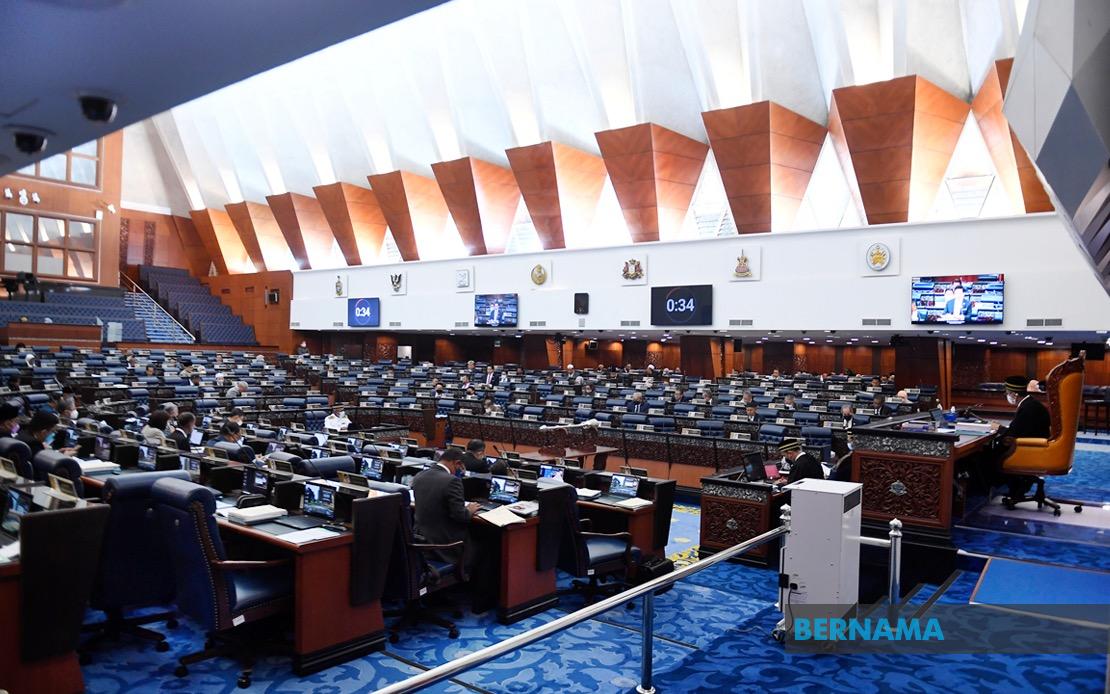
The Dewan Rakyat is set for a substantive sitting that will examine two contentious issues dominating the current political discourse: whether the Federal Government distributes resources fairly across state governments, and the status of electoral rules that restrict project announcements during campaign periods. The parliamentary session on June 30 reflects growing scrutiny of how federal funds reach the states and intensifying concerns about campaign conduct ahead of forthcoming regional elections in Johor, Melaka, and Negeri Sembilan.
The fairness of federal allocations has emerged as a flashpoint in centre-state relations. Datuk Seri Doris Sophia Brodi, representing Sri Aman under the GPS banner, will push the Prime Minister to address claims that state governments receive inadequate federal funding relative to the revenue they generate for the nation. This framing—comparing allocations against state revenue contributions—reflects a persistent complaint from state capitals that their economic output is not proportionally reflected in federal disbursements. The question implicitly challenges whether the MADANI Government's administration has improved resource distribution mechanisms or perpetuated patterns perceived as inequitable by certain state authorities.
The enforcement of election-period restrictions on government announcements forms another significant focus. Datuk Seri Dr Shahidan Kassim, from the PN opposition bloc, will interrogate whether the prohibition on announcing new government allocations or projects after nomination day remains active law, and crucially, what mechanisms will actually enforce this rule during the three imminent state elections. This question reflects scepticism about whether previous pledges to regulate campaign conduct have translated into meaningful action. Election observers and opposition figures have long raised concerns about government announcements timed strategically during campaigns, and the inquiry suggests doubt that enforcement has been rigorous.
Beyond electoral and fiscal matters, the parliament sitting reveals the breadth of policy challenges occupying legislators' attention. Datuk Seri Ismail Sabri Yaakob will direct the Communications Minister toward the expanding threat of artificial intelligence-generated disinformation. The proliferation of deepfake videos and manipulated visual content on social media platforms has prompted calls for government strategy on media and digital literacy. His question seeks clarity on how citizens can distinguish authentic from fabricated content, and what labelling or verification systems the government intends to implement. For Malaysia's increasingly connected population, distinguishing AI-generated fiction from reality represents a critical modern challenge.
Energy readiness for emerging digital industries forms another line of questioning. Chong Zhemin will ask the Energy Transition and Water Transformation Minister whether Malaysia's electricity infrastructure can sustain the enormous power demands from data centres and artificial intelligence operations. This reflects strategic thinking about positioning Malaysia within the global digital economy, as technology companies seek reliable power sources for computational hubs. The question implicitly acknowledges that electricity adequacy is foundational to attracting these high-value operations.
Social welfare initiatives feature prominently in the questioning agenda. Datuk Awang Hashim will probe the effectiveness of the mySalam health scheme for the B40 lowest-income category, seeking evidence of whether this targeted programme achieves its intended coverage and impact. Similarly, Syahredzan Johan will examine redemption rates for the MADANI Book Voucher programme across 2024 and 2025, indicating parliamentary interest in gauging public uptake of cultural initiatives. These queries reflect broader accountability expectations around how government programmes perform when measured against actual participation and utilisation.
Workforce participation emerges as another policy priority. Datuk Mumtaz Md Nawi will question the Human Resources Minister on the success of TalentCorp's Career Comeback Programme in enabling women to re-enter employment after career breaks. This reflects national strategic interest in expanding Malaysia's labour force and retaining skilled female workers who might otherwise remain outside the formal economy. The effectiveness of such initiatives directly influences national productivity and women's economic independence.
Cost-of-living relief remains politically salient. Datuk Iskandar Dzulkarnain Abdul Khalid will seek updated figures on the rollout of Program Jualan Rahmah MADANI—a price-subsidised retail initiative operated across state constituencies. His query about the government's capacity to increase programme frequency underscores recognition that affordability pressures persist among ordinary Malaysians despite existing interventions. The question essentially asks whether current relief measures are sufficient or whether more frequent operations would better address constituent needs.
Following question time, parliament will resume debate on the Sexual Offences Against Children (Amendment) Bill 2026, indicating the legislature's intention to strengthen child protection frameworks. The sitting will also consider amendments that the Dewan Negara has proposed to the Employment Insurance System (Amendment) Bill 2025, suggesting refinements to worker protections are advancing through the legislative process. Additionally, the Cyber Crime Bill 2026 will receive parliamentary attention, reflecting growing legislative responses to digital-age criminal threats.
The confluence of these agenda items—electoral conduct, fiscal equity, artificial intelligence governance, social safety nets, and emerging security threats—reveals parliament grappling with the interconnected challenges of modern governance. The focus on federal-state relations and electoral fairness suggests underlying tensions in Malaysia's federalism that the MADANI Government continues to navigate. Similarly, the questions on AI disinformation and digital threats indicate recognition that technological change is outpacing existing regulatory frameworks, requiring urgent legislative and administrative response. For Malaysian citizens and businesses, these parliamentary debates signal the government's wrestling with distributional justice, technological disruption, and electoral integrity—issues directly affecting economic opportunity and social stability.

