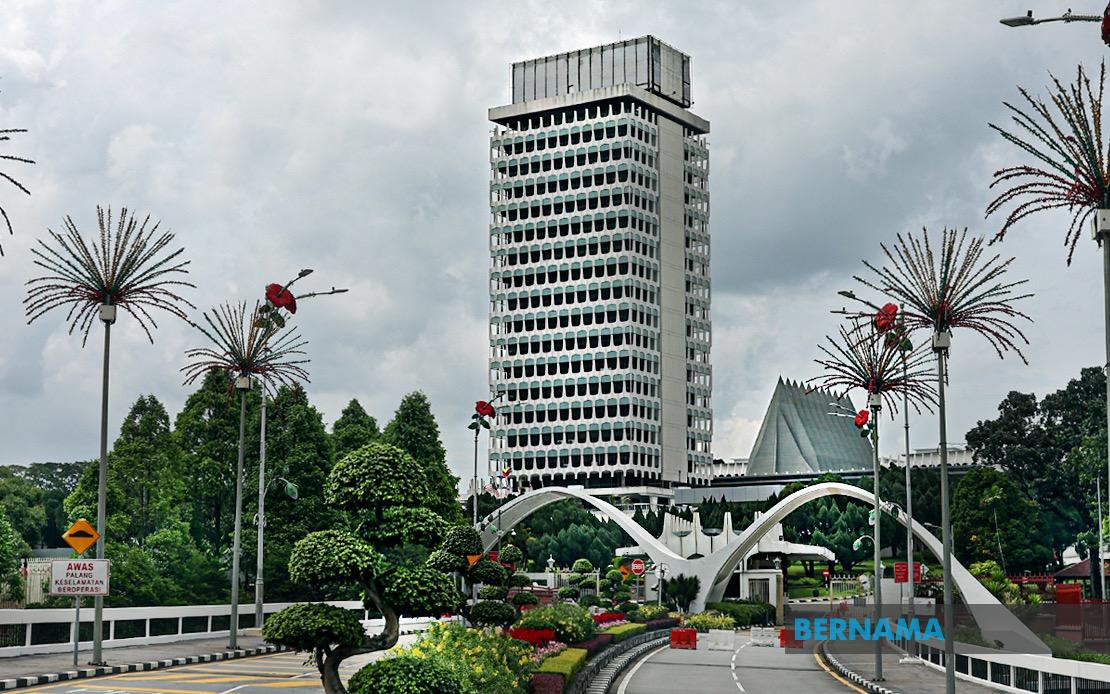
The Dewan Rakyat convenes today for a substantive sitting that reflects Malaysia's complex policy landscape, spanning energy transition, economic resilience, and critical regional diplomacy. Among the pressing matters occupying parliamentary time are the rollout of the Corporate Renewable Energy Supply Scheme (CRESS), government strategies to counter the cascading effects of the global energy crisis, and the trajectory of Malaysia's Myanmar policy under the framework of the Five-Point Consensus, alongside scrutiny of the Malaysia Agreement 1963 implementation.
Energy transformation remains high on the legislative agenda, with parliamentarians probing the practical effectiveness of CRESS and identifying bottlenecks to industry participation. Rodziah Ismail of Ampang will interrogate the Minister of Energy Transition and Water Transformation on implementation metrics and the number of companies engaged in the scheme. Her line of questioning extends to the results of the System Access Charge review—a technical matter with potentially sweeping commercial implications. The SAC review carries significance for Malaysia's ambitions to establish itself as a competitive data centre hub in Southeast Asia, where operating costs directly influence investor decisions. She will also seek clarity on how the Corporate Green Power Programme and Battery Energy Storage Systems integration feature in the government's broader energy transition blueprint.
The energy crisis and its economic fallout occupy multiple parliamentary queries, reflecting widespread concern among legislators about job security and business viability across sectors. Mohd Syahir Che Sulaiman will press the Minister of Economy on concrete mitigation measures deployed by the National Economic Action Council to arrest rising unemployment and business contractions exacerbated by energy instability. The question signals parliamentary scrutiny of the government's crisis management capabilities at a time when energy costs ripple through manufacturing, logistics, and service industries, each vital to Malaysia's regional competitiveness.
Fuel subsidy targeting and adequacy of entitlements have emerged as a touchstone of public concern, particularly among transport operators and rural consumers dependent on diesel for agricultural and commercial operations. Hasni Mohammad will challenge the Finance Minister on the rationale underpinning the standardisation of fuel subsidies and the proposed use of MyKad for diesel allocation. The question of whether the 200-litre entitlement suffices for both petrol and diesel users speaks to the lived experience of ordinary Malaysians navigating inflation and cost-of-living pressures in a fiscally constrained environment.
Malaysia's foreign policy stance towards Myanmar represents a significant test of regional diplomatic coherence under the Five-Point Consensus framework. William Leong Jee Keen will interrogate the Foreign Minister on how current policy towards the Myanmar government aligns with the 5PC and whether substantive progress on the consensus translates into tangible policy shifts. This query carries weight given Myanmar's instability and the humanitarian crisis unfolding within its borders, which threatens to destabilise the broader Southeast Asian region and impose refugee pressures on neighbouring nations including Malaysia. The question reflects parliamentary interest in ensuring that Malaysia's diplomatic posture reflects both regional values and practical strategic calculations.
Data sovereignty and cybersecurity infrastructure have assumed heightened urgency in Malaysia's technological ambitions. Amirudin Shari will seek assurance that state-level digital initiatives, particularly Selangor's Dark Fiber Network, align with federal data sovereignty objectives and protect national security interests. His complementary question about whether data sovereignty considerations inform Malaysia's 2030 artificial intelligence readiness targets underscores growing parliamentary awareness that technological advancement divorced from security safeguards poses systemic risks. This reflects international lessons from supply chain dependencies and the proliferation of surveillance technologies across Southeast Asia.
Islamic education policy and curriculum efficacy in student development form another substantive parliamentary focus. Idris Ahmad will request the Prime Minister's assessment of how the Islamic Education curriculum contributes to broader student development goals and whether coordination mechanisms between federal and state Islamic Religious Councils ensure consistent standards nationwide. The question acknowledges the federal-state dimension of education policy in Malaysia's constitutional architecture while interrogating outcomes, not merely inputs.
The Malaysia Agreement 1963 implementation continues as a barometer of central government commitment to addressing Sabah and Sarawak's constitutional aspirations. Isnaraissah Munirah Majilis will demand clarity on progress towards the MA63 implementation timeline and concrete timelines for increasing parliamentary representation for Sabah and Sarawak to 35 per cent of total seats. This question sits at the intersection of constitutional reform, electoral representation, and regional grievances in Malaysia's eastern states, where historical asymmetries in federal resource allocation and political voice persist as sources of tension.
Beyond question time, Parliament will hear a Public Accounts Committee briefing on healthcare insurance premium escalations and private hospital charge inflation, examining implications across the Ministry of Finance, Ministry of Health, and Bank Negara Malaysia portfolios. Rising health insurance costs and private hospital charges constitute a backdoor mechanism through which inflation transmits to ordinary households, particularly middle-class Malaysians reliant on private healthcare. The PAC briefing signals parliamentary vigilance on consumer protection and the distributional consequences of rising healthcare costs in an ageing society.
The parliamentary session will subsequently proceed to debate the Prisons (Amendment) Bill 2026, legislation addressing the penal system's administrative and operational frameworks. This session, the second meeting of the fifth session under the 15th Parliament, runs for 16 days from June 22 to July 16, providing extended time for substantive deliberation on matters ranging from energy infrastructure to Myanmar diplomacy to constitutional implementation.
Collectively, today's parliamentary agenda reflects Malaysia's navigation of converging challenges: the energy transition imperative, global economic uncertainty, regional geopolitical complexity, and internal constitutional demands. The range of questions submitted by opposition and government backbenchers alike suggests parliamentary capacity for focused scrutiny across energy, economics, foreign policy, and constitutional administration, even as divisions on opposition benches shape the parliamentary dynamics within which these debates unfold.

