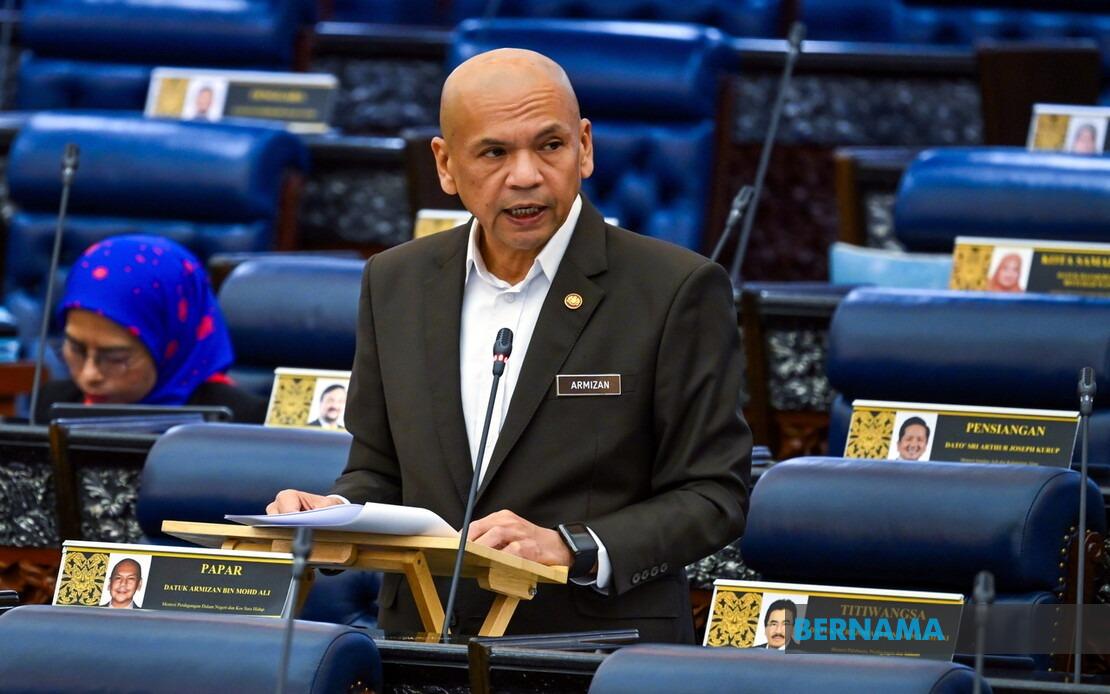
Parliament has given the Malaysia Competition Commission (MyCC) substantially enhanced authority to police anti-competitive practices, passing the Competition Commission (Amendment) Bill 2026 in the Dewan Rakyat following cross-party debate. The legislation, which encompasses 34 distinct amendments, represents the most significant overhaul of the competition regulator's toolkit in recent years and reflects growing parliamentary concern over the sophistication and prevalence of market-distorting conduct in the Malaysian economy. The bill secured passage through a majority voice vote, with 12 lawmakers from government and opposition benches participating in the deliberation process.
Minister Datuk Armizan Mohd Ali, leading the domestic trade portfolio, framed the amendments as essential to maintaining fair market conditions in an era of escalating cartel complexity. He emphasised that the existing Competition Act already criminalises several serious offences—including price fixing agreements, bid rigging, production quotas, market division schemes, and exploitative abuse of market dominance—yet the commission had faced material constraints in gathering evidence and intelligence to prosecute such violations. The new provisions directly address these operational bottlenecks that have hampered MyCC's investigative effectiveness since the act's introduction.
Crucially, the amendments extend MyCC's authority to demand information not merely during formal investigations, but as part of broader market reviews that the commission conducts to assess competitive conditions across sectors. Previously, the regulator struggled to compel cooperation from government agencies, state enterprises, and private firms that claimed exemptions or refused voluntary cooperation with data requests. This expanded remit for information gathering transforms MyCC's capacity to conduct comprehensive sectoral assessments—a tool increasingly recognised internationally as vital for detecting emergent anticompetitive patterns before they become entrenched. The implications for Malaysian consumers are substantial: thorough market reviews can identify situations where cartels are suppressing competition and inflating prices across everyday goods and services.
The bill also modernises MyCC's internal governance by introducing formal provisions for delegation of powers and functions under a new Section 17A. This administrative reform acknowledges that as the commission's responsibilities expand, its leadership cannot personally oversee every decision. Clear delegation frameworks protect institutional efficiency while establishing audit trails that enhance accountability. Without such provisions, the minister cautioned, MyCC's day-to-day operations and administrative coherence could deteriorate—a particular risk given that investigations into large, multi-party cartels demand sustained coordination across multiple teams and branches.
Most controversially, the amendments grant MyCC officers direct authority to impose financial penalties and late payment charges without requiring court approval for minor violations. This shift from judicial oversight to administrative enforcement alarmed several lawmakers across party lines. Chong Zhemin, an opposition MP from Kampar, voiced qualified support for the expanded penalty powers while insisting that guidelines be transparent, proportionate, and calibrated to protect small enterprises from unintended consequences. He highlighted a fundamental enforcement challenge: penalties must exceed the profits gained from illegal conduct, otherwise companies rationally treat violations as acceptable business costs. Yet simultaneously, he cautioned that small businesses inadvertently breaching competition rules due to ignorance should face different treatment than sophisticated cartels deliberately distorting markets—a nuance that guidelines must reflect.
The minister's acknowledgment of these concerns suggests the government recognises that penalty authority must be wielded judiciously. The practical challenge for MyCC will be designing graduated penalty schemes that genuinely deter large cartels from engaging in illegal price coordination or bid rigging while avoiding excessive punishment of micro-enterprises or family businesses that may lack dedicated compliance functions. This balance is particularly acute in Malaysia, where small and medium enterprises constitute a large proportion of economic activity and employ millions of workers. Punitive enforcement perceived as unfairly targeting smaller players could generate political backlash and undermine the competition law regime's legitimacy.
Regional representation emerged as a secondary but significant theme in parliamentary debate. Isnaraissah Munirah Majilis, representing Sabah's Kota Belud constituency, proposed establishing a dedicated MyCC branch in Sabah to accelerate investigation and resolution of competition complaints affecting Borneo's business community. She highlighted that Malaysian competition law enforcement has historically concentrated in peninsular administrative hubs, creating practical delays for complainants and businesses in Sabah and Sarawak. Similar proposals came from Datuk Abdul Khalib Abdullah and Datuk Andi Muhammad Suryady Bandy, whose constituencies span both peninsular and Sabahan divisions. This parliamentary focus on regional equity reflects a broader pattern: as federal initiatives become increasingly sophisticated, peripheral regions sometimes struggle to access services at equivalent quality or speed.
The timing of these amendments reflects international trends. Competition authorities worldwide are reassessing their enforcement models in response to digital platforms, complex supply chain arrangements, and cross-border cartels that traditional investigative methods struggle to detect. MyCC's expanded information-gathering authority aligns with comparable agencies in developed markets, though the Malaysian commission operates with considerably smaller budgets and staffing. The enhancement of MyCC's powers must therefore be accompanied by adequate resource allocation—a point not explicitly addressed in the parliamentary debate but critical to actual enforcement capacity.
For Malaysian consumers and businesses, the practical effect of this legislation will depend entirely on MyCC's implementation and resource commitment. The expanded authority means little without investigators trained in detecting modern cartel conduct, economic analysts capable of interpreting complex commercial data, and prosecutors prepared to pursue difficult cases through Malaysia's courts. The bill establishes the legal framework, but execution remains an organisational and political challenge. How thoroughly MyCC exercises its new information-gathering powers, how consistently it applies penalty guidelines across large and small violators, and whether it can attract and retain talented staff will ultimately determine whether these amendments fulfil their stated purpose of ensuring comprehensive competition law enforcement.

