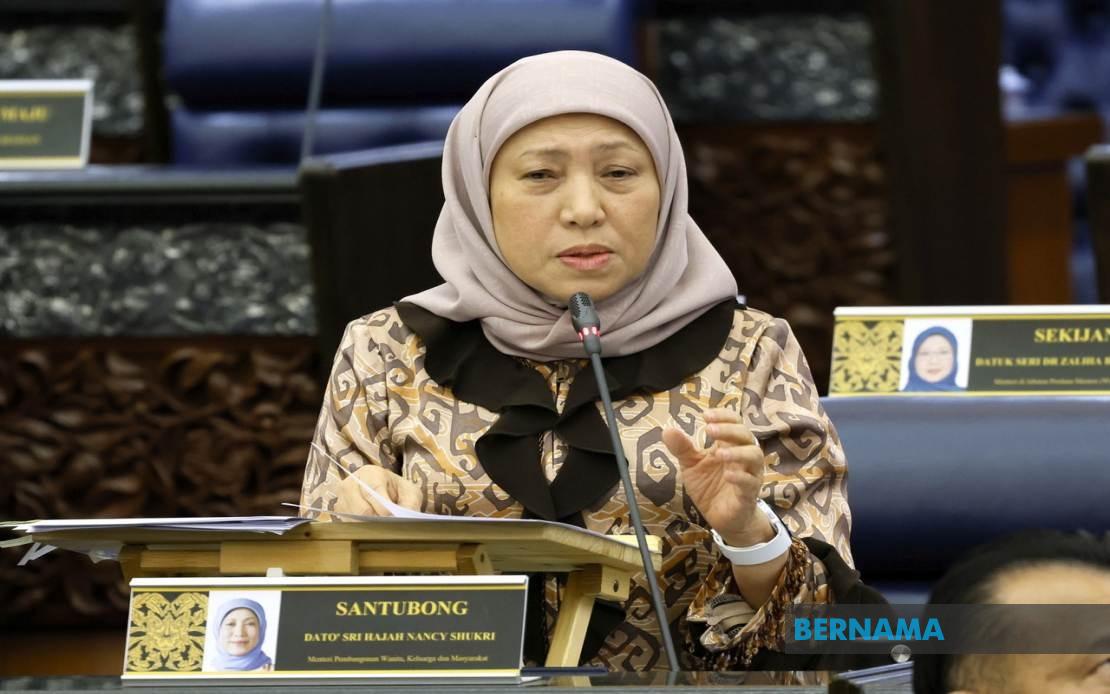
Parliament has endorsed the Social Work Profession Bill 2026, a watershed moment for Malaysia's social work sector that establishes formal regulatory mechanisms to govern practitioners across the country. The legislation secured passage through majority vote in the Dewan Rakyat following substantive debate among 23 Members of Parliament representing both government and opposition benches. The Bill creates the Malaysian Social Work Profession Council, which will serve as the central authority for oversight, professional standards, and governance of the social work profession.
According to Minister Datuk Seri Nancy Shukri of the Women, Family and Community Development Ministry, implementation will follow a phased approach that prioritises establishing the Council before extending formal regulatory obligations to public sector practitioners. This staged rollout reflects careful consideration of the differing operational structures between private and government social workers, ensuring that the transition to comprehensive regulation remains manageable and sustainable. The initial phase concentrates on registering private sector professionals, including those employed by non-governmental organisations, community-based organisations, and corporate entities, as well as independent practitioners.
Public sector social workers face different requirements under the new framework. Government employees engaged in social work will only require registration if they undertake social work activities outside their formal government responsibilities. This distinction acknowledges that public officers already operate within established supervisory systems, training programmes, standard operating procedures, and existing ethical codes enforced across government departments. However, the exclusion of public sector workers from the initial registration mandate has drawn parliamentary scrutiny regarding consistency in professional standards.
The exemption proved contentious during parliamentary debate, with Ipoh Timor MP Howard Lee questioning whether public sector practitioners should maintain identical professional credentials and standards as their private and NGO counterparts. He highlighted that government social workers frequently manage high-risk cases involving child protection, persons with disabilities, the elderly, and vulnerable families, suggesting that service users deserve equivalent professional assurance regardless of sector. This perspective reflects broader concerns about maintaining uniform quality across Malaysia's fragmented social work ecosystem.
Minister Shukri reiterated the government's long-term commitment to developing comprehensive integrated regulation encompassing all social workers. However, she acknowledged the complexity of implementing mandatory registration across the public sector, which would require coordination between multiple ministries and government agencies before formal mechanisms could commence. The current approach thus represents a pragmatic intermediate step while a more thorough legal framework is developed for eventual universal coverage.
The newly established Council will assume substantial responsibilities in advancing the profession's development. Beyond maintaining a registry of practitioners, the Council will develop regulations, guidelines, and competency frameworks applicable to social workers. It will establish mechanisms for handling professional complaints, draft guidelines protecting social worker safety and wellbeing, and explore proposals including a national reciprocity framework for mutual recognition of qualifications. These functions position the Council as a comprehensive professional body advancing standards and best practices across Malaysia's social work landscape.
The legislation excludes volunteers and informal caregivers from its regulatory scope, applying exclusively to professional social work practitioners. This distinction preserves the important role of community volunteers while establishing professional standards for those providing social work services as their primary function. Additionally, the Bill clarifies that minimum wage matters remain subject to existing labour legislation, ensuring that regulatory innovation does not inadvertently conflict with established employment protections.
Operational funding for the Council will derive from annual government allocations rather than practitioner fees, reducing financial barriers to professional registration and ensuring broad accessibility. This funding model reflects government commitment to professionalising the sector while recognising the often modest financial resources available to NGOs and independent practitioners. The arrangement also underscores state responsibility for supporting social work as a public service profession essential to national development.
Parlamentary contributions highlighted regional and sectoral disparities requiring attention during implementation. Beaufort MP Datuk Siti Aminah Aching emphasised the importance of developing competitive career schemes that attract qualified professionals to Sabah and Sarawak, where social work capacity remains limited. Kapar MP Dr. Halimah Ali advocated for targeted support mechanisms including grants to NGOs, educational scholarships, and rural placement incentives to ensure the legislation achieves meaningful outcomes across diverse geographic and organisational contexts.
The legislative framework emphasises continuous refinement through regulations and guidelines developed by the Council, providing flexibility for the profession to evolve as circumstances require. This adaptive approach acknowledges that social work operates in dynamic environments where practitioner needs, service user populations, and best practices continually develop. The Council's capacity to refine standards through regulatory updates ensures the profession can respond to emerging challenges and opportunities without requiring frequent legislative amendment.
The Bill's passage represents culmination of more than a decade of advocacy and political effort to secure formal recognition of social work as a distinct, regulated profession in Malaysia. Earlier legislative attempts had stalled, making this achievement particularly significant for social workers and the organisations they represent. The recognition carries symbolic importance alongside practical benefits, signalling parliamentary and governmental commitment to professionalising a sector that addresses among the nation's most vulnerable populations.
As implementation proceeds through establishment of the Council and development of detailed regulatory frameworks, attention will focus on whether the phased approach successfully achieves comprehensive professional standards, whether public sector integration ultimately occurs, and whether regional support mechanisms adequately address disparities between urban and rural social work capacity. The Bill provides essential legislative foundation, but its ultimate impact will depend substantially on resourcing, enforcement commitment, and the Council's operational effectiveness in advancing professional standards across Malaysia's diverse social work ecosystem.

