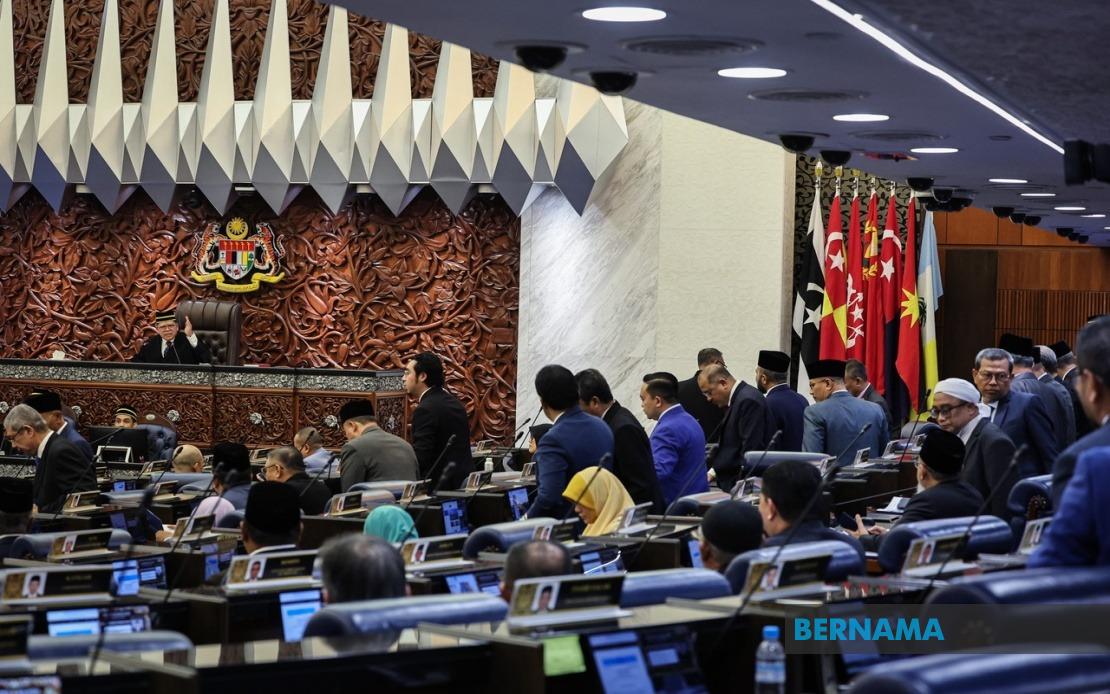
Parliament's Speaker Tan Sri Johari Abdul has reaffirmed that the Dewan Rakyat is providing legislators comprehensive opportunity to examine and discuss the findings of the Royal Commission of Inquiry into Lembaga Tabung Haji, describing the initiative as essential for maintaining public confidence and strengthening governance standards.
The special parliamentary sitting, convened in Kuala Lumpur on August 11, was formally authorised under Standing Order 11(3) of the Dewan Rakyat's procedural rules, following an official request lodged by Prime Minister Datuk Seri Anwar Ibrahim. The Speaker's decision to facilitate the sitting demonstrates the parliamentary commitment to addressing matters of significant national concern through structured deliberation.
Tan Sri Johari explained that upon receiving the Prime Minister's formal letter requesting the special sitting, he responded affirmatively to enable comprehensive legislative review of the commission's key conclusions. The Speaker's role in this instance reflects the constitutional responsibility of parliament to serve as a forum for scrutinising matters affecting public institutions and citizen interests.
The invocation of Standing Order 11(3) underscores the formal procedures that govern parliament's operations and establish the mechanisms through which urgent or particularly significant matters can be brought before legislators outside the regular calendar. This procedural framework ensures that institutions of critical importance to Malaysian society, such as Lembaga Tabung Haji, can be subjected to parliamentary oversight when circumstances warrant such attention.
The sitting's importance extends beyond routine legislative business, given Tabung Haji's role as a premier financial institution serving Malaysia's Muslim community through investment and savings schemes. The RCI's investigation into the organisation's operations represents a significant governance accountability mechanism, addressing public concerns that had accumulated regarding the institution's financial performance and management practices.
Parliament's willingness to dedicate a special sitting to this matter reflects broader democratic principles about transparency and the need for legislative scrutiny of major public institutions. By permitting members from both the ruling coalition and opposition ranks to participate in debate, the arrangement ensures that multiple perspectives inform the parliamentary record on this sensitive issue.
The Speaker's remarks emphasise that the special sitting framework serves the broader public interest rather than narrow partisan objectives. This distinction is crucial in Malaysian parliamentary tradition, where matters of institutional integrity and public confidence are understood to transcend ordinary party divisions and require unified attention to governance quality.
The RCI's investigation into Tabung Haji had generated considerable public discussion regarding asset management, investment returns, and governance structures within the institution. Parliamentary debate provides an opportunity for legislators to engage with the commission's detailed findings, ask clarifying questions through ministers responsible for relevant portfolios, and consider legislative or policy responses that might be warranted.
The briefing by the responsible minister during the special sitting would provide parliament with authoritative explanation of the RCI's recommendations and the government's position regarding implementation of any proposed changes. This format allows for direct exchange between the executive and legislative branches on matters requiring coordinated policy response.
For Malaysian stakeholders with financial relationships with Tabung Haji, parliament's engagement with the RCI report carries practical implications regarding potential institutional reforms, regulatory adjustments, or operational modifications that might flow from the commission's investigation. The special sitting creates a formal mechanism through which public input, via legislative representatives, enters into consideration of the institution's future direction.
The arrangement also establishes precedent regarding how parliament addresses inquiries into major public institutions when findings warrant comprehensive legislative discussion. The procedural flexibility demonstrated through Standing Order 11(3) permits parliament to respond responsively to governance concerns while maintaining orderly, structured deliberation rather than reactive emergency procedures.
Regionally, Malaysia's approach to parliamentary oversight of major national institutions through formal investigative commissions and subsequent legislative debate reflects democratic governance standards increasingly expected across Southeast Asia. The transparency demonstrated through the public sitting and multi-party participation aligns with evolving regional norms regarding institutional accountability.
The Speaker's confirmation that ample opportunity exists for legislators to examine the RCI findings reinforces parliament's institutional role as guardian of public accountability. This statement serves simultaneously as assurance to the Malaysian public that their elected representatives have adequate forum to engage with matters of institutional significance, and as affirmation to parliament itself that procedures exist to ensure comprehensive legislative attention to governance issues requiring urgent resolution.

