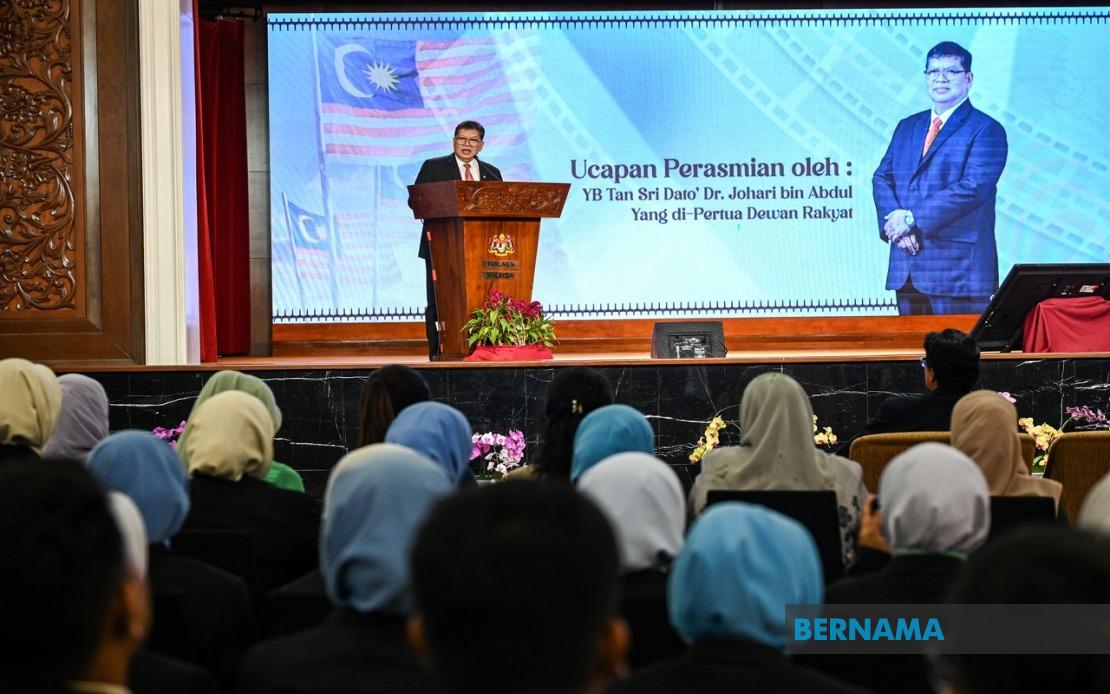
Parliament has launched 'Arkitek Bangsa', a short film intended to spark leadership aspirations and strengthen patriotic values among Malaysia's younger generation. The screening, held at the Parliament Building in Kuala Lumpur on July 16, underscores Parliament's commitment to shaping the next cohort of national leaders through multimedia engagement. According to the parliamentary leadership, the production addresses a critical gap in how the country cultivates civic consciousness and prepares young citizens for positions of influence and responsibility.
The messaging behind the film rests on a fundamental premise: that leadership is neither an innate quality nor the preserve of a select few, but rather a learned competency developed through sustained exposure, mentorship, and structured training. Parliamentary officials argue that young Malaysians must transcend a passive acceptance of their circumstances and instead adopt the mindset of active nation-builders. This philosophy acknowledges that generational renewal depends not on spontaneous individual brilliance, but on deliberate institutional efforts to nurture ambition and provide frameworks through which ambition can be productively channelled.
The film's release coincides with Parliament's expansion of existing youth-engagement platforms. The Parliament School Programme has already facilitated visits from 1,057 schools, bringing thousands of students directly into contact with the nation's legislative chambers and processes. These field visits serve a dual purpose: demystifying democratic institutions for young people while simultaneously normalising the idea that Parliament is a space where citizens can engage meaningfully with governance. By transforming Parliament from an abstract constitutional entity into a tangible, visitable place, the initiative aims to reduce psychological barriers between ordinary youth and the possibility of future parliamentary careers.
Beyond school visits, Parliament has deepened its involvement with the National Service Training Programme (PLKN) through a dedicated select committee, signalling recognition that formal military and civic service provides an additional venue for leadership development. More substantively, Parliament has restructured its Youth Parliament mechanism, doubling membership from 100 to 222 participants and implementing proportional representation for electoral selection. This expansion democratises access to youth parliamentary experience and ensures that the cohort better reflects Malaysia's demographic diversity, potentially widening the pool of young people who see themselves as potential future legislators.
The film's underlying narrative emphasises the fragility of national institutions and achievements relative to the ease with which they can be undermined or destroyed. This framing appeals to younger viewers' sense of stewardship and moral obligation: the nation inherited from previous generations, the messaging suggests, requires active guardianship rather than passive consumption. The emphasis on understanding historical sacrifice and contribution serves a pedagogical function, contextualising contemporary privileges within narratives of struggle and collective effort. For young Malaysians navigating identity questions in an increasingly pluralistic society, this narrative anchoring offers a unifying framework centred on shared national project rather than communal or ideological division.
Parliamentary officials anticipate that the film will be integrated into youth-focused programmes administered across multiple government ministries and agencies. This horizontal distribution strategy broadens the potential reach beyond Parliament's direct educational programmes, embedding the film into the routine operations of institutions touching young people's lives. Whether through education ministries, youth and sports departments, or community development agencies, the film is positioned as a common resource that reinforces consistent messaging about national identity and leadership expectations across governmental silos.
The film's production involved Malaysia's National Film Development Corporation (FINAS), reflecting a deliberate choice to employ culturally resonant media formats rather than relying on conventional lectures or policy documents. This approach recognises that film, as a narrative and visual medium, can create emotional resonance and memorable impressions more effectively than abstract argumentation. By centering a creative industry partner, Parliament also signals recognition that nation-building is not exclusively a political or administrative exercise but requires contributions from cultural producers and storytellers.
For Malaysia's context, this initiative reflects broader regional and global concerns about civic disengagement among youth, political polarisation, and the erosion of shared national narratives. Southeast Asian democracies have observed concerning trends whereby young citizens either withdraw from political participation entirely or engage in highly fractionalised, identity-based or sectarian mobilisation. 'Arkitek Bangsa' attempts to counter these trajectories by offering an inclusive vision of leadership that emphasises individual agency within a collectively-owned national project. The film's appeal to pride in Malaysian identity and its invitation to view oneself as a nation architect addresses anxieties about generational commitment to democratic institutions and social cohesion.
The scale of Parliament's youth initiatives—involving over 1,000 schools, expanding Youth Parliament membership to over 200, and now distributing a film across multiple government agencies—suggests institutional recognition that leadership cultivation cannot be left to accident or individual initiative. Rather, it requires systematic, sustained intervention beginning in formative years. The diversity of formats employed (direct parliamentary visits, youth parliament participation, national service involvement, and now film production) reflects understanding that different young people respond to different engagement mechanisms, and that comprehensive youth-focused strategy demands multiple complementary channels.
Critically, the success of these initiatives depends substantially on downstream implementation quality. A film distributed to ministries and agencies without accompanying pedagogical guidance or commitment to classroom engagement risks becoming merely another media artefact circulating within government systems. Similarly, Youth Parliament expansion only strengthens national leadership pipelines if participants genuinely influence parliamentary deliberations or transition to substantive political roles. Parliament's strategic messaging emphasises aspiration and pride, but translating these emotional responses into concrete career commitments requires sustained mentorship relationships, visible role models, and credible pathways from youth engagement programmes into political and administrative leadership positions.

