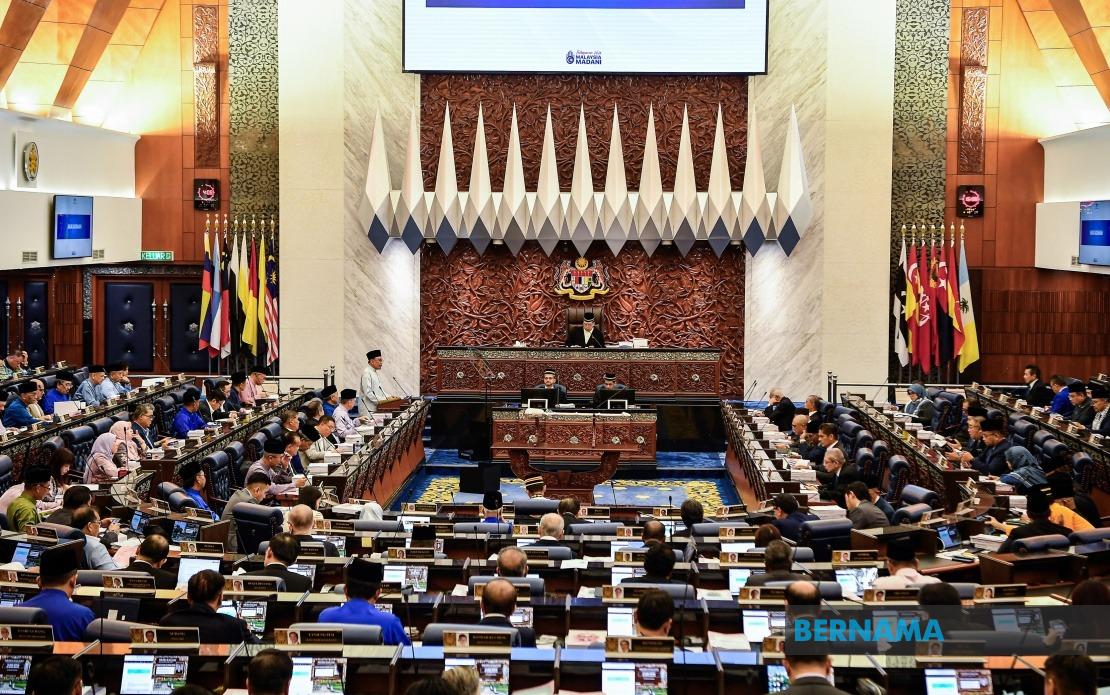
Malaysia's parliament has endorsed the Malaysian Communications and Multimedia Commission (Amendment) Bill 2026, marking a significant legislative step to keep the nation's primary telecommunications regulator aligned with contemporary industry demands and governance standards. The Dewan Rakyat approved the measure following deliberations from 14 lawmakers across the government and opposition benches, reflecting broad parliamentary consensus on the need to refresh the statutory framework governing MCMC operations.
Deputy Communications Minister Teo Nie Ching outlined during the debate's conclusion that the amendments address long-standing structural gaps within the commission's governance architecture. The new provisions clarify the mechanism by which the minister selects the MCMC chairman and board members, anchoring these appointments to clearly defined statutory criteria rather than allowing discretionary decision-making. Qualifications, personal integrity, relevant professional experience, and demonstrated capacity to lead institutional transformation now form the explicit basis for recruitment decisions.
A central innovation embedded in the legislation bars the MCMC chairman from simultaneously holding office in any legislative body, either at federal or state level. This prohibition aims directly at mitigating potential conflicts of interest that might compromise the regulator's impartiality when addressing contentious industry matters or policy questions with political dimensions. The requirement represents a departure from the framework established under the original 1998 legislation, which contained no such structural safeguard against dual roles.
The Bill's most economically significant provision raises MCMC's threshold for autonomous contract approval from RM5 million to RM50 million, fundamentally altering how the commission manages procurement decisions. Teo justified this tenfold increase by reference to updated federal procurement guidelines issued by the Finance Ministry, which permit fully internally funded statutory bodies to authorise expenditures of up to RM499 million. Nevertheless, the government determined that RM50 million represents the proportionate ceiling for MCMC's authority, recognizing that the original limit had remained frozen since 1998 despite substantial economic transformations.
Inflation, accelerating technological change, and rising labour and materials costs have eroded the purchasing power of the RM5 million threshold over two decades. By 2026, that amount purchases considerably less infrastructure, software, and professional services than it did in the late 1990s, constraining MCMC's ability to execute modernisation projects without seeking ministerial approval for routine expenditures. The revised ceiling addresses this practical constraint while remaining conservative relative to the regulatory maximum established for federal bodies broadly, thereby maintaining legislative oversight proportionate to the commission's importance within Malaysia's digital economy.
Opposition lawmakers, however, pressed the government to advance more ambitious governance reforms during the parliamentary debate. Dr Halimah Ali from Kapar raised concerns about MCMC's susceptibility to political pressure despite the new structural amendments. She advocated remodelling the appointment process along the lines of the Human Rights Commission of Malaysia (SUHAKAM), where members emerge from a more transparent competitive selection emphasizing professional qualifications and public credibility rather than ministerial preference. Such a model would distance commissioner appointments from partisan considerations and signal institutional independence to both international observers and Malaysia's communications industry stakeholders.
Datuk Mas Ermieyati Samsudin from Masjid Tanah similarly emphasised the imperative of strengthening checks within MCMC's internal operations, directing particular attention toward governance of the Universal Service Provision Fund, the scope of the commission's audit capabilities, and the recording of ministerial directives. She proposed establishing periodic parliamentary accountability mechanisms requiring transparent reporting on USP Fund utilisation. These suggestions reflect underlying anxieties that structural amendments to appointment and contracting procedures, while valuable, remain insufficient without complementary transparency protocols ensuring that day-to-day commission activities remain susceptible to democratic scrutiny.
Dr Richard Rapu from Betong articulated a more supportive interpretation of the legislative package, contending that the amendments strengthen institutional architecture while positioning MCMC as a modernised, professionally managed regulator capable of navigating the complexities inherent in Malaysia's digital economy transformation. His remarks suggest that government backbenchers view the Bill as foundational infrastructure for emerging regulatory challenges spanning cybersecurity, digital platform oversight, spectrum allocation, and emerging technologies that the communications landscape will increasingly demand.
The amendments reflect Malaysia's recognition that regulatory institutions established in the pre-broadband era require periodic recalibration to accommodate economic growth and technological evolution. MCMC, tasked with regulating an industry encompassing fixed-line telecommunications, mobile networks, broadcasting, digital services, and spectrum management, operates within an environment fundamentally transformed since 1998. The current legislative framework contains lacunae and obsolete provisions that constrain effective governance without providing compensating safeguards against institutional capture or mismanagement.
For Malaysian telecommunications companies and digital service providers, the increased contract threshold provides greater operational flexibility, potentially accelerating procurement cycles for infrastructure modernisation without creating administrative delays at ministerial offices. However, the opposition's unresolved concerns regarding appointment transparency and ministerial directive accountability suggest that future debates may centre on whether the current amendments adequately insulate MCMC from political interference or whether additional measures become necessary as the commission assumes greater responsibility for regulating digitally mediated content and services with increasingly sensitive political dimensions.
The Bill's passage also carries implications for Malaysia's broader regulatory environment and international standing. Effective, independent telecommunications regulation increasingly influences foreign investment decisions and technology partnerships, particularly as Southeast Asian governments compete for regional technological leadership and digital infrastructure development. Countries demonstrating robust, transparent regulatory institutions attract telecommunications operators and digital services companies seeking jurisdictions with predictable, professional oversight divorced from political volatility. By clarifying MCMC's governance framework and establishing more rigorous appointment criteria, Malaysia signals commitment to institutional development that aligns with standards expected by sophisticated international market participants.

