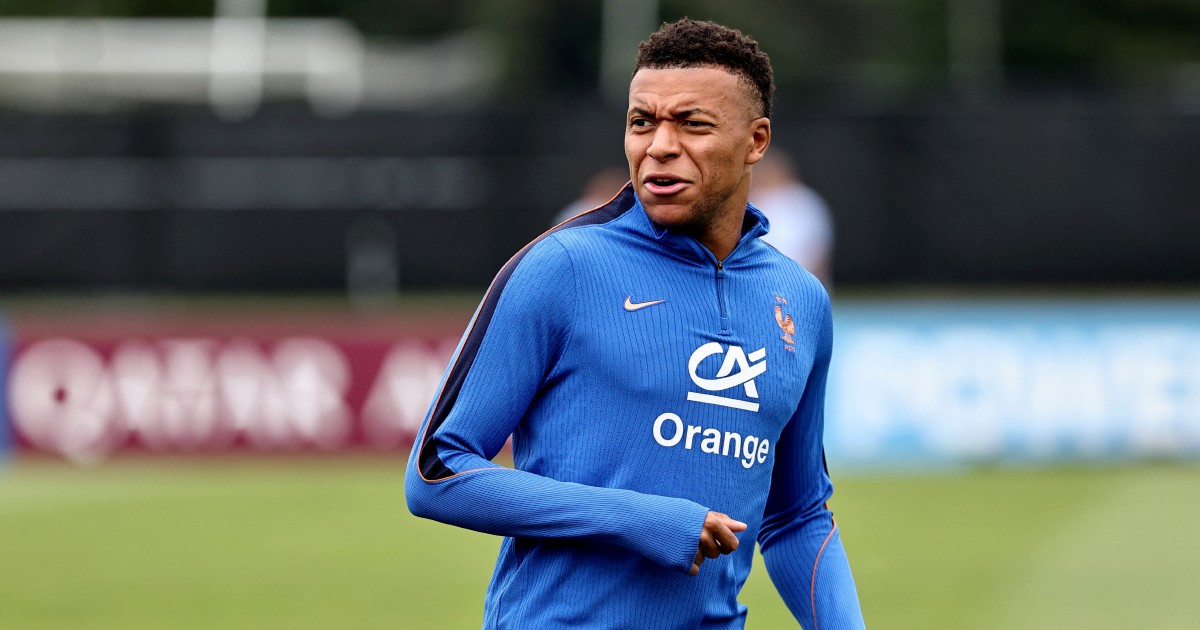
The Paris public prosecutor's office announced on Tuesday that it had commenced a formal investigation into statements attributed to a member of Paraguay's legislature regarding Kylian Mbappé, the captain of France's national football team. The decision to open the inquiry reflects the serious nature of the remarks and the potential legal implications they may carry under French law.
While the precise details of the lawmaker's comments have not been extensively outlined in the initial announcement, the decision by French authorities to pursue an investigation signals that the statements were deemed sufficiently troubling to warrant official scrutiny. The involvement of the Paris prosecutor's office indicates that the matter falls within jurisdictions where France maintains legal authority to investigate and potentially prosecute, depending on the findings.
Kylian Mbappé stands as one of world football's most prominent figures, serving as captain of the French national team at a time when the sport commands enormous media attention and public interest. His profile extends far beyond the sporting arena, making commentary about him a matter of broader public concern. The decision by French prosecutors to formally investigate demonstrates how seriously such statements are being treated by authorities.
The involvement of a Paraguayan lawmaker introduces an international dimension to the case, raising questions about jurisdiction, diplomatic considerations, and the boundaries of protected speech across borders. Paraguay, as a South American nation, has its own legislative system and constitutional protections, which may intersect in complex ways with French legal frameworks. This cross-border element adds complexity to how the investigation might proceed and what remedies or consequences might ultimately be available.
In an era of global social media connectivity and instant information sharing, statements made by public figures in one corner of the world can rapidly spread and acquire significant prominence elsewhere. A remark originating from a Paraguayan parliamentary context can quickly reach international audiences, particularly when it concerns a globally recognised sports personality. This interconnectedness means that the geographical distance between Paraguay and France becomes largely irrelevant in terms of potential impact and reach.
French law contains various protections against defamation, false statements, and hate speech that may have been engaged by the lawmaker's remarks. The specific charges or legal theories under investigation remain unclear from the initial announcement, but prosecutors typically consider whether statements constitute criminal defamation, invasion of privacy, discrimination, or other violations. The investigation will likely focus on establishing what was said, the context in which it was communicated, and whether it crosses thresholds established under French legislation.
For Malaysian and Southeast Asian observers, this case illustrates how globalised sports culture intersects with legal systems and international relations in unexpected ways. The incident shows that prominent athletes and public figures enjoy certain protections under law, and that statements made about them may trigger formal legal proceedings regardless of where or by whom they are made. This has implications for how public discourse unfolds in the region, where social media has made commentary about international figures commonplace.
The timing of the prosecutor's announcement and the mechanics of the investigation remain to be fully clarified. Authorities will need to determine the exact nature of the remarks, establish whether they were made in an official capacity or personal context, and assess the degree to which they may violate French legal standards. The investigative process may involve requests for information from Paraguayan authorities, examination of statements made publicly or privately, and consultation with legal experts regarding applicable law.
This development also touches on broader conversations about parliamentary immunity and freedom of expression for lawmakers. In many democracies, legislators enjoy certain protections that allow them to speak on matters of public concern without fear of immediate legal consequences. However, such protections are not absolute, and statements that cross into defamation, hate speech, or other prohibited categories may still trigger investigation and prosecution. The specific circumstances will determine whether the Paraguayan lawmaker can claim such protections or whether standard legal principles apply to their remarks.
The case underscores how international sports figures, particularly those holding national team captaincies, inhabit a complex space where sporting achievement meets public prominence and sometimes legal vulnerability. Mbappé's prominence as France's football captain makes him both a celebrated national symbol and potentially a subject of scrutiny that extends well beyond sporting contexts. Any remarks about him acquire heightened significance because of his public status and the millions of people who follow his career globally.
As the investigation develops, clarity should emerge regarding the specific nature of the remarks and the legal principles French prosecutors believe have been engaged. The outcome may have implications for how public discourse involving international sports figures is conducted, particularly by individuals holding positions of legislative authority. It may also set precedents regarding how cross-border legal matters involving prominent public figures are handled in the interconnected contemporary world where geographical and jurisdictional boundaries hold diminishing significance for the rapid dissemination of information and commentary.

