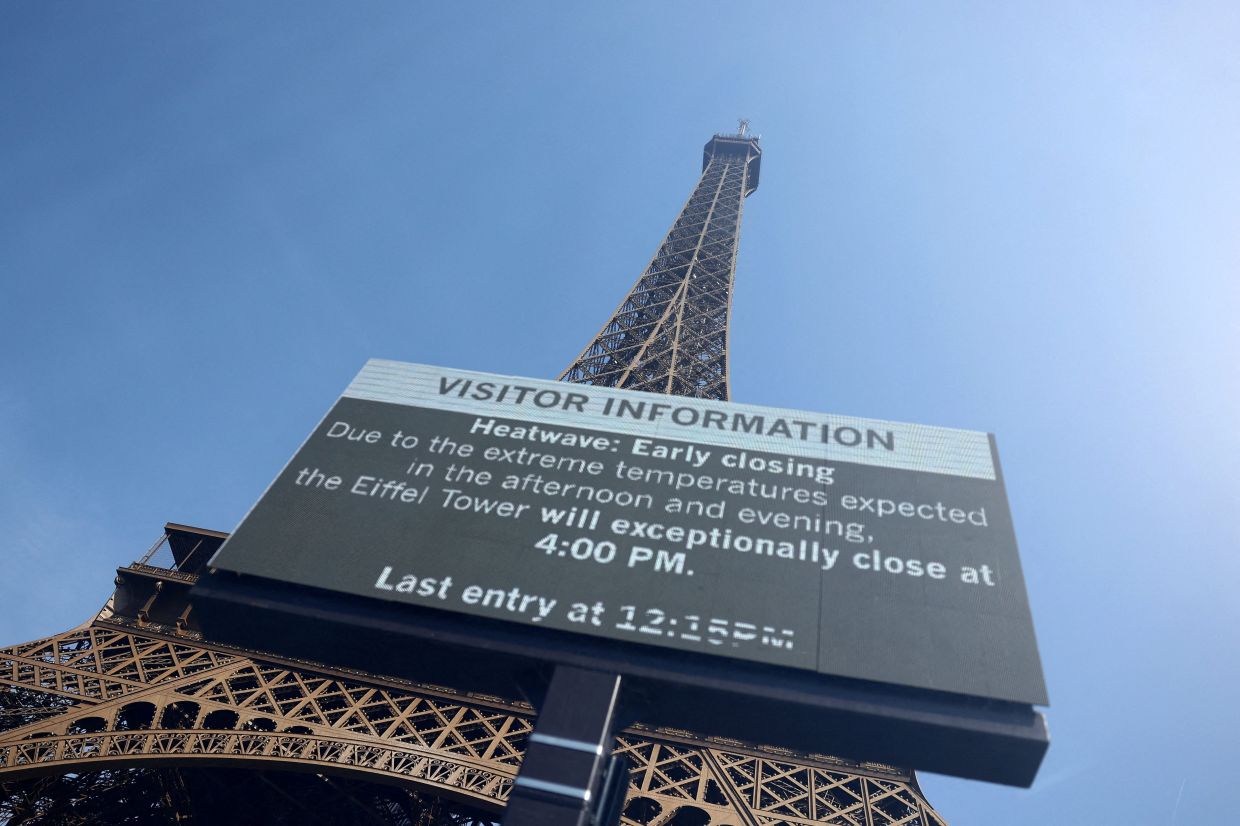
A blistering heatwave engulfing France this week has upended travel plans for countless tourists, with iconic Paris attractions including the Eiffel Tower and the Louvre shutting their doors ahead of schedule as temperatures soared to record levels. The extreme weather has left visitors scrambling to reorganise itineraries and find refuge indoors, turning what should be dream holidays into tests of endurance against the oppressive heat blanketing the capital and beyond.
On June 23, France recorded its hottest day since official temperature measurements began in 1947, a sobering milestone that underscores the intensifying climate crisis gripping Europe. The Eiffel Tower, which ordinarily welcomes seven million visitors annually and typically operates past midnight during peak summer season, announced it would "exceptionally close" at 4pm that day, with management signalling it would likely maintain shortened hours throughout the heatwave. The decision left tourists who had carefully planned visits to ascend the 324-metre monument facing cancellation or rescheduling, disrupting months of anticipation and savings.
Spanish nurse Maite Blazques from Madrid exemplifies the human cost of such disruptions. The 35-year-old had spent months squirreling away money to give her six-year-old son a memorable Paris experience, only to have the record temperatures force a complete overhaul of her carefully crafted holiday agenda. Walking through Paris with a young child in extreme heat posed genuine safety risks, leaving her with little choice but to abandon plans for a guided tour through the historic Marais district, a leisurely river boat cruise along the Seine, and the highlight ascent up the Eiffel Tower. The weight of disappointment was visible as she held her son's hand, contemplating how to salvage what remained of their holiday within severe weather constraints.
American tourist Tamara Dancer experienced similar frustration when her scheduled guided tour was cancelled on Tuesday afternoon without alternative arrangements readily available. The cancellation effectively punctured a significant portion of her vacation itinerary, yet she was far from alone in facing such disruptions. Across the capital, hundreds of guided tours were shelved, museum visits curtailed, and outdoor activities abandoned as the heat became genuinely dangerous rather than merely uncomfortable.
Those who ventured onto Paris's streets armed themselves with parasols, wide-brimmed hats, and portable fans in a desperate bid to manage the relentless temperature. John Beeler, a 45-year-old American engineer, articulated the grim reality facing outdoor explorers, reporting that he and his wife felt they were "suffocating" not only in the blazing streets but also in the sweltering Paris Metro and even within their rental accommodation. The only solution was upgrading to a hotel with functioning air conditioning, an unexpected expense that many budget-conscious travellers could ill afford. His comments reflected a broader sentiment among tourists: Paris's charm is fundamentally accessible through wandering its neighbourhoods on foot, but extreme heat renders this essential experience dangerous and deeply unpleasant.
Drake Winners, a 66-year-old London retiree, expressed the same frustration more philosophically. For him, truly discovering Paris means strolling its boulevards, absorbing the atmosphere and discovering hidden corners organically. The oppressive heat made such exploration feel impossible, forcing a pivot toward indoor alternatives. He spent his time instead exploring museums and churches, spaces with dependable climate control where he could at least enjoy cultural experiences without risking heat exhaustion. The Louvre, the world's most visited museum with approximately nine million annual visitors, became a refuge for many tourists seeking cool air and cultural sustenance.
However, even these backup options came with complications. The Louvre's management acknowledged that the historic palace, accumulated and modified over centuries by successive French monarchs and presidents, is "not sufficiently adapted to climate change." This candid admission exposes a critical vulnerability: Europe's most treasured cultural institutions, many constructed before modern climate control was even conceived, lack the infrastructure to withstand increasingly severe heat events. The museum has already weathered multiple challenges recently, including a brazen US$100 million jewellery heist, a significant water leak, and various maintenance issues that compound the challenges posed by extreme temperatures.
The crisis extends well beyond Paris. More than half of mainland France remained under the national weather service's highest alert level, prompting tourist attractions nationwide to announce early closures or issue warnings discouraging visits. Mont Saint-Michel, the spectacular island monastery in Normandy and France's most visited attraction outside the Paris region, explicitly urged tourists to postpone their visits during the red alert period, an extraordinary measure reflecting the genuine danger posed by the conditions.
These disruptions carry implications far beyond individual disappointment. For Malaysia and Southeast Asia, where tourism represents a vital economic sector, the Paris situation serves as a cautionary tale about climate change's escalating impact on travel infrastructure and visitor experiences. As Southeast Asian cities grow hotter and more humid due to climate change, tourist destinations face similar pressure to adapt aging attractions and ensure visitor safety during extreme weather events. Thailand's temples, Indonesia's archaeological sites, and Malaysia's national parks all face comparable long-term vulnerabilities that require proactive infrastructure investment and climate adaptation planning.
Furthermore, the global tourism industry depends on the reliability and appeal of major destinations. When iconic attractions become inaccessible or unpleasant due to heat, tourists may redirect spending toward alternative destinations, with potential economic consequences. For Malaysian tourism operators and businesses, understanding how competitors manage climate challenges offers important lessons about investment priorities, from air conditioning infrastructure to flexible booking policies that accommodate weather-related disruptions.
The Paris heatwave ultimately illustrates a broader reality: climate change is no longer an abstract future threat but a present challenge reshaping how humanity experiences its cherished cultural landmarks. Institutions worldwide, from Paris to Kuala Lumpur, must urgently address adaptation and resilience as extreme weather becomes increasingly routine. For tourists and travel companies alike, the era of assuming benign weather conditions and reliable access is rapidly ending.

