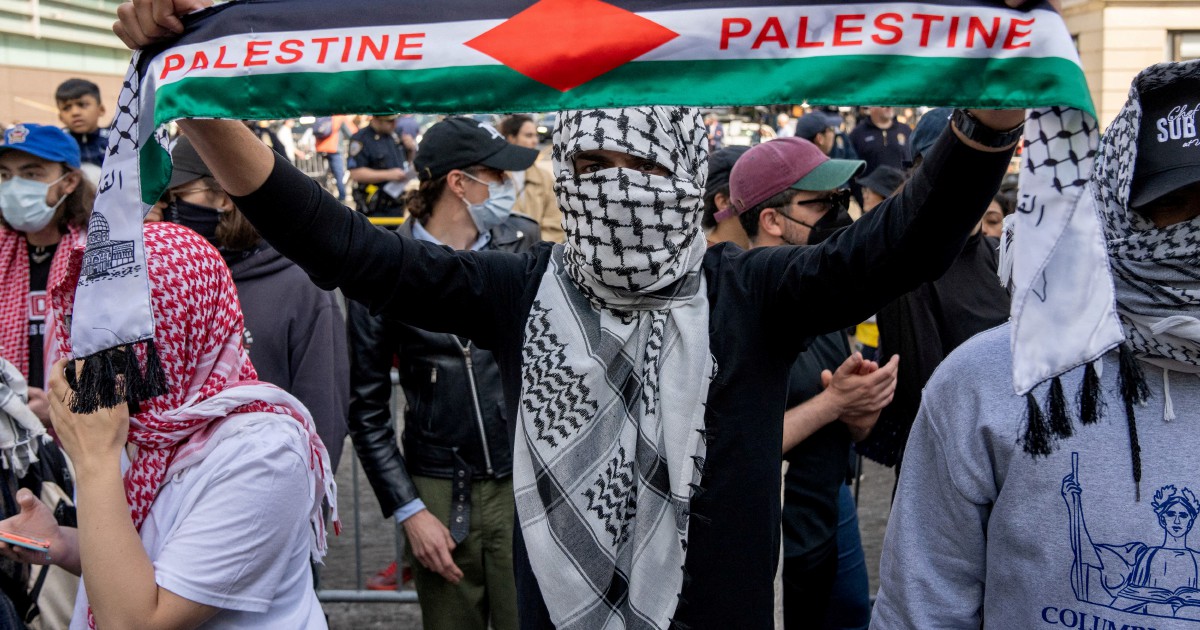
A coalition comprising both current and former Palestinian students alongside university staff members has initiated formal legal proceedings against Columbia University, with court documents filed in New York detailing their grievances. The lawsuit centres on allegations that the prestigious New York institution has systematically subjected its Palestinian community to discriminatory practices beginning in the latter months of 2023, a period coinciding with heightened tensions across university campuses in the United States following major geopolitical developments in the Middle East.
The legal action represents a substantial moment in the ongoing discourse regarding campus climate and institutional accountability. Columbia University, one of the Ivy League's most prominent members and a major intellectual hub in the United States, faces formal accusations that it has failed to provide equitable treatment to Palestinian members of its community. The timing of these allegations—spanning from late 2023 onwards—suggests the plaintiffs view the university's response during a particularly contentious period as inadequate or prejudicial.
For Malaysian and Southeast Asian observers, this lawsuit illuminates broader questions about university governance and the protection of minority communities within academic institutions globally. The dispute at Columbia serves as a case study in how major educational institutions navigate complex geopolitical issues while maintaining their obligations to all students and employees. The legal framework now being tested in New York courts may carry implications for how universities worldwide approach similar situations involving students from contested regions or political backgrounds.
The Palestinian students and staff bringing the action have taken the formal legal route, suggesting they believe internal university mechanisms have proven insufficient to address their concerns. This escalation indicates either a breakdown in dialogue between the Palestinian community and university administration, or a conviction among the plaintiffs that only external judicial intervention can produce meaningful change. The specific nature of the alleged discriminatory treatment has not been fully detailed in available reports, but such cases typically encompass issues ranging from biased enforcement of university policies to social exclusion or inadequate administrative response to harassment.
Columbia's campus has been notably affected by the broader campus activism surrounding Middle Eastern affairs. The university's location in New York, home to significant Palestinian and pro-Palestinian communities, adds another layer of complexity to institutional dynamics. The presence of active student organizations advocating various perspectives on Middle Eastern politics has created an environment where campus expression intersects with institutional management challenges and questions of free speech versus community safety.
The lawsuit filing in New York courts places this dispute firmly within the American legal system, where universities have been increasingly subjected to scrutiny regarding their treatment of students based on national origin, ethnicity, or political views. Legal precedents involving educational institutions and discrimination claims have evolved substantially, particularly in recent years as campuses have grappled with demographic diversification and ideological pluralism. The outcome of this case could establish important benchmarks for how universities must address grievances from historically marginalized or politically contentious student groups.
From an international perspective, the legal action signals that Palestinian students at American universities feel sufficiently aggrieved to pursue formal remedies rather than accept their circumstances. This willingness to litigate reflects both the severity of the perceived wrongs and the availability of legal resources and institutional knowledge required to mount such a challenge. For universities worldwide seeking to understand the stakes involved in managing campus communities with diverse geopolitical perspectives, the Columbia case offers instructive lessons about institutional accountability and the costs of perceived inequity.
The broader implications for Southeast Asian universities should not be overlooked. As regional institutions increasingly attract international student populations and expand research collaborations globally, they too must grapple with questions of how to create genuinely inclusive environments while navigating complex geopolitical sensitivities. The Columbia case demonstrates that failure to address legitimate grievances from minority communities can result in formal legal consequences and reputational damage that extends far beyond the immediate institutional context.
The coming legal proceedings will likely involve discovery of internal university communications, policies, and administrative decisions relevant to Palestinian students and staff during the specified period. This process could reveal significant information about how Columbia's administration responded to campus tensions, what complaints were raised internally, and what actions the institution took in response. The litigation promises to be closely watched not only by Columbia's community but by the broader higher education sector, particularly institutions with similarly diverse student bodies navigating comparable challenges.
For Palestinian students globally, the lawsuit represents a significant assertion of legal rights and institutional accountability. It demonstrates that those who believe they have experienced unjust treatment by their universities are willing to pursue formal remedies through courts rather than accept administrative dismissals or institutional inaction. Whether the New York courts ultimately find merit in the allegations remains to be determined, but the very filing of such a case signals that questions about institutional discrimination and equitable treatment in American higher education remain urgent and unresolved.

