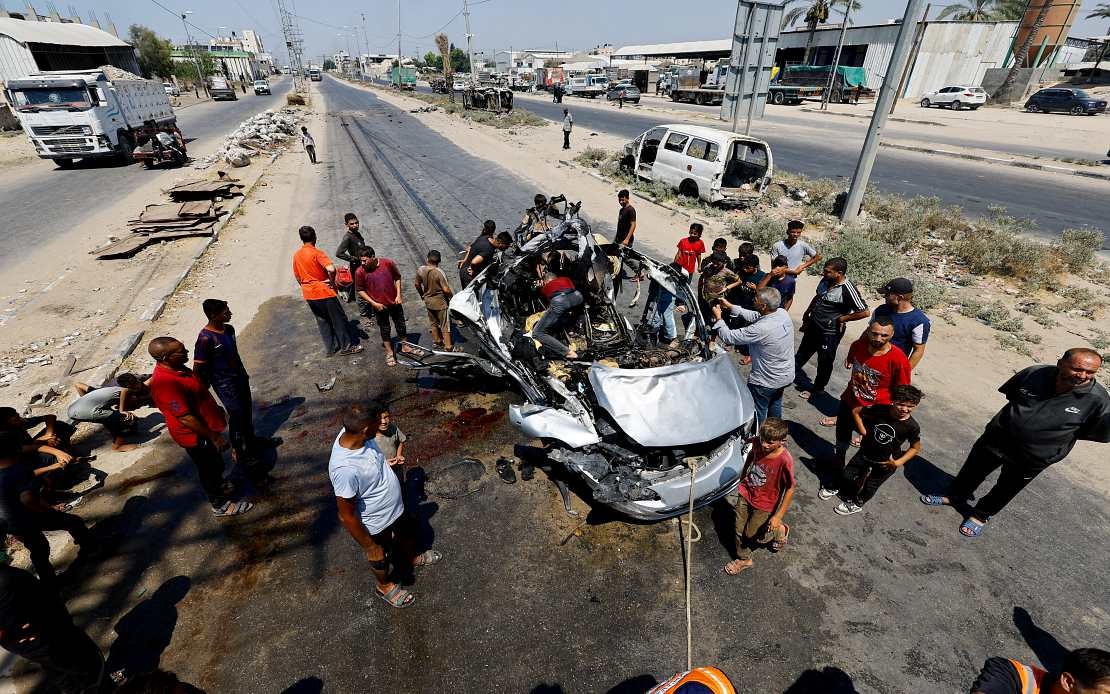
Palestinian leadership has moved to publicly challenge Israel's adherence to a ceasefire agreement, with presidential spokesperson Nabil Abu Rudeineh declaring on Monday that military operations persist despite an announced accord to commence the second phase of the Gaza truce. According to statements from the Palestine News and Information Agency (WAFA), the Palestinian official characterised the situation as one where an agreement exists in formal terms but remains meaningless amid ongoing bloodshed affecting civilian populations.
The assertion from Ramallah represents an escalation in Palestinian rhetoric regarding implementation failures, extending beyond merely documenting violations to directly questioning whether the international accord holds substance. Abu Rudeineh framed the disconnect between the agreement's text and ground reality as revealing fundamental gaps in the ceasefire's architecture, suggesting that the mechanism lacks sufficient enforcement provisions to compel compliance from the Israeli side. This interpretation suggests Palestinian frustration with a negotiated settlement that fails to deliver the comprehensive halt to hostilities that Palestinian leadership had expected.
Central to the Palestinian complaint is the accusation that Israel continues targeting refugee camps and villages, actions the Palestinian spokesperson characterised as part of a systematic campaign to undermine Palestinian territorial presence and eliminate the refugee question as a negotiating factor. Such operations, if verified, would represent a categorical breach of ceasefire provisions that typically mandate cessation of all military activity. The framing of these operations as deliberate policy rather than isolated incidents indicates Palestinian officials view them as strategic choices rather than operational mistakes, a distinction with significant implications for the viability of any negotiated settlement.
For Malaysian and Southeast Asian observers, the impasse reflects broader challenges inherent in implementing ceasefires in protracted asymmetric conflicts. The credibility gap between agreement text and field implementation mirrors patterns witnessed in other regional disputes, where formal truces frequently collapse under pressure from actors who prioritise strategic objectives over treaty obligations. The Palestinian position suggests that without robust international monitoring and enforcement mechanisms—elements that proved insufficient in previous Gaza conflicts—ceasefire agreements risk becoming temporary pauses that benefit the militarily dominant party more than populations seeking durable peace.
The Palestinian leadership has specifically called upon the United Nations Security Council to intervene directly, demanding that the international body compel Israeli authorities to implement the second phase of the agreement and halt all military operations across Gaza, the West Bank, and occupied East Jerusalem. This appeal represents a return to fundamental Palestinian strategy, which historically depends upon United Nations mechanisms to counterbalance military disparities. However, the continued impasse suggests that Security Council action remains constrained by geopolitical considerations, particularly the strategic positions of permanent members regarding Israeli security concerns.
Abu Rudeineh's condemnation extends to what he characterises as systemic impunity shielding Israeli military operations from accountability mechanisms. The Palestinian official contends that the absence of consequences for alleged violations of international humanitarian law creates perverse incentives for further breaches. This argument reflects longstanding Palestinian grievances regarding asymmetric application of international law, where they perceive Israeli actions as routinely exempt from the accountability standards applied to other parties in international disputes. The question of differential enforcement of international norms remains particularly sensitive across the Middle East and Global South, where many nations perceive the international legal framework as reflecting historically dominant power structures.
The spokesperson emphasised that regional stability remains impossible while what Palestinians term "occupation" continues and military operations persist. This formulation links the ceasefire dispute to the broader Israeli-Palestinian conflict regarding final status negotiations, territorial control, and the establishment of Palestinian statehood. The insistence that durable peace requires resolving underlying territorial and sovereignty disputes suggests that Palestinian leadership views temporary ceasefires as insufficient solutions without parallel progress toward permanent political settlement.
Palestinian demands explicitly incorporate the Arab Peace Initiative and the establishment of an independent Palestinian state with East Jerusalem as its capital. These negotiating positions reflect the Palestinian consensus on core issues, though they remain distant from Israeli positions. The invocation of international legitimacy resolutions indicates Palestinian strategy of grounding demands in established international consensus, though such consensus has proven insufficient to generate binding enforcement mechanisms. The reference to East Jerusalem's status particularly signals Palestinian non-negotiability on a question that has repeatedly deadlocked final status talks.
The implications for regional security extend beyond the immediate Israeli-Palestinian context. Malaysia and other Southeast Asian nations maintain diplomatic and economic relationships across the Middle East, creating stakes in conflict resolution and ceasefire stability. Repeated cycles of escalation followed by nominal ceasefires generate humanitarian crises affecting vulnerable populations and create instability affecting regional commerce and political relationships. The pattern described in Palestinian official statements—agreements failing to halt violence—raises questions about the effectiveness of current international mechanisms for conflict management in the region.
The dispute over ceasefire implementation also reflects divergent strategic calculations regarding the agreement's purpose. Palestinian officials appear to view the ceasefire as a mechanism for achieving lasting peace through cessation of hostilities, while Israeli operations suggest a different conception where the truce serves tactical purposes without precluding military pressure. These fundamentally different frameworks for understanding the agreement's purpose suggest that negotiations addressing only procedural aspects of ceasefires, rather than underlying political disputes, may be inherently unstable.
Moving forward, the credibility of future negotiated agreements appears dependent upon establishing verification mechanisms and enforcement provisions with genuine teeth. The pattern described by Abu Rudeineh, where formal agreements coexist with continued violence, undermines trust in the negotiation process itself. Palestinian willingness to engage in further ceasefire negotiations may depend upon international guarantees that agreements will be monitored comprehensively and violations will trigger predetermined consequences. Without such assurances, Palestinian leadership faces domestic pressure to abandon negotiation in favour of alternative strategies for challenging Israeli military operations.

