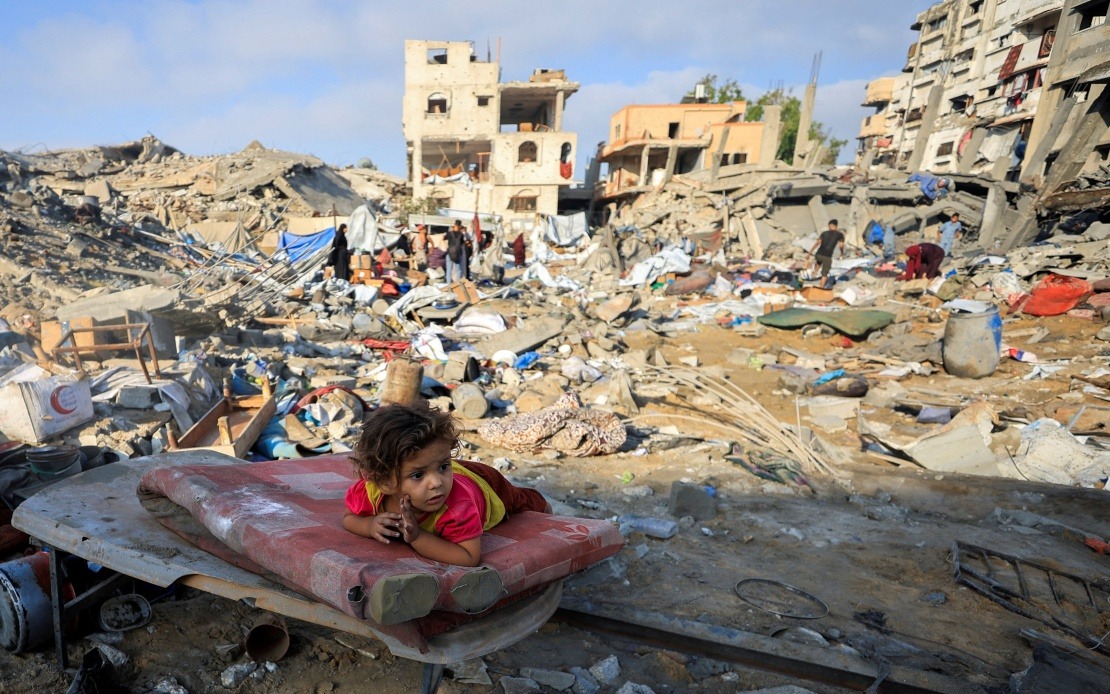
The Palestinian Ministry of Health has issued an urgent warning that the healthcare system across Palestinian territories is experiencing conditions without precedent in its history, marking a critical juncture that threatens to unravel decades of medical infrastructure and service delivery. The declaration comes as the ministry confronts a convergence of crises that extend beyond the immediate security challenges in Gaza to encompass systemic financial collapse and deteriorating conditions in the West Bank, creating a dual emergency that strains resources to breaking point.
At the centre of the crisis lies the ongoing military operations in the Gaza Strip, where hospitals and health facilities face relentless attacks while operating under extreme humanitarian constraints. The health system there has been reduced to functioning in what the ministry describes as extraordinarily harsh conditions, with medical personnel attempting to sustain lifesaving services despite mounting obstacles. The repeated targeting of healthcare infrastructure has compounded shortages of essential medicines, medical supplies, and fuel, leaving Gaza's medical sector unable to meet even baseline patient needs. These supply disruptions are not incidental but systematic, creating cascading failures throughout the healthcare chain and forcing difficult triage decisions that pit one patient's survival against another's.
The West Bank presents a different but equally troubling picture, where escalating Israeli military operations and restrictions by settlers are undermining healthcare delivery in occupied territories including Jerusalem. Medical personnel there face mounting obstacles to treating patients, with ambulance movements restricted and healthcare workers themselves becoming targets or displaced. The financial crisis affecting the Palestinian government compounds these physical barriers, limiting the ability of health authorities to compensate staff, maintain facilities, or purchase medicines even when supply corridors theoretically permit entry. This combination of military pressure, movement restrictions, and resource depletion creates a situation where healthcare professionals operate in a state of perpetual crisis management.
Health Minister Majed Abu Ramadan has framed the deterioration as extending beyond Palestinian borders into the realm of international law and moral responsibility. His position holds that restrictions on patient access to treatment, prevention of medical supply deliveries, and targeting of health facilities constitute serious violations of international humanitarian law that demand concrete international responses. This framing transforms the healthcare crisis from a regional dispute into a matter of global legal obligation, positioning intervention not as charitable assistance but as enforcement of binding international agreements regarding the protection of civilians and medical personnel during conflict. The minister's emphasis on international legal responsibility signals Palestinian strategy to mobilise enforcement mechanisms through institutions like the United Nations and International Court systems.
The ministry's appeal targets multiple international actors, specifically naming the United Nations, World Health Organisation, International Committee of the Red Cross, and influential states to exercise pressure on Israel to permit regular entry of medicines, medical supplies, fuel and humanitarian assistance into Gaza. The repetition and specificity of these requests indicate systematic blockage rather than occasional supply difficulties. The Palestinian health authorities have also called for establishment of safe humanitarian corridors that would guarantee unhindered movement of medical supplies, patients and wounded, alongside explicit protection for healthcare facilities and personnel under international humanitarian law. These demands reflect recognition that piecemeal solutions addressing one bottleneck leave the system vulnerable to collapse from other pressure points.
For Malaysia and Southeast Asian observers, the Palestinian healthcare crisis carries particular resonance given regional experiences with conflict-affected health systems and the principle of humanitarian access that undergirds international medical practice. The systematic obstruction of medical supplies and targeting of health facilities runs counter to foundational norms that most nations, including Malaysian ones, have endorsed through membership in international health and humanitarian organisations. The crisis also raises questions about the adequacy of existing enforcement mechanisms when nations with significant international standing face accusations of violating humanitarian law, and whether current structures can compel compliance or merely document violations.
The ministry has specifically acknowledged the exceptional circumstances facing Palestinian healthcare workers, many of whom have fled Gaza seeking safety or to pursue education and careers elsewhere. Rather than framing this exodus as abandonment, the ministry characterises these professionals as remaining integral to the Palestinian healthcare system despite extraordinary pressures that made their departure necessary. This recognition attempts to maintain institutional coherence and professional identity even as the physical basis for healthcare delivery collapses, signalling that Palestinian authorities view the current situation as temporary and reversible rather than structural or permanent. The positioning preserves future capacity to rebuild by maintaining professional networks and preventing brain drain from becoming permanent migration.
Within Gaza itself, the ministry has documented that healthcare workers continue functioning despite losing family members, experiencing displacement, coming under direct attack, and witnessing destruction of their homes and workplaces. The deliberate emphasis on these personal sacrifices serves multiple functions: it documents war crimes allegations, honours frontline workers, and implicitly questions how long such extraordinary commitment can be sustained without external support. Healthcare professionals have demonstrated that their humanitarian mission persists even under conditions of total war, but this resilience cannot substitute indefinitely for fuel, medicines, and functioning infrastructure. The ministry's praise for staff resilience contains an unspoken warning that without external intervention, even extraordinary dedication will eventually prove insufficient.
The West Bank health sector operates under different but equally severe constraints, with medical personnel providing services despite escalating military raids, restrictions on ambulance movement, and chronic financial difficulties that prevent staff compensation and facility maintenance. The geographic and operational separation between Gaza and West Bank health systems means that neither can draw on resources from the other, forcing each to confront shortages independently. Financial pressures affect both territories disproportionately because the Palestinian government lacks resources to sustain parallel health systems under optimal conditions, much less during conflict. The compounding of military pressure with financial crisis creates a situation where even occupied areas theoretically outside active conflict zones face healthcare deterioration through simple resource depletion.
The Palestinian Ministry of Health's commitment to maintaining services through resource management and coordination with governmental, international, and community partners appears more aspirational than immediately achievable given the depth of current constraints. The ministry's stated strategy emphasises efficiency of resource utilisation, resilience of systems, and mobilisation of political and financial support, yet each of these elements faces fundamental obstacles. Efficiency can only extend existing shortages so far before basic functioning becomes impossible. Resilience requires some minimum threshold of input resources below which systems cannot function. Political mobilisation depends on international actors willing to expend political capital on Palestinian healthcare, a commodity that has proven difficult to secure in sufficient quantities. The declaration of unprecedented crisis thus serves as both warning and implicit appeal for intervention at scales previously considered unnecessary.

