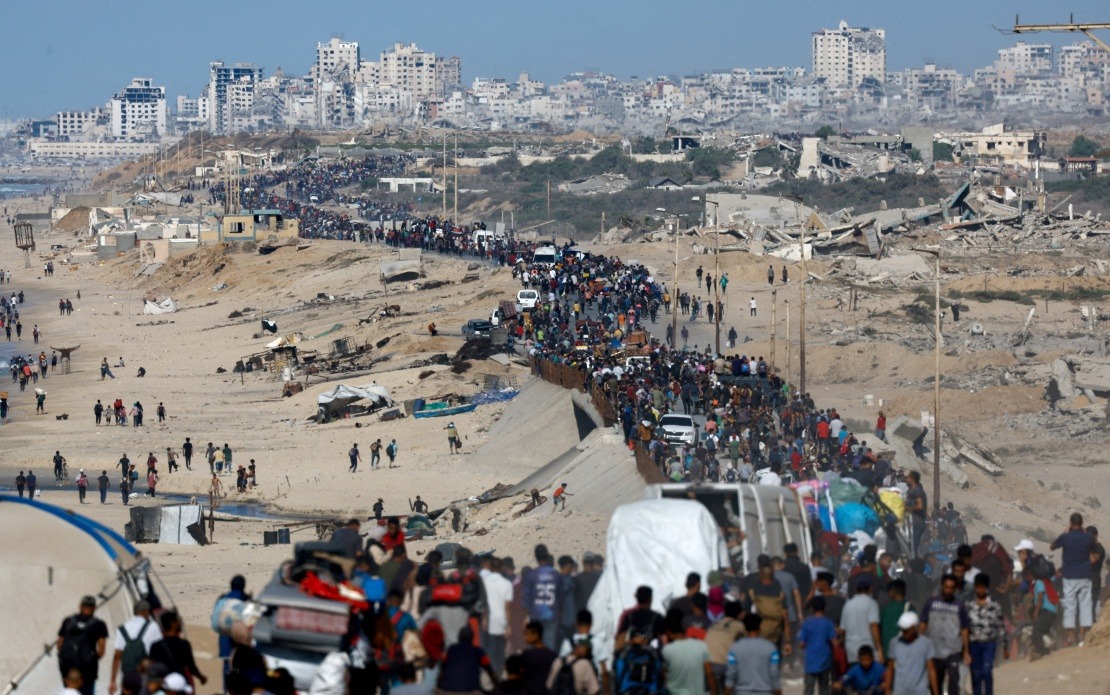
The Palestinian Foreign Ministry has mounted a strong defence of the United Nations Relief and Works Agency for Palestine Refugees in the Near East (UNRWA), rejecting what it characterises as coordinated attempts to weaken the agency's operational mandate across the occupied Palestinian territories. The statement, issued from Ramallah on Wednesday, underscores escalating international tensions surrounding the future of humanitarian assistance mechanisms in Gaza at a time when civilian needs remain acute following more than nine months of intensive military operations.
UNRWA serves as a critical institutional pillar supporting millions of Palestinians across Gaza, the West Bank including East Jerusalem, and refugee camps in neighbouring countries. The agency's portfolio spans education, primary healthcare, social welfare programmes, and emergency relief operations—services that Palestinian authorities argue have become indispensable given the scale of displacement and infrastructure damage across the territories. The Foreign Ministry's characterisation of UNRWA as an "irreplaceable" and "indispensable lifeline" reflects Palestinian dependence on the agency's capacity to deliver services where local governance structures remain constrained by occupation and ongoing conflict.
Palestinian officials emphasise that UNRWA operates under an explicit international legal framework established by UN mandate and operates in compliance with international law. This framing is strategically significant, as it positions challenges to UNRWA's operations as violations of established international norms rather than mere policy disagreements. The ministry stressed that the agency's legitimacy derives not from the preferences of any single state but from decades of UN institutional recognition and the legal rights of Palestinian refugees as enshrined in international instruments, particularly United Nations General Assembly Resolution 194.
The statement reflects Palestinian concerns that efforts to circumscribe UNRWA's role represent an attempt to address symptoms of displacement without confronting underlying causes. Palestinian officials argue that humanitarian assistance, while necessary, cannot substitute for what they describe as "inalienable rights" of refugees—a reference to the international legal principle of refugee return and compensation that remains at the core of Palestinian negotiating positions. This distinction carries profound implications for any future political settlement, as it signals Palestinian resistance to humanitarian solutions that might implicitly abandon claims to return or reparations.
Geographical and political terminology has become another flashpoint in Palestinian statements regarding UNRWA's future. The Foreign Ministry explicitly rejected language that fragments Palestinian geography, reaffirming that Gaza constitutes "an integral part of the occupied State of Palestine" rather than a separate territorial entity. This linguistic emphasis counters proposals that might treat Gaza as a distinct administrative unit under alternative governance arrangements, reflecting Palestinian fears that UNRWA restructuring could facilitate permanent territorial partition inconsistent with Palestinian national aspirations.
The timing of Palestine's statement coincides with recent assertions from Trump's Board of Peace, an initiative established in January to develop settlement proposals for Gaza. The Board stated publicly that "UNRWA has no place in the new Gaza," framing the agency's operations as perpetuating dependency rather than enabling recovery. This formulation presents humanitarian assistance and political solutions as incompatible rather than complementary, positioning UNRWA's presence as an obstacle to post-conflict reconstruction rather than a necessity for managing civilian welfare during transition periods.
The Board of Peace initiative represents a significant diplomatic development for Malaysian and Southeast Asian observers. Established under Trump's leadership following the November UN Security Council Resolution on Gaza, the Board convened its inaugural meeting in February at the US Institute of Peace in Washington. The initiative constitutes phase two of a twenty-point plan intended to end Gaza conflict, suggesting that international peace architecture may increasingly marginalise established UN agencies in favour of alternative administrative arrangements. Such developments carry implications for UN system effectiveness and the precedential value of challenging agency mandates during conflict resolution processes.
Palestinian casualties and infrastructure devastation provide contextual weight to Ramallah's defence of UNRWA. According to Palestinian figures, military operations since October 2023 have resulted in over 73,000 deaths and more than 173,000 injuries, with the majority being women and children. Against this backdrop, Palestinian officials frame UNRWA's continued operations as essential infrastructure for a population experiencing extraordinary humanitarian stress, making arguments for the agency's termination appear particularly contentious from the Palestinian perspective.
The Palestinian statement calls upon "all states, institutions and international organisations" to respect UNRWA's mandate, privileges, and immunities under international law, seeking to mobilise international opinion against prospective restrictions. This appeal extends beyond statements to encompass protection of personnel and facilities, implying Palestinian concerns that UNRWA operations face physical as well as bureaucratic threats. For Malaysia and other Southeast Asian nations maintaining principled stances on Palestinian rights, the statement represents an invitation to publicly affirm support for established UN mechanisms and resist alternative governance frameworks that might undermine Palestinian political claims.
The broader strategic question underpinning these disputes concerns the architecture of post-conflict Palestinian administration. Whether UNRWA continues operations signals whether international humanitarian mechanisms will remain central to Palestinian institution-building or whether new administrative arrangements will supplant existing structures. Palestinian insistence on UNRWA's indispensability reflects determination to preserve institutional continuity and international legal anchoring of refugee rights regardless of how immediate governance arrangements evolve. The coming months will reveal whether international consensus supports Palestinian positions or whether alternative mechanisms increasingly marginalise UNRWA from operational roles in Gaza reconstruction.

