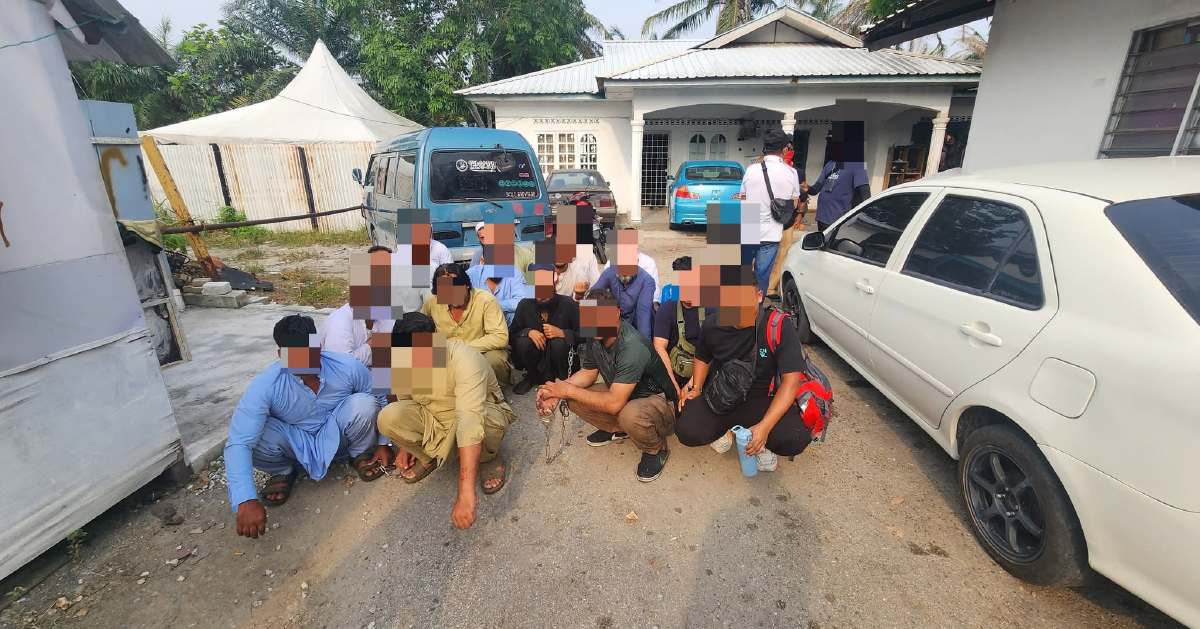
A major crackdown on vehicle parts trafficking has resulted in the arrest of twenty individuals, including a Pakistani national believed to be the operational mastermind behind a sprawling syndicate that has been systematically stripping and reselling motor vehicle components across the Klang Valley. The Immigration Department conducted the enforcement action at a premises on Jalan Kapar in Klang yesterday, delivering a significant blow to what authorities characterise as an organised criminal network that has likely caused substantial losses to vehicle owners and insurance companies throughout the region.
The alleged ringmaster is a foreign national whose involvement at the top levels of the syndicate suggests a transnational dimension to the operation, pointing to the increasingly sophisticated networks through which stolen vehicle parts flow across Southeast Asia. The fact that the leadership comprises non-Malaysian nationals underscores how organised crime groups leverage immigration vulnerabilities and operational bases in Malaysia to facilitate regional smuggling activities. Intelligence suggests this particular network may have been active for an extended period, gradually escalating its operations whilst maintaining a low profile through frequent relocation and compartmentalisation of activities.
Authorities indicate that the syndicate's modus operandi involved acquiring vehicles, likely through theft or acquisition of distressed inventory, then systematically dismantling them into component parts for resale through established channels. The Klang location is strategically significant, given its proximity to Port Klang and its established networks of automotive workshops, spare parts dealers, and informal trading channels that provide convenient distribution routes for illicit goods. The operation appears to have exploited Malaysia's porous logistics infrastructure and the difficulty in tracking high-value automotive components once they enter the secondary market.
The twenty arrests represent the culmination of what appears to have been an extensive investigative process, suggesting that authorities had been building their case over several months through surveillance, intelligence gathering, and likely cooperation between the Immigration Department and other enforcement agencies. The decision to move simultaneously against multiple individuals indicates a coordinated operation designed to prevent the syndicate from dismantling its infrastructure or destroying evidence before suspects could be apprehended. This tactical approach reflects growing sophistication in how Malaysian law enforcement tackles organised crime networks.
For Malaysian vehicle owners and insurers, this bust provides temporary relief but also raises uncomfortable questions about the prevalence of similar operations that remain undetected. The stolen vehicle parts market represents a multi-billion-ringgit underground economy across Southeast Asia, with components finding their way into repair workshops, export shipments bound for markets in South Asia and the Middle East, and informal retail channels. The ease with which vehicles can be acquired, dismantled, and their components laundered into legitimate supply chains makes this form of organised crime particularly difficult to combat.
The Immigration Department's role in spearheading this operation highlights how vehicle parts trafficking increasingly falls within immigration enforcement purview, particularly when foreign nationals lead the criminal enterprises. This interdepartmental angle suggests that Malaysian authorities are adopting a more comprehensive approach to tackling organised crime, recognising that immigration violations and criminal activity often proceed in tandem. The presence of foreign leadership in this syndicate may actually prove advantageous for prosecution, as immigration violations provide additional charges that can supplement trafficking and theft allegations.
Investigators will now focus on establishing the full extent of the network's operations, including determining how many vehicles were dismantled, the scale of financial proceeds, and the identities of downstream buyers who purchased components knowingly or unknowingly. Tracing the supply chain becomes increasingly difficult the further removed buyers are from the original point of theft, though financial transactions and vehicle registration records may provide investigative leads. The syndicate likely maintained detailed records of transactions, vehicle sources, and buyer contacts, which authorities will analyse to identify additional suspects and uncover the network's full operational scope.
The detention of the Pakistani mastermind raises questions about how such individuals establish themselves in Malaysia and build criminal infrastructure without triggering earlier intervention. Border control records, visa issuance policies, and monitoring of known criminal associates warrant review to prevent similar networks from establishing footholds in future. The fact that someone orchestrating a major syndicate operated with sufficient freedom to coordinate twenty associates suggests potential gaps in how Malaysia monitors activities of foreign nationals engaged in commercial enterprises, particularly those operating in the automotive sector.
Regional implications are significant, as vehicle parts traffickers operate across Southeast Asian borders with relative impunity, exploiting different enforcement standards and limited cross-border intelligence sharing. Stolen Malaysian vehicles and components regularly flow through Thailand, Indonesia, and Bangladesh, where demand for affordable spare parts remains high and enforcement mechanisms weaker. Enhanced cooperation between ASEAN nations on vehicle trafficking intelligence and coordinated enforcement operations would substantially increase the cost of operating such syndicates and disrupt their established supply chains.
This arrest signals Malaysia's growing intolerance for organised automotive crime, particularly when foreign nationals attempt to weaponise Malaysia's geographic advantages and infrastructure for transnational smuggling. The success of this operation may serve as a template for future enforcement actions targeting similar networks, though the rapid adaptation of criminal groups suggests authorities must remain vigilant against new variants of vehicle parts trafficking that emerge to exploit market demand.

