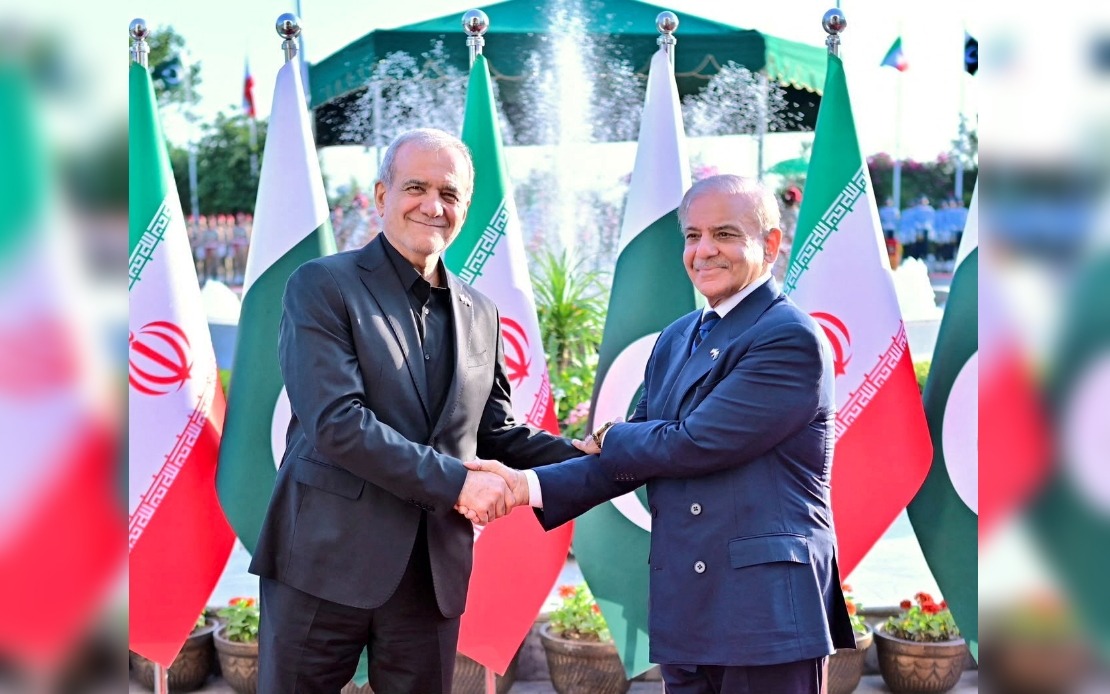
Pakistan's Prime Minister Shehbaz Sharif has moved to reinforce diplomatic ties with Iran by firmly endorsing Tehran's ballistic missile programme, declaring that weapons development was deliberately excluded from the memorandum of understanding the two countries reached with the United States earlier this month. Speaking alongside visiting Iranian President Masoud Pezeshkian in Islamabad on Tuesday, Sharif contended that Iran should not face discriminatory treatment regarding its defensive capabilities, particularly when other nations maintain similar arsenals without international objection.
The timing of Sharif's remarks carries significant weight within regional geopolitics. The US-Iran agreement, negotiated with Pakistani mediation on June 17, established a framework for de-escalation following months of military tensions. Yet by publicly reaffirming that ballistic missiles were never part of these negotiations, Sharif appears intent on preventing any future pressure on Iran to curb its weapons development. His comments suggest that despite hosting the peace talks, Pakistan views the missile question as fundamentally separate from broader diplomatic resolutions, a distinction that could prove consequential as implementation of the understanding unfolds.
Sharif's articulation of the Pakistani position reflects a calculated diplomatic strategy. By stating explicitly that the Iranian delegation had no interest in discussing missiles during negotiations, he effectively shields Tehran from anticipated international criticism that might follow the peace accord. This protective stance reveals how Pakistan, long positioned as a bridge between competing powers in South and West Asia, continues balancing its relationships while supporting allies' security prerogatives. The prime minister's emphasis on Pakistan's mediation role also signals that Islamabad expects recognition for its diplomatic labour, having previously facilitated a temporary ceasefire between Washington and Tehran in April.
The substance of Sharif's argument rests on a principle of equal treatment in international security arrangements. He emphasised that permitting some nations to maintain ballistic capabilities whilst denying others would constitute unjust double standards. This rhetoric aligns with broader Iranian narratives about sovereignty and non-discrimination in matters of national defence. By amplifying this argument publicly, Sharif lends Pakistan's weight to Iran's position during a moment when Tehran faces potential external pressure to accept constraints beyond those formally agreed with the United States.
Pezeshkian's reciprocal comments during the joint appearance reinforced the Iranian perspective that defensive systems represent non-negotiable elements of national security doctrine. The Iranian president invoked hypothetical scenarios involving Israeli military action to justify Tehran's missile programme, explicitly linking defensive capabilities to protecting civilian populations from regional threats. His reference to Gaza suggested that without robust deterrence, Iran might face similar circumstances, a framing that transforms the missile question from an arms control issue into an existential security matter in the Iranian strategic calculus.
The ceremonial dimensions of the Iranian president's visit underscored the significance Pakistan attaches to its relationship with Tehran. Pezeshkian's arrival in Islamabad featured a military honour guard of six Pakistani Air Force fighter jets, a 21-gun salute, and reception by both Shehbaz Sharif and President Asif Ali Zardari. These pageantries communicate unmistakable messages about partnership and mutual respect, particularly important during a period when Iran's international standing faces scrutiny over its weapons programmes and regional activities. For Pakistan, the optics of hosting Iran's president with such ceremonial warmth demonstrate commitment to the relationship despite potential complications arising from broader international dynamics.
Sharif's acknowledgment of spoilers attempting to undermine the US-Iran understanding introduces another analytical dimension. His reference to global actors working to sabotage the peace accord, combined with implicit criticism of Israel as the principal obstacle to regional stability, positions Pakistan as defending a fragile diplomatic achievement against malign interference. This framing allows Sharif to simultaneously support Iran's security concerns whilst suggesting that external powers, rather than Iranian defence postures, represent the genuine threat to regional peace. Such rhetoric serves multiple audiences—reassuring Iran of Pakistani loyalty whilst potentially signalling to the international community that Islamabad views the agreement as vulnerable to destabilisation.
The recent comments by US President Donald Trump, conceding that Iran's possession of ballistic missiles aligns with other nations' practices, provided diplomatic cover for Pakistani endorsements of Iranian capabilities. Trump's June 17 statement essentially normalised the principle Sharif articulated, suggesting that American tolerance for Iranian missiles might have shifted or that domestic political considerations in the United States influenced Washington's negotiating position. This American positioning potentially facilitated Sharif's public backing of Iran's weapons programme by reducing the risk that Pakistan's stance would directly contradict stated US policy.
For Malaysia and broader Southeast Asia, the Pakistan-Iran alignment on missile questions carries implications for regional security architecture. As these nations deepen cooperation in energy, trade, and defence matters, their collective position on weapons development and deterrence strategies may influence how developing nations throughout Asia approach similar issues. Pakistan's willingness to publicly defend Iran's military capabilities without extracting reciprocal concessions suggests that South Asian powers increasingly view missile development as legitimate expressions of sovereignty rather than proliferation concerns requiring international management.
The structural context shaping this diplomatic moment deserves emphasis. Pakistan's February experience with Israeli and American strikes on Iranian territory—referenced by both leaders—fundamentally altered threat perceptions in Tehran. These attacks vindicated, in Iranian eyes, the indispensability of robust defensive capabilities. Pakistan's recognition of this reality, expressed through Sharif's unambiguous endorsement, represents acknowledgment that Middle Eastern security dynamics have shifted, and that Iran's deterrence posture commands respect rather than objection from neighbouring states.
Looking forward, the statements from Islamabad will likely feature prominently in international discussions about implementation of the US-Iran understanding. Iran can reference Pakistani backing when resisting international pressure for additional concessions on missiles, whilst Western governments may view the comments as evidence that the peace accord contains insufficient safeguards. Pakistan's positioning thus carries consequences extending well beyond immediate bilateral relations, potentially influencing how various powers interpret commitments made during the June negotiations.
The visit also demonstrates how Pakistan continues leveraging its geographic position and diplomatic history to maintain relevance in regional affairs. By hosting high-level Iranian delegations and offering unequivocal support for Tehran's strategic priorities, Islamabad reinforces its value as an interlocutor and mediator whilst simultaneously deepening ties with a crucial neighbour. This approach reflects enduring Pakistani calculations about navigating relationships with both Western powers and regional actors, a balancing act that recent diplomatic successes appear to have emboldened.