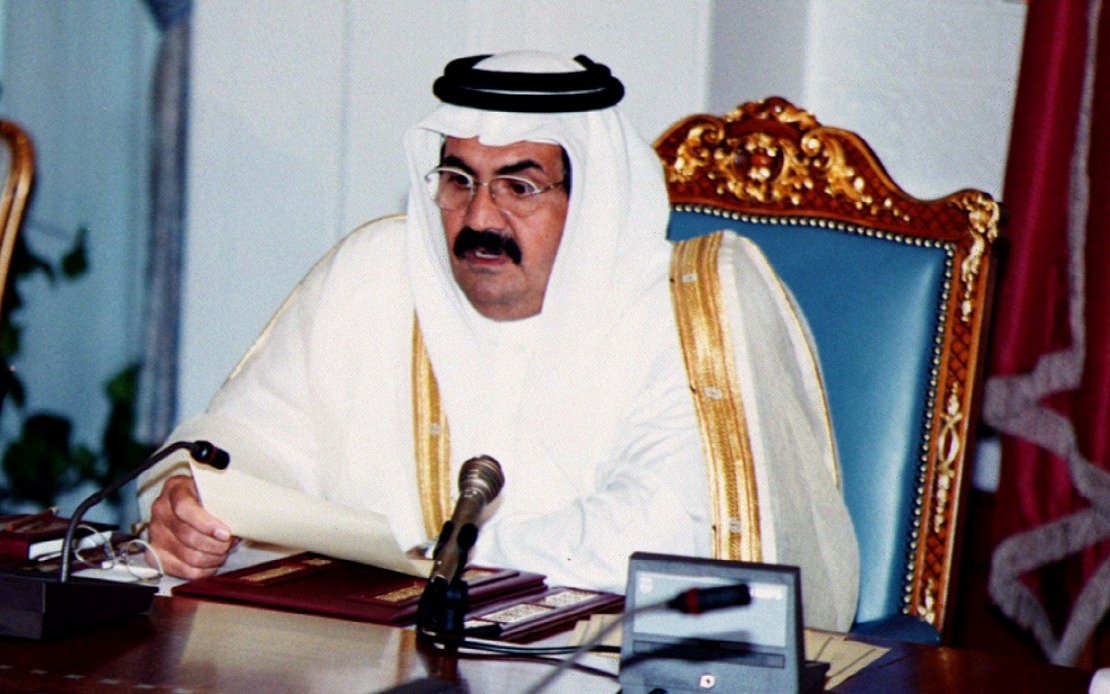
Pakistan's Prime Minister Shehbaz Sharif and Maldives President Mohamed Muizzu made their way to Qatar on Monday to convey their sympathies to the Qatari leadership in the wake of former Emir Sheikh Hamad Bin Khalifa Al Thani's passing. The diplomatic visits underscore the regional significance of the late ruler, whose three-decade tenure fundamentally transformed the Gulf state into a global power.
Shehbaz Sharif's delegation comprised several high-ranking officials, reflecting the importance Pakistan attaches to its relationship with Qatar. Accompanying the prime minister were his brother Nawaz Sharif, who previously served as Pakistan's prime minister, alongside Deputy Prime Minister and Foreign Minister Senator Ishaq Dar, and Information Minister Attaullah Tarar. The composition of the delegation signals both familial support and institutional gravitas in acknowledging Qatar's loss.
Sheikh Hamad Bin Khalifa Al Thani, who governed Qatar from 1995 until his voluntary abdication in 2013, died on Sunday at the age of 74. His departure marks the end of an era that witnessed Qatar's meteoric rise from a modest petroleum-dependent economy to a diversified international player with significant soft power influence. The timing of his death has prompted regional governments to formally recognise his contributions to the Arabian Peninsula and beyond.
Bangladesh Prime Minister Sheikh Hasina, through official statements, emphasised the late emir's enduring influence across multiple domains. She highlighted how Sheikh Hamad's initiatives in regional stability, economic diversification, educational advancement, and international diplomacy would remain exemplary for future generations. These tributes reflect the widespread acknowledgment among South and Southeast Asian nations of his role in fostering connections between the Gulf and the broader Islamic world.
Maldives President Mohamed Muizzu's visit carries particular significance given the Indian Ocean island nation's strategic position and its economic ties with Gulf states. His journey to Qatar demonstrates the Maldives' commitment to maintaining strong bilateral relations with a key regional power during a period of institutional transition. The presence of both South Asian leaders underscores how Sheikh Hamad's reign created diplomatic pathways that extended far beyond the Middle East.
Pakistan and India have each declared Monday as a national day of mourning, an exceptional gesture that highlights the profound respect accorded to the late emir across the Indian subcontinent. This coordinated display of respect, despite the longstanding tensions between Islamabad and New Delhi, testifies to Sheikh Hamad's universal standing in the Islamic world and his reputation as a stabilising force in regional affairs.
The succession of power to Sheikh Tamim Bin Hamad Al Thani, who assumed full authority following his father's abdication, has proceeded smoothly, and the current emir now receives the formal condolences of neighbouring and allied states. International leaders have universally praised Sheikh Hamad's stewardship during a transformative period. Under his vision, Qatar hosted the 2022 FIFA World Cup, emerged as a major financial hub, and positioned itself as a mediator in international disputes.
For Malaysia and other Southeast Asian nations, Sheikh Hamad's legacy carries implications for understanding how smaller states can leverage natural resources and strategic positioning to achieve outsized global influence. His emphasis on education, investment in soft power through media and cultural institutions, and pragmatic foreign policy offer lessons for regional governments. The diplomatic manoeuvres surrounding his death and succession demonstrate the interconnected nature of modern Gulf politics with South and Southeast Asian affairs.
The visits by Pakistan and Maldives officials represent more than ceremonial obligation. They reflect the consolidation of relationships that were nurtured during Sheikh Hamad's tenure and now transition to the new emir's administration. These interactions provide opportunities for both nations to reaffirm their positions within Qatar's expanding circle of partners and to position themselves favourably in the coming years of Sheikh Tamim's reign. The diplomatic traffic to Doha will likely intensify as global leaders queue to acknowledge the transition and establish working relationships with the new administration.

