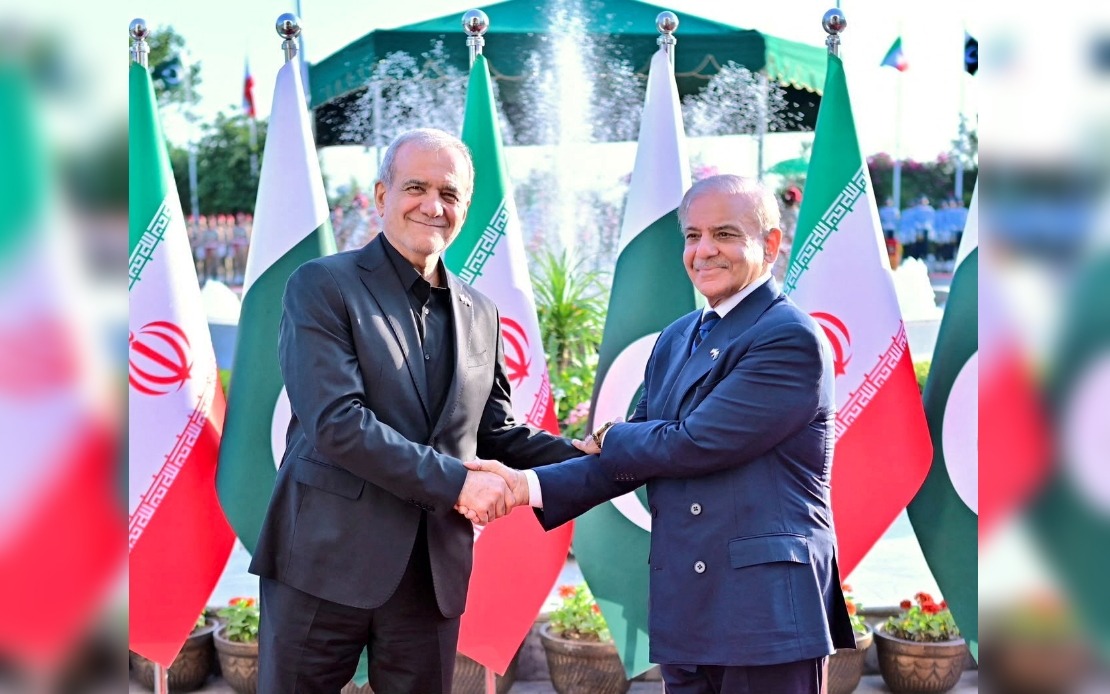
Pakistan and Iran have signalled their intent to resurrect the Islamabad-Tehran-Istanbul freight train service, a project that could reshape trade patterns across South Asia, the Middle East and beyond. During talks in Islamabad on Wednesday, Pakistan's Railway Minister Muhammad Hanif Abbasi and Iranian Interior Minister Eskandar Momeni explored the practical steps needed to restore the dormant corridor, which once promised to integrate markets across three countries and extend commercial reach towards Central Asia, Russia and Europe.
The ITI service carries particular significance for Pakistan's regional ambitions. By knitting together rail networks from the Turkish border through Iran to Pakistan's western edge, the corridor would create an alternative trade artery to maritime routes, reducing transit times and costs for bulk commodities. For Malaysian traders and manufacturers, such regional infrastructure developments matter deeply, as they reshape supply chains and create new opportunities for companies seeking to export to or source from Pakistan, Iran and beyond.
The freight train service previously operated until 2010, when disruptions and geopolitical tensions caused it to cease. A decade later, in December 2021, efforts to resurrect the link proved initially successful, with trains resuming movement between the three nations. However, this revival proved short-lived. By 2022, operational hurdles and logistical complications prompted a second suspension, leaving the ambitious project in limbo and raising questions about the sustainability of such undertakings in volatile regions.
Abbasi outlined an ambitious domestic investment to support cross-border connectivity. Pakistan is currently upgrading its Main Line-3 railway, the crucial artery running through Sindh and Balochistan that serves as the principal rail gateway to Iran. This modernisation project represents a significant commitment of resources and engineering capacity, with work slated to begin in the current fiscal year and completion targeted for December 2029. The seven-year timeline underscores the scale of infrastructure work required to enable reliable freight operations along this historically difficult corridor.
Iran's complementary investment demonstrates mutual commitment to restoring the corridor. Momeni indicated that Iran expects to complete modernisation of the Zahedan–Mirjaveh railway line within a month, removing one critical bottleneck on the Iranian side of the border. However, the Iranian minister placed responsibility squarely on Pakistan to complete the final piece of this puzzle: a standard-gauge rail line from Mirjaveh to Taftan, both located in Balochistan. Without this Pakistani contribution, even fully modernised Iranian infrastructure would remain isolated, unable to feed trains efficiently towards Istanbul and beyond.
The infrastructure challenges here extend beyond simple engineering. The Balochistan region presents particular difficulties due to terrain, security considerations and limited existing capacity. Standard-gauge conversion represents a major undertaking that requires not only capital investment but also sustained coordination with provincial authorities and international partners. The fact that both nations are discussing these details suggests serious intent, yet the historical record of false starts demands scepticism about timelines and completion prospects.
For Malaysian companies interested in Central Asian and Middle Eastern markets, success in reviving the ITI corridor could fundamentally alter commercial calculations. A functioning multi-national rail service would provide stable, cost-effective transport for containerised goods, raw materials and machinery. The Suez Canal route, currently the dominant path for Asian exports to Europe and the Middle East, carries geopolitical risks and piracy threats. An overland rail alternative through Pakistan and Iran could offer a safer, potentially cheaper option for certain cargo categories.
The corridor's strategic importance extends beyond commerce. By strengthening Pakistan-Iran-Turkey connectivity, the project promotes regional integration and reduces isolation. For Pakistan specifically, improved trade access to Turkey and beyond Europe could help offset geographic constraints and strengthen economic ties with nations beyond traditional South Asian partnerships. Iran gains similar leverage in accessing Asian markets through Pakistani ports and railways. Turkey benefits from integrated supply chains extending eastward into South and Central Asia.
Yet significant obstacles remain. Security concerns in Balochistan have persistently hindered infrastructure development. Cross-border railway operations require sophisticated customs, immigration and quarantine procedures, which Pakistani and Iranian bureaucracies must harmonise. Regulatory frameworks for international freight must accommodate Turkish standards and preferences. The geopolitical relationship between Pakistan and Iran, while generally stable, occasionally experiences friction over border security, water rights and sectarian tensions.
Momeni's emphasis on Pakistan completing the Mirjaveh-Taftan line suggests Iranian frustration at unequal progress. If Pakistan completes its ML-3 upgrade but delays the border extension, the entire corridor remains broken. Conversely, if Iranian infrastructure advances faster than Pakistani capacity, momentum may dissipate. The sequencing and pace of infrastructure investment across borders presents familiar coordination problems that have derailed similar regional projects elsewhere.
The discussions also reflect broader regional trends. Both Pakistan and Iran face economic pressures and seek new revenue sources through transit fees and increased bilateral trade. Türkiye's integration into Central Asian trade networks makes it an obvious hub for eastbound commerce. Pakistan, positioned as the gateway between South Asia and beyond, cannot afford to miss opportunities to develop infrastructure that enhances its role as a transit nation.
The timeline to December 2029 offers a reasonable window, assuming funding remains secure and political commitment holds firm. However, infrastructure projects in conflict-affected regions frequently experience delays, cost overruns and scope adjustments. Malaysian stakeholders monitoring this development should prepare contingency plans assuming slower-than-announced progress while positioning to capitalize on any successful implementation.

