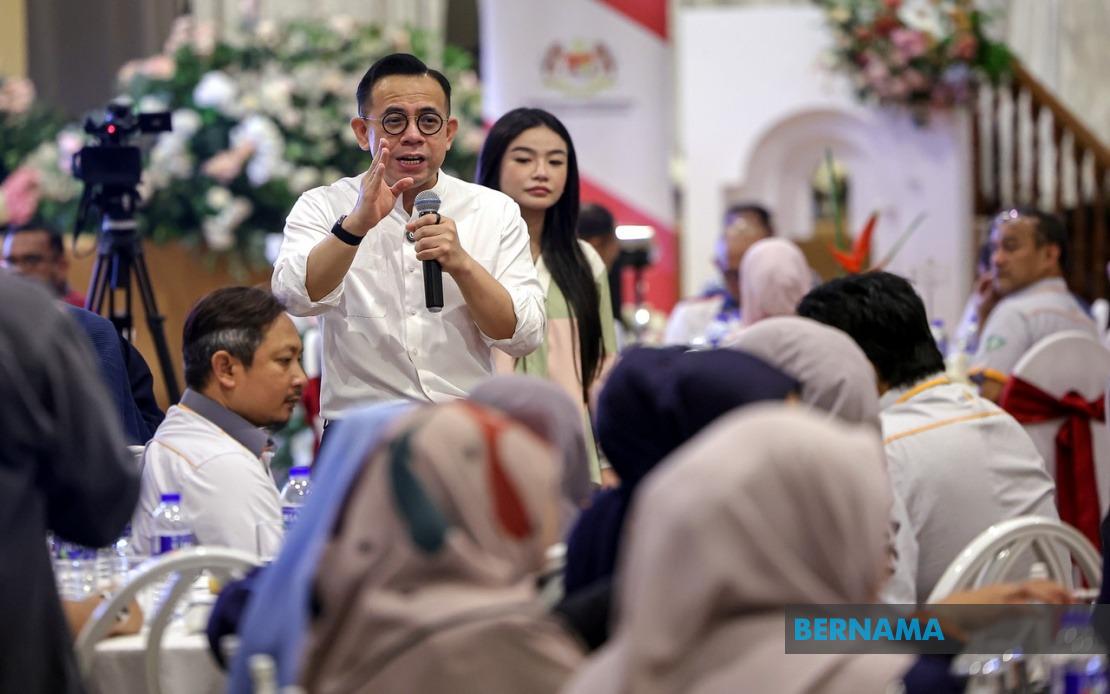
Pakatan Harapan is positioning its Negeri Sembilan state election manifesto not as a collection of aspirational pledges but as a concrete extension of programmes already delivering tangible results to residents across the state. Speaking in Seremban on Monday, Penang DAP chairman Steven Sim drew a sharp distinction between PH's approach and conventional campaign promises, arguing that the coalition's advantage lies in its ability to point to real achievements rather than rhetoric alone.
The manifesto unveiled by PH contains ten key commitments designed to appeal to Negeri Sembilan voters ahead of polling day on August 1. According to Sim, who also serves as Entrepreneur Development and Cooperatives Minister at the federal level, these pledges should be understood as enhancements and expansions of existing initiatives that have already demonstrated effectiveness within the state. This framing is strategically significant, as it allows PH to claim continuity while presenting itself as forward-thinking rather than static.
Sim's comments, made during an assembly of the Negeri Sembilan Ministry of Entrepreneur Development and Cooperatives staff and agencies, underscore a deliberate messaging strategy heading into the 16th state election. By tying the manifesto to Menteri Besar Aminuddin Harun's administration, PH seeks to leverage the incumbent's tenure as evidence that its proposals deserve voter confidence. The coalition's ability to demonstrate policy implementation through an actual government record distinguishes it from opposition parties without such incumbency, a crucial advantage in regional elections where economic management and visible infrastructure often sway outcomes.
One of the manifesto's flagship commitments involves establishing the Youth Entrepreneurs Fund, or TUB, which falls under the purview of the federal Entrepreneur Development and Cooperatives Ministry. This initiative exemplifies PH's approach of building on existing institutional frameworks while introducing new mechanisms to address specific constituencies. Young entrepreneurs represent a demographic increasingly important to state-level economic strategies across Southeast Asia, and Negeri Sembilan's focus on this group signals awareness of demographic shifts and employment trends. The fund's implementation would likely involve coordination between federal and state agencies, reflecting the interconnected nature of governance in Malaysia's federal system.
Sim emphasised that the difference between PH's offering and typical campaign manifestos lies in demonstrability and experiential evidence. While any political party can articulate promises on paper, the capacity to deliver requires institutional machinery, fiscal resources, and administrative competence. For voters in Negeri Sembilan, the question becomes whether past performance under PH governance suggests future capability. This appeal to track record is particularly potent in contexts where governance failures have been recent or visible, as voters often employ backward-looking judgments when assessing forward-looking claims.
The political context surrounding this election involves broader questions about coalition stability and policy consistency at both state and federal levels. Negeri Sembilan has been a relatively stable state for PH, and maintaining control requires not merely mobilising the base but convincing swing voters and fence-sitters that continued PH governance represents a better option than alternatives. The manifesto's emphasis on economic performance sustainability and tangible benefits directly addresses voter concerns about livelihoods, consumer prices, and employment opportunities—issues that cut across urban and rural constituencies alike.
Federal government support for Negeri Sembilan's economic development trajectory forms another dimension of PH's campaign messaging. Sim indicated that his ministry would intensify collaboration with the state government to support entrepreneur development, suggesting that a PH victory would strengthen resource flows from Putrajaya to Seremban. This vertical alignment—where federal and state governments operate under the same coalition—typically facilitates smoother policy coordination and potentially faster disbursement of development allocations. Opposition-controlled states often experience friction with federal allocations, a structural disadvantage that incumbent coalitions consistently highlight during campaigns.
The Election Commission's schedule—early voting on July 28 and general polling on August 1—compresses the campaign period, placing strategic emphasis on pre-election messaging and voter mobilisation efficiency. During such compressed timeframes, the ability to reference concrete accomplishments rather than vision statements becomes especially valuable, as voters have limited time to weigh complex arguments. PH's manifesto strategy of emphasising proven track record aligns well with this compressed timeline, requiring less persuasive effort than building enthusiasm for entirely new proposals.
For Malaysian observers and Southeast Asian regional analysts, the Negeri Sembilan election represents a litmus test for PH's continued electoral viability following its federal government formation in 2022. The coalition's capacity to retain state governments while holding federal power indicates either strengthening or deteriorating public confidence. A strong PH performance in Negeri Sembilan would suggest that voter dissatisfaction with the federal government has not yet translated into wholesale rejection at the state level, whereas losses might signal erosion of confidence across governance levels.
The emphasis on programmes that have "already proven effective" also carries implicit messaging about governance stability and policy consistency. Negeri Sembilan residents who have benefited from specific state initiatives would recognise these references, creating opportunities for testimonial-style campaigning where beneficiaries become informal advocates for PH policies. This grassroots validation mechanism often proves more persuasive than politician-delivered talking points, particularly in communities where direct experience with government services remains fresh and visible.
Sim's role as a federal minister speaking on behalf of a state-level campaign illustrates the integration of political messaging across governance levels. The federal ministry's commitment to supporting Negeri Sembilan entrepreneurs suggests that economic development remains a central pillar of PH's state-level positioning. Given Negeri Sembilan's role as a semi-urbanised state with mixed agricultural and industrial economic bases, policies targeting entrepreneurs—particularly younger cohorts—align with diversification objectives and employment generation priorities that cut across constituencies.

