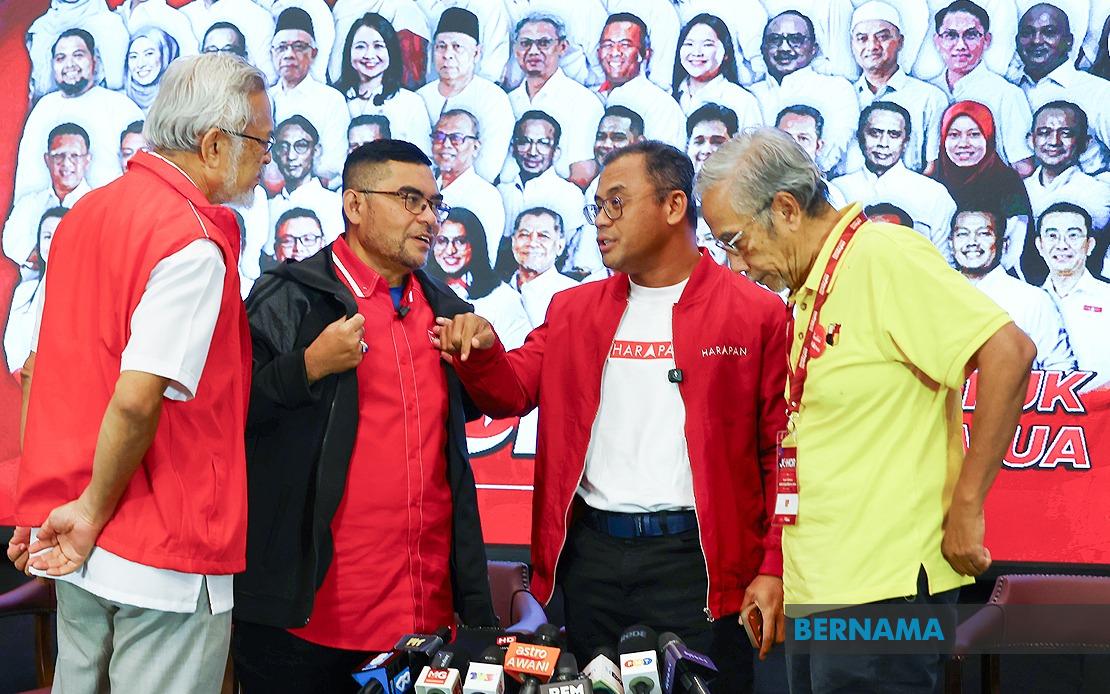
Pakatan Harapan is embarking on a detailed postmortem of its performance in the Johor state election, using the findings to fortify its operational strategy ahead of the Negeri Sembilan polls set to unfold in coming weeks. The coalition's leadership signalled that while the full picture from Johor remained incomplete on polling night, the party would use the interim period to identify key weaknesses and recalibrate its electoral machinery across different demographic segments.
Datuk Seri Amirudin Shari, the Selangor Menteri Besar and a senior figure overseeing PH's election machinery, underscored the necessity of examining multiple variables that shaped voter behaviour in Johor. Among his priorities are understanding shifts in voting patterns across constituencies, assessing the coalition's penetration among younger voters, and evaluating where campaign messaging may have fallen short. His measured remarks reflected an acknowledgement that the Johor outcome, where Barisan Nasional secured 29 of 56 state seats, represented a setback for PH's electoral ambitions in the peninsula's southern stronghold.
The timing of Amirudin's comments at the PH Operations Centre in Johor Bahru came as the tabulation of results was still ongoing, with several constituencies yet to be formally confirmed. Rather than rushing to sweeping interpretations, PH's leadership opted for a methodical approach, requesting approximately a week to consolidate data and extract meaningful insights from the electoral machinery's ground performance. This stance reflects a recognition among party strategists that incomplete information could lead to flawed strategic adjustments heading into the Negeri Sembilan contest.
For Negeri Sembilan, however, PH projects considerably greater confidence. The coalition currently governs the state under Menteri Besar Datuk Seri Aminuddin Harun and has constructed what party officials characterise as a strong administrative record. Amirudin explicitly stated PH's intention to retain control of the state government, framing the upcoming election as an opportunity for voters to endorse the coalition's developmental achievements and continued stewardship. This messaging represents a deliberate attempt to elevate the campaign above merely reacting to Johor's outcome.
Critically, candidate selection for Negeri Sembilan emerged as the next immediate flashpoint for internal coalition dynamics. Party discussions scheduled for the day following Amirudin's press conference would determine which candidates represented PH's constituent parties—principally PKR, Amanah, and allied partners. The coalition aimed to finalise and publicly announce its complete slate by July 14, a compressed timeline that underscores both the urgency and the potential for internal friction if consensus proves elusive. Amanah's representation at the press conference, through deputy president Datuk Seri Dr Mujahid Yusof Rawa and others, signalled the three-party coalition's apparent unity, though candidate negotiations frequently expose latent tensions over seat allocations.
The broader implications for Malaysia's federal political landscape also occupied Amirudin's attention. Despite setbacks at the state level, PH sought to reassure stakeholders that electoral outcomes in individual states would not destabilise the federal government led by Prime Minister Datuk Seri Anwar Ibrahim. Amirudin articulated a purported consensus among federal coalition partners—encompassing both PH and its ally Barisan Nasional—to maintain governmental continuity until Parliament's dissolution. This framing attempted to compartmentalise state electoral competition from federal stability, a separation that carries significance for investor confidence and policy continuity.
Yet the emphasis on federal stability also hints at underlying vulnerabilities. The coalition's capacity to retain Negeri Sembilan becomes strategically important not merely for state-level symbolism but as a demonstration that PH retains electoral viability in heartland constituencies. A loss in Negeri Sembilan, following a disappointing Johor result, could intensify speculation about the coalition's broader electoral prospects and embolden critics questioning Anwar Ibrahim's political mandate.
The focus on youth voter engagement identified by Amirudin reflects a demographic challenge confronting PH. Younger Malaysian voters have demonstrated less predictable loyalty to traditional coalition politics and have shown responsiveness to alternative messaging around economic opportunity, governance reform, and social issues. Understanding why Johor's youth vote shifted—if indeed it did—and recalibrating appeals to this segment becomes essential not only for Negeri Sembilan but for potential federal contests looming further ahead.
From a Southeast Asian perspective, PH's recalibration effort illustrates how Malaysian state elections function as mini-laboratories for broader coalition politics. The coalition's willingness to conduct systematic reviews rather than adopt purely reactive postures suggests organisational maturity, yet also underscores the competitive pressures facing an incumbent federal government navigating periodic state-level contests. The Negeri Sembilan election thus acquires significance beyond its immediate scope as a test of whether PH can sustain electoral relevance across Malaysia's diverse constituencies.
Looking ahead, the next fortnight becomes crucial for PH. Beyond finalising candidates, the coalition must translate its Johor lessons into concrete campaign adjustments for Negeri Sembilan—whether through targeted outreach to youth constituencies, refined messaging on governance performance, or intensified ground-level mobilisation. The state election will serve as a barometer of whether PH's strategic reassessment proves effective in stemming electoral erosion, or whether deeper structural challenges confront the coalition's long-term viability.

