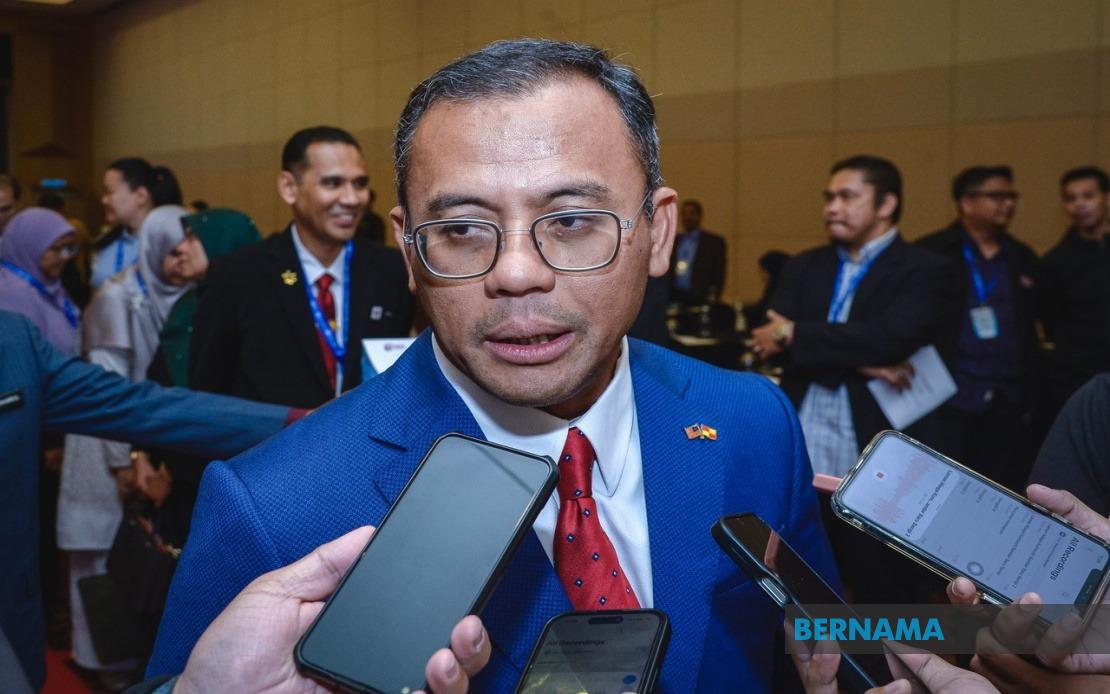
Pakatan Harapan has laid out clear parameters for any future political cooperation with rival parties or coalitions, insisting that such arrangements must be anchored in two fundamental principles: maintaining political stability and safeguarding the interests of the Malaysian people. Datuk Seri Amirudin Shari, who holds dual positions as Selangor Menteri Besar and a member of PH's Presidential Council, articulated this stance during remarks made in Bangi on August 10, signalling that the coalition's doors remain open despite recent speculation about potential alignments.
The PKR vice-president's comments represent an important clarification of PH's political posture as Malaysia navigates a period of considerable flux. Rather than adopting an absolutist stance that rules out engagement with former rivals or smaller parties, Amirudin suggested that ideological compatibility on core governance principles matters more than existing partisan divisions. This reflects a pragmatic recognition within PH's leadership that Malaysia's fractionalised political landscape may require flexible arrangements to achieve and maintain governmental objectives.
Amirudin was responding to recent media reports indicating that Selangor's state-level PH machinery had explored potential collaboration with Bersatu, the breakaway party led by former Prime Minister Muhyiddin Yassin. These reports had generated considerable speculation about whether such arrangements might extend beyond Selangor to influence national-level politics, particularly as Malaysia approaches general elections and state elections in Melaka. The timing of such discussions is significant, as both major coalitions—PH and Perikatan Nasional—seek to consolidate support and prevent defections that could alter electoral mathematics.
However, Amirudin was emphatic in denying that any substantive cooperation agreements have materialised between Selangor's PH leadership and Bersatu. He characterised recent suggestions as external speculation rather than the result of formal negotiations, emphasising that no internal discussions or binding decisions have occurred at the state level. This distinction is important for understanding PH's current position: the coalition is signalling flexibility whilst avoiding commitments that could alienate its base or complicate relationships with coalition partners.
The Selangor leader also underscored that any future cooperation cannot be decided unilaterally at the state level, emphasising the necessity of coordination with PH's central leadership. This hierarchical approach reflects the coalition's acknowledgement that state-level political choices carry national implications. Electoral timing, coalition dynamics at the federal level, and broader strategic considerations all factor into such decisions, requiring deliberation among senior party figures and coalition partners rather than ad hoc state-level initiatives.
Amirudin's framework reveals a calculus that extends beyond simple electoral mathematics. By conditioning cooperation on political stability and public welfare, PH has implicitly rejected the notion that politics should be driven solely by seat-counting or narrow party advantage. This rhetorical positioning may be intended to make such alignments more palatable to voters and party members who might otherwise view cross-coalition cooperation as opportunistic. It also provides flexibility: almost any political arrangement could theoretically be justified as serving stability or public interests, depending on how those terms are interpreted.
For Malaysian readers and political observers, these developments carry practical implications. The willingness of established coalitions to explore cooperation across traditional boundaries suggests that Malaysia's political landscape continues to shift away from rigid two-coalition competition toward more fluid, issue-based or pragmatically-driven arrangements. This could mean voters face less predictable electoral landscapes where yesterday's opponents become today's potential partners. It also reflects the underlying weakness of existing coalitions, which must constantly negotiate with smaller parties and potential defectors rather than relying on solid support bases.
The specific mention of timing, electoral considerations, and national circumstances as factors in cooperation decisions indicates that PH sees itself as having tactical options. The party is not desperate for immediate alliances but evaluates opportunities through a lens of strategic advantage. Whether cooperation with Bersatu or other parties might occur depends on how political conditions evolve—a formulation that preserves flexibility whilst avoiding current commitments.
For Southeast Asian observers, Malaysia's fluid coalition dynamics reflect broader regional trends toward less ideologically coherent political blocs and more transactional arrangements. Thailand, Cambodia, and Indonesia have all experienced similar shifts toward ad hoc political cooperation driven by immediate interests rather than stable party systems. Whether this represents democratic maturation or fragmentation remains contested among political analysts.
Amirudin's careful language also hints at internal PH discussions that remain unresolved. Different party components—PKR, DAP, and Amanah—may hold varying views on cooperation with rivals, requiring the Presidential Council to mediate between divergent perspectives. The emphasis on central-level deliberation suggests these conversations are ongoing and have not reached consensus. State leaders like Amirudin appear to be managing expectations whilst those discussions continue.
The broader context involves government viability and electoral prospects. If general elections appear likely to produce fragmented parliaments where no coalition commands an outright majority, cooperation frameworks become essential for government formation. Conversely, if one coalition appears to have a clear path to victory, cooperation becomes less necessary. Amirudin's comments suggest PH is hedging against multiple possible electoral outcomes whilst maintaining maximum flexibility.
Ultimately, PH's stated openness to cooperation reflects the political reality that Malaysia's elections may not produce clear-cut mandates. Rather than viewing this as a failure of the system, the coalition frames cooperation as a pragmatic response to voters' fragmented preferences. Whether this approach ultimately strengthens or weakens democratic governance in Malaysia remains an open question that will become clearer as specific cooperation arrangements—or the lack thereof—emerge.

