The Pakatan Harapan coalition remains confident that its election campaign across Johor constituencies will not be undermined by a series of minor acts of sabotage, according to PKR secretary-general Datuk Fuziah Salleh. Speaking in Johor Bahru on July 2, Fuziah acknowledged that several incidents had occurred, including the removal and damage of campaign posters, destruction of billboards, and the burning of party flags, but stressed these isolated occurrences have not diminished the overall strength and momentum of PH's push towards the July 11 state election.
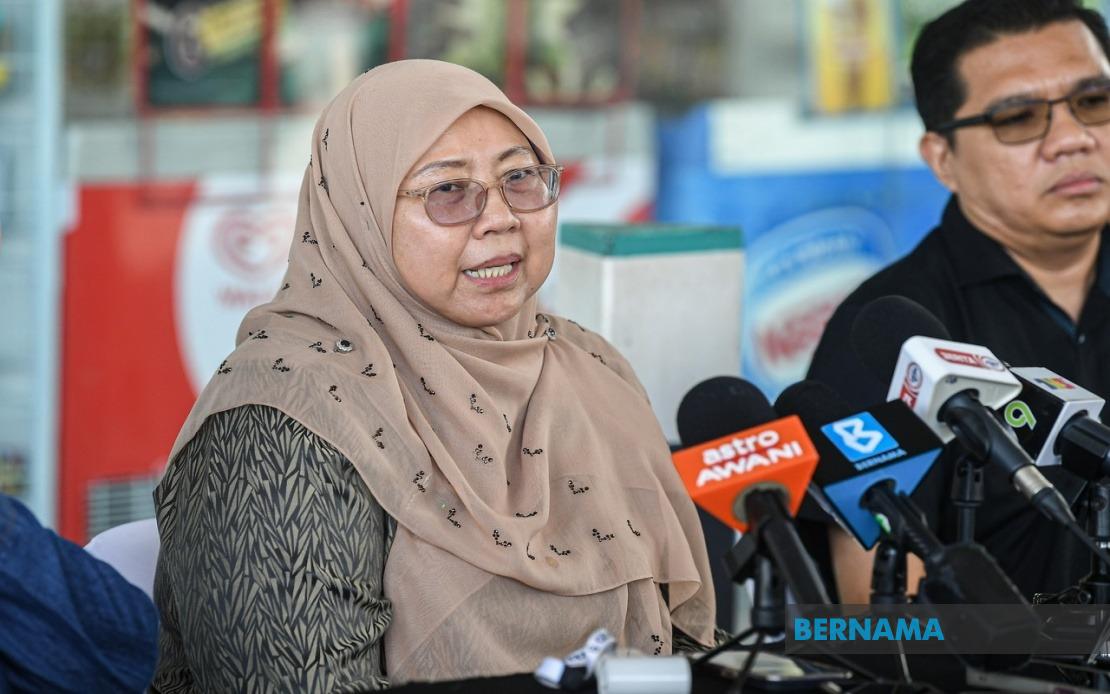
Fuziah, who serves as Deputy Minister of Domestic Trade and Cost of Living, made her comments during a press conference held at a petrol station where she was reviewing the implementation of the Budi MADANI Diesel subsidy assistance scheme. The incidents she referenced—while acknowledged as problematic—appear minor in scale and have not prompted the coalition to scale back or alter its campaign strategy in the state. The confidence displayed by PH's leadership suggests the party views these acts as the work of rivals seeking to disrupt campaigning rather than reflecting any broader public sentiment against the coalition's message.
Instead of dwelling on sabotage, Fuziah highlighted the intensive nature of PH's ground operations in Johor. Each candidate fielded by the coalition is working through a demanding schedule that spans from early morning until late evening, with candidates participating in up to ten separate campaign events and community engagements daily. This relentless pace reflects the coalition's determination to maximize voter contact during the critical final weeks before the election, suggesting PH believes its campaign machinery remains well-resourced and focused despite external disruptions. The sheer volume of activities underway indicates substantial grassroots mobilization across the state.
Perhaps more significantly, Fuziah drew attention to what she described as overwhelmingly positive voter feedback towards PH candidates, particularly among younger voters and first-time participants in elections. She noted that support appears to be growing among these demographic groups for the federal ruling coalition, a development of considerable political importance given that youth engagement and first-time voter participation often signal shifting political sentiment. In Malaysian electoral contexts, youth support can translate into substantial vote swings, and PH's reported success in this area could prove decisive in closely contested constituencies.
The PH secretary-general also addressed a point of contention regarding campaign messaging, specifically clarifying the status of policy announcements made by candidates for the Skudai and Perlis state seats. Those candidates had released what they described as a manifesto, but Fuziah distinguished between binding, state-level policy commitments and local pledges. She emphasized that statements addressing specific community concerns—such as waste collection problems in particular neighborhoods—should not be confused with comprehensive governmental policy platforms. According to her, such local commitments reflect individual candidates' determination to serve their constituencies rather than representing the formal policy direction that would guide a PH-led state government.
This distinction becomes important as voters evaluate different campaigns. Fuziah explained that when PH refers to its manifesto, the party is discussing major policy initiatives with the capacity for implementation at the state level—systemic changes that would affect all residents regardless of constituency. By contrast, candidate pledges typically focus on constituency-specific improvements and services. While both matter to voters considering their choices, they operate on different scales of governance and should be understood accordingly. This nuance helps clarify what voters can realistically expect from PH if the coalition wins sufficient seats to form a state government.
The full Pakatan Harapan manifesto for the Johor state election was expected to be unveiled the day following Fuziah's remarks, providing voters with comprehensive insight into the coalition's platform and vision for the state's future. That timing—releasing the formal manifesto during the final days before the campaign officially concludes—represents a strategic choice to keep PH's core message fresh in voters' minds heading into the polling period. The manifesto would presumably address key state-level issues including economic development, infrastructure, education, healthcare, and other domains within state government purview.
The Johor state election itself will involve 172 candidates competing across multiple constituencies, with voting scheduled for July 11. Early voting has been set for July 7, accommodating voters including those registered to cast ballots before the official election day. The presence of such a large candidate field suggests competitive races across most if not all constituencies, indicating a multi-cornered contest rather than straightforward two-way battles. This complexity means that vote fragmentation could play a significant role in determining which coalition ultimately commands sufficient state assembly seats to form government.
For Malaysian observers, the Johor state election holds particular weight within the broader political landscape. Johor has historically been a significant state electoral battleground where coalition performance often foreshadows broader national trends. How Pakatan Harapan performs in this traditionally competitive state could influence momentum heading towards future national elections and shape perceptions of the federal coalition's electoral viability. Similarly, the apparent strong youth engagement reported by PH's leadership would merit monitoring as an indicator of generational political shifts within the Malaysian electorate, with implications extending beyond Johor itself. The coalition's ability to translate reported voter enthusiasm into actual votes on July 11 will provide important data about its electoral strength in a key state.

