Pakatan Harapan officials have expressed confidence that the opposition coalition will not be derailed by PAS's strategic decision to direct its supporters towards Barisan Nasional candidates in seats the Islamist party is not directly contesting in the upcoming Johor state election. The move by PAS represents a calculated political manoeuvre designed to fragment the opposition vote and bolster BN's electoral prospects, yet PH leadership has signalled a resolute commitment to maintaining campaign momentum without succumbing to what they characterise as provocative tactics employed by rival coalitions.
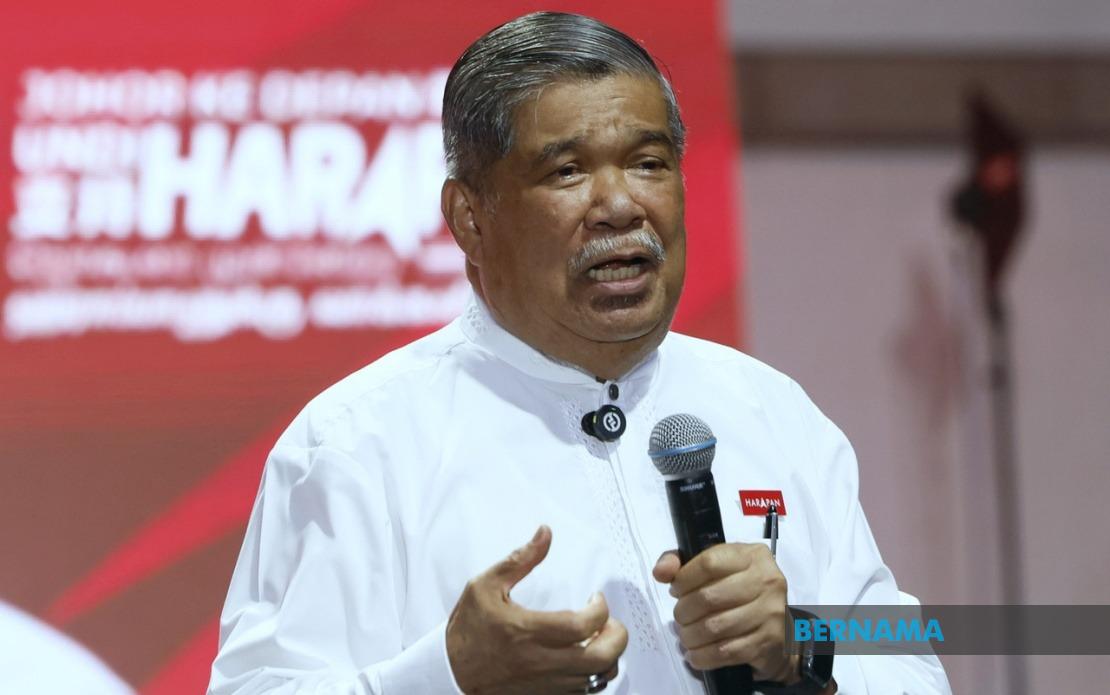
Amanah president Datuk Seri Mohamad Sabu, speaking following a PH campaign event in Permas Jaya, underscored that the coalition's organisational apparatus would proceed with its predetermined campaign schedule without hesitation or distraction. His characterisation of the party machinery as "unfazed" reflects a deliberate attempt to project stability and unity within PH ranks, even as the opposition navigates the fractured political landscape of Malaysian electoral politics. The Minister of Agriculture and Food Security's public pronouncement carries particular weight given his cabinet position and standing within PH's leadership hierarchy, signalling that the coalition views PAS's directive not as a significant threat but rather as evidence of opposing forces grasping at tactical advantages.
At the heart of PH's electoral narrative lies an assertion that the coalition's fundamental strength derives from its capacity to unite voters across racial and religious divides. Mohamad Sabu articulated this position by arguing that genuine political stability and economic development depend upon moving beyond identity-based appeals and instead evaluating candidates on substantive criteria including competence, administrative track record, and commitment to equitable governance. This messaging strategy attempts to reframe the election as a choice between narrow sectarianism and inclusive nation-building, positioning PH as the custodian of a more progressive political vision.
The coalition has specifically called upon Johor voters to grant PH the electoral mandate necessary to achieve administrative cohesion between state and federal governance structures. Such alignment, PH argues, would streamline the implementation of major developmental initiatives tailored to Johor's economic interests and infrastructure requirements. The party has identified several priority areas including the overhaul of public transportation networks, enhancement of facilities at international border crossings, and the creation of conditions conducive to attracting substantial foreign and domestic investment into the state economy.
DAP's strategic director Liew Chin Tong, who also serves as Deputy Finance Minister, has identified voter participation rates—particularly among younger demographics—as the pivotal variable that will ultimately determine electoral outcomes in this contest. His analysis draws upon the 2022 Johor state election as a cautionary reference point, wherein depressed voter turnout disproportionately benefited BN, a phenomenon that was exacerbated by pandemic-related travel restrictions that prevented many Johor residents employed in Singapore from returning home to cast their ballots. This historical precedent underscores the importance of mobilisation strategies that specifically target younger, potentially mobile populations who might otherwise abstain from voting.
Liew has advocated for a substantive reorientation of campaign discourse in the second phase of the election cycle, arguing that political rivalries should recede in prominence relative to policy platforms directly addressing citizen welfare. He has articulated a vision wherein the Johor election campaign focuses upon employment creation, specifically the generation of high-quality professional positions offering competitive remuneration that would stem the outflow of young Johorean talent seeking opportunities across the border in Singapore. This framing positions economic opportunity as an electoral priority that transcends traditional partisan divisions.
The deputy finance minister has furthermore emphasised that state and federal governments must address interconnected challenges ranging from public transportation infrastructure to flood management and river system maintenance. He has highlighted the urgency of preparing governance frameworks appropriate to an ageing population demographic, including the expansion of accessible childcare facilities. These proposals represent an attempt to ground the election in tangible issues affecting daily life rather than abstract ideological disputes or identity politics.
Central to PH's electoral strategy in Johor is the argument that productive cooperation between federal and state administrations of the same political orientation would accelerate the delivery of developmental initiatives, most notably the proposed Johor-Singapore Special Economic Zone. The JS-SEZ represents a substantial infrastructure and economic development undertaking that could potentially generate thousands of high-quality employment opportunities throughout the state, thereby addressing one of the most acute concerns animating voter preferences among younger Johoreans. This framing positions PH governance as instrumentally valuable for addressing structural economic challenges affecting the state's demographic profile.
The 16th Johor state election will feature contests across all 56 state assembly constituencies, with both PH and BN fielding comprehensive candidate slates. The electoral contest, scheduled for July 11, includes early voting provisions set for July 7. The timing of this state-level election occurs within the broader context of Malaysia's multiparty political system, wherein coalition management and strategic positioning within the federal cabinet structure significantly influences resource allocation and policy prioritisation at the state level.
PAS's strategic directive to direct its supporters toward BN candidates in non-contested seats reflects the intricate calculus of Malaysian electoral mathematics, wherein fragmentation of the opposition vote has historically provided advantages to the ruling coalition. However, PH's dismissal of this tactic as inconsequential suggests the opposition coalition is banking upon voter sophistication and the tangible appeal of its policy platforms to transcend such mechanical vote-splitting dynamics. The election will serve as a significant barometer of whether Malaysian voters prioritise incremental governance competence and multiethnic coalition-building over the sectarian appeals and identity-based mobilisation strategies that have characterised recent electoral contests.

