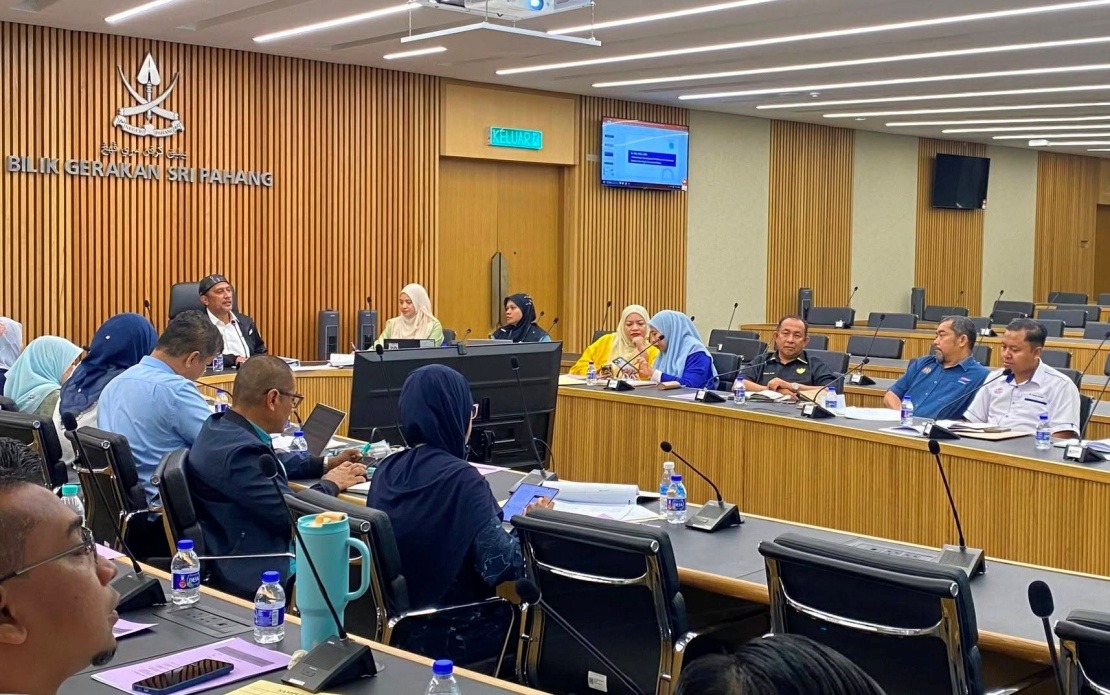
The Pahang state government has pledged to involve the Department of Orang Asli Development (JAKOA), the Pahang Land and Mines Office (PTG), and district land authorities in finding a workable resolution to longstanding land ownership disputes affecting indigenous communities in Kampung Sungai Cot, Maran. According to Datuk Seri Syed Ibrahim Syed Ahmad, the committee chairman overseeing Islamic religious affairs, rural development and Orang Asli matters for the state, any intervention will be grounded in established legal frameworks and pursued through dialogue with all stakeholders to ensure an equitable outcome.
The dispute centres on overlapping claims to the same parcel of land. Twelve Orang Asli residents have been using the area for cultivation and submitted a formal land claim to JAKOA; however, that same tract was granted to a private company following approval by the state's 32nd Executive Council meeting on November 4, 2015. This collision of interests, dating back nearly a decade, has created uncertainty for both the indigenous claimants and the corporate entity holding official sanction for development rights.
Syed Ibrahim sought to reframe recent public statements surrounding the matter, contending that characterisations of the situation made by certain parties do not align with the actual circumstances. His clarification underscores a recurring tension in Malaysian land administration: the difficulty of reconciling historical use and occupation by indigenous peoples with formal legal processes and commercial development allocations that may have proceeded without thorough consultation or verification of prior claims.
Investigative work by JAKOA has narrowed the field of active claimants significantly. Of the original twelve Orang Asli individuals who cultivated the land, only six now actively pursue recognition of their claim through official channels. During preliminary discussions between JAKOA representatives and these claimants, the indigenous representatives asserted that the disputed territory constitutes their ancestral homeland. Yet the state authorities acknowledge that their existing records and documented evidence do not substantiate these historical assertions, presenting a fundamental evidentiary barrier to validating the claims under current administrative standards.
This gap between oral tradition and archival documentation reflects a broader challenge in Orang Asli land recognition across Malaysia. Indigenous communities often lack formal, written proof of ancestral occupation that predates modern land surveys and gazettement procedures. The absence of such documentation does not necessarily negate genuine historical claims but does place claimants at a procedural disadvantage when seeking to overturn or challenge officially authorised allocations. Pahang's approach of requesting further study suggests an awareness that administrative rigidity may not serve justice where historical records are incomplete or inaccessible.
Pahang's wider efforts to secure land rights for its Orang Asli population provide context for how the Maran dispute fits into state-level indigenous affairs policy. The state currently administers 264 registered Orang Asli villages housing more than 90,000 inhabitants. Of these, thirty villages have been formally gazetted under the relevant provisions of the Orang Asli Act 1954 and the National Land Code, affording them enhanced legal protection and recognition. Additionally, the state has facilitated land ownership transfers to Orang Asli communities in sixteen villages, demonstrating political will to expand indigenous land holdings through formal mechanisms.
The volume of pending applications indicates that land recognition processes remain heavily backlogged throughout the state. Seventy-five applications from Orang Asli communities seeking gazettement of their lands are at various stages of processing. Thirty-one of these applications have completed preliminary work and await consideration by the state executive council, while forty-four applications are stalled because they involve parcels where overlapping claims or competing interests—such as the Maran situation—must first be resolved. A further 143 applications remain at the initial measurement and survey stage, suggesting that the machinery for processing Orang Asli land claims moves slowly despite apparent state commitment to the cause.
The structural obstacles facing indigenous claimants extend beyond the Maran case. State land administration systems were not designed with indigenous land stewardship in mind; they evolved from colonial frameworks that prioritised surveying, classification and commercial allocation. Orang Asli communities, having occupied lands for generations before formal gazettement was conceived, now must navigate bureaucratic channels that privilege documentary proof over historical continuity. The Pahang government's willingness to request a fresh review of the Maran situation suggests some recognition that procedural rigour and substantive justice do not always align when dealing with indigenous claims.
For the six claimants still pursuing their case in Maran, the outcome remains uncertain. Should JAKOA and PTG recommend acknowledging their ancestral connection despite insufficient documentary evidence, the state would need to either acquire the company's rights through negotiation or compensation, or find an alternative parcel for the claimants. Conversely, should authorities maintain that the evidentiary standard cannot be met, the claimants face the prospect of losing access to land they have worked for years. The consultative approach promised by Syed Ibrahim may offer space for creative solutions—perhaps joint management arrangements, compensation frameworks, or phased transitions—but such options require genuine flexibility from all parties.
The Maran dispute also carries implications for Southeast Asian indigenous rights more broadly. Malaysia is not unique in struggling to accommodate ancestral land claims within modern administrative systems. The region contains millions of indigenous people, many of whom face similar documentation challenges when seeking recognition and security over territories their communities have inhabited for centuries. How Malaysia resolves cases like Kampung Sungai Cot may offer lessons—both positive and cautionary—for neighbours grappling with comparable tensions between development priorities and indigenous entitlements.
Looking ahead, the state government's commitment to process seventy-five additional gazettement applications suggests that land recognition for Orang Asli communities remains a policy priority. However, the Maran case demonstrates that procedural gridlock and competing interests can prevent progress even when political will exists. Streamlining the application process, improving mechanisms for verifying historical claims, and establishing clearer protocols for resolving overlaps between indigenous and commercial interests could accelerate resolution of the backlog. Until such structural improvements materialise, many Orang Asli communities will face lengthy delays and uncertain outcomes in securing formal recognition of their land rights.

