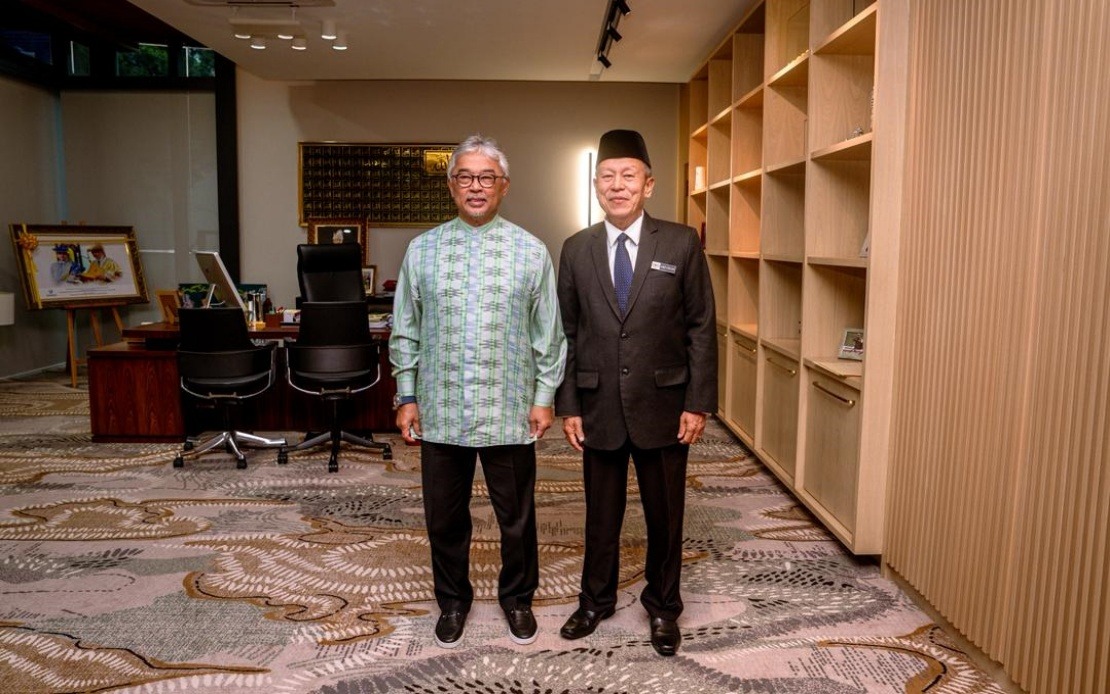
The Sultan of Pahang, Al-Sultan Abdullah Ri'ayatuddin Al-Mustafa Billah Shah, held a significant meeting with Malaysian Anti-Corruption Commission (MACC) chief commissioner Datuk Seri Abd Halim Aman at Shahzan House in Ampang, underscoring the institutional recognition being given to the country's anti-graft efforts at the highest levels of governance. The hour-long audience, held yesterday, reflected the commission's commitment to engaging with Malaysia's constitutional leadership on matters of national integrity and institutional accountability.
During the engagement, the MACC leadership presented an overview of its recent operational developments and strategic direction to the royal household. This presentation encompassed the commission's evolving approach to detecting, investigating, and preventing corrupt practices across both the public and private sectors. The royal audience provided an important platform for the MACC to communicate directly with the Sultan of Pahang regarding the scope and complexity of its mandate in an environment where corruption remains a persistent challenge to institutional trust and national development.
The briefing extended beyond operational updates to encompass the broader policy landscape shaping anti-corruption work in Malaysia. Datuk Seri Abd Halim utilised the opportunity to outline various mechanisms through which the MACC is strengthening integrity standards across government agencies and state bodies. These efforts represent a multi-layered approach combining preventive education, institutional reform, and enforcement activities designed to create systemic barriers against corrupt conduct.
Central to the discussion were governance modernisation initiatives that the MACC is championing. These include enhanced transparency protocols, improved internal controls within public institutions, and collaborative frameworks with other enforcement agencies. The commission's engagement with royal leadership signals an attempt to elevate anti-corruption work beyond partisan politics and position it as a matter of constitutional importance and national stewardship. For Malaysian citizens and regional observers, such engagement demonstrates coordination between institutional guardians of governance standards.
The MACC also highlighted contemporary challenges in corruption prevention and the commission's strategic responses to emerging threats. In an era of digitalisation and evolving financial mechanisms, combating corrupt practices requires adaptive enforcement methodologies and continuous institutional learning. The briefing allowed the commission to contextualise its work within Malaysia's broader governance transformation agenda and demonstrate responsiveness to contemporary anti-corruption imperatives.
Datuk Seri Abd Halim's gratitude toward Al-Sultan Abdullah reflected acknowledgment of the royal institution's pivotal role in Malaysia's constitutional framework as a custodian of national values and institutional probity. The Sultan's willingness to receive detailed briefings on MACC operations sends an important signal about the perceived legitimacy and significance of anti-corruption work within Malaysia's governance structure. This kind of institutional engagement can reinforce public perception that combating corruption enjoys support from all pillars of the Malaysian system.
The commission's emphasis on public confidence during the audience carries particular significance in a regional context where perceptions of institutional integrity influence investment decisions, business confidence, and international standing. Southeast Asian economies increasingly compete for foreign direct investment and regional influence, with governance quality becoming a differentiating factor. Malaysia's demonstration of commitment to anti-corruption through such high-level engagements contributes to signalling institutional seriousness to both domestic and international audiences.
The discussion of accountability-based governance represented an implicit acknowledgment of the governance challenges Malaysia has faced in recent years. The emphasis on transparent, accountable, and integrity-centred practices reflects lessons learned from previous institutional failures and represents an attempt to embed governance standards more deeply within public administration. For regional observers, Malaysia's institutional efforts in this domain may provide instructive examples of how different governance sectors can coordinate on anti-corruption priorities.
The MACC's presentation to the Sultan included discussion of the commission's role in institutional reform beyond traditional enforcement. This encompasses advisory functions, capacity-building initiatives with government bodies, and participation in policy development addressing corruption vulnerabilities. Such preventive approaches have become increasingly central to modern anti-corruption strategies, reflecting recognition that sustainable integrity requires systemic change rather than isolated prosecutions.
The timing and nature of this royal audience also reflect evolving relationships between Malaysia's constitutional monarchy and the executive branch regarding institutional accountability. While the Sultan's role remains largely ceremonial under Malaysia's constitutional framework, the willingness to engage substantively with the MACC's leadership indicates that the institution views anti-corruption work as aligned with royal concerns for national welfare and institutional propriety. This alignment can provide important political cover for the commission's enforcement activities and lend gravitas to its independence.
For Malaysian stakeholders in business, civil society, and government, the meeting underscores that anti-corruption remains a priority concern spanning institutional hierarchies. The MACC's access to royal audiences provides visibility for the commission's work and potentially influences how other government bodies perceive and cooperate with anti-corruption initiatives. In organisational terms, such engagement can translate into improved inter-agency collaboration and clearer prioritisation of integrity standards within individual institutions.
The audience concluded with mutual reaffirmation of commitment to Malaysia's anti-corruption agenda, though substantive operational outcomes will depend on how the commission's strategic directions translate into enforcement actions and policy implementation across government. The symbolic importance of the engagement lies in demonstrating institutional coherence around integrity principles, even as the practical challenges of corruption prevention and investigation remain complex and ongoing.
%22%2F%3E%3C%2Fpattern%3E%3C%2Fdefs%3E%3Crect%20width%3D%22100%25%22%20height%3D%22100%25%22%20fill%3D%22url(%23ph4la6vg)%22%2F%3E%3Crect%20width%3D%22100%25%22%20height%3D%22100%25%22%20fill%3D%22url(%23ph4la6vp)%22%2F%3E%3Ctext%20x%3D%2250%25%22%20y%3D%2250%25%22%20text-anchor%3D%22middle%22%20dominant-baseline%3D%22central%22%20fill%3D%22rgba(255%2C255%2C255%2C0.95)%22%20font-family%3D%22Georgia%2C%20'Times%20New%20Roman'%2C%20serif%22%20font-weight%3D%22700%22%20font-size%3D%22194%22%20letter-spacing%3D%22-0.02em%22%3ETeacher%3C%2Ftext%3E%3C%2Fsvg%3E)
%22%2F%3E%3C%2Fpattern%3E%3C%2Fdefs%3E%3Crect%20width%3D%22100%25%22%20height%3D%22100%25%22%20fill%3D%22url(%23phmd71g)%22%2F%3E%3Crect%20width%3D%22100%25%22%20height%3D%22100%25%22%20fill%3D%22url(%23phmd71p)%22%2F%3E%3Ctext%20x%3D%2250%25%22%20y%3D%2250%25%22%20text-anchor%3D%22middle%22%20dominant-baseline%3D%22central%22%20fill%3D%22rgba(255%2C255%2C255%2C0.95)%22%20font-family%3D%22Georgia%2C%20'Times%20New%20Roman'%2C%20serif%22%20font-weight%3D%22700%22%20font-size%3D%22136%22%20letter-spacing%3D%22-0.02em%22%3EProsecuti%E2%80%A6%3C%2Ftext%3E%3C%2Fsvg%3E)