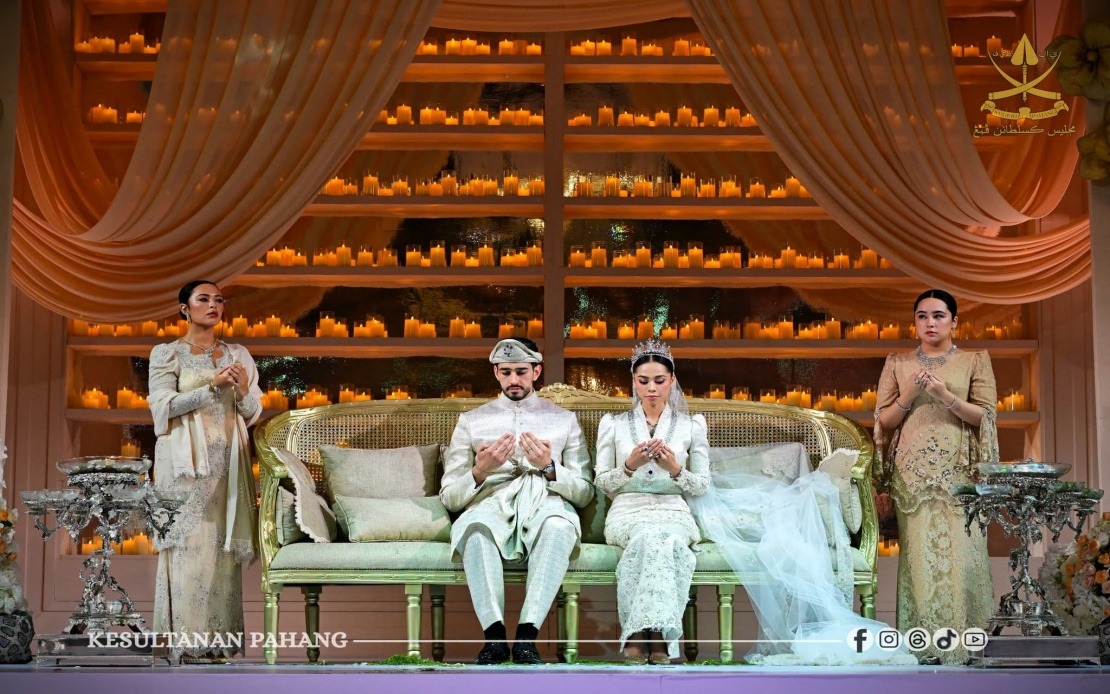
The Pahang ruler formally graced the wedding celebration of his daughter Tengku Puteri Raja Tengku Puteri Ilyana Alia and her husband Christopher Lionel Froggatt at a Kuala Lumpur hotel on August 8, underscoring the significance of the union between a member of Malaysia's royal family and the international community. Al-Sultan Abdullah Ri'ayatuddin Al-Mustafa Billah Shah's attendance at the lavish reception marked an important occasion within Pahang's royal household, drawing together immediate family members alongside state officials and distinguished international dignitaries.
The royal gathering reflected the ceremonial importance assigned to the occasion by the sultanate. The Regent of Pahang Tengku Hassanal Ibrahim Alam Shah accompanied the sultan, alongside the bride's siblings and broader members of the extended royal family. The presence of these senior figures demonstrated the ceremonial weight given to this cross-cultural matrimonial alliance, as multiple generations of Pahang's ruling family came together to celebrate the occasion.
Beyond the immediate royal family, the reception drew significant political representation from within the state administration. Pahang Menteri Besar Datuk Seri Wan Rosdy Wan Ismail's attendance reflected the state government's formal recognition of the event. The guest list expanded further to include international representation, with Shaikh Mohammed Hamad Tahnoon Al Nahyan attending as the official representative of the President of the United Arab Emirates, signifying diplomatic recognition of the marriage and underlying commercial or diplomatic ties between the UAE and Pahang's administration.
The wedding reception featured an elaborate programme of traditional royal Malay ceremonies, each laden with symbolic significance and rooted in centuries of palatial custom. The proceedings commenced with the 'Istiadat Menyuap Nasi Semangat', a ceremonial feeding ritual steeped in cultural tradition. This particular rite was orchestrated by Tengku Puteri Seri Lela Wangsa Tengku Tan Sri Meriam Sultan Ahmad Shah, a senior female member of the royal household, highlighting the continued role of palace women in maintaining and executing formal ceremonial protocols.
The newlyweds took their designated place on the royal dais following the initial feeding ceremony, positioning them at the focal point of the gathering in accordance with Malay-Muslim royal protocol. The 'Istiadat Bersanding dan Merenjis' ceremony followed, a cherished Malay wedding tradition wherein the newly married couple sits in elevated ceremonial state whilst family members and distinguished guests approach to offer blessings and participate in the ritual spraying of fragrant water or rosewater. The sultan himself led this blessing ceremony, underscoring his paternal role and formally acknowledging the union before the assembled company.
Al-Sultan Abdullah further demonstrated his endorsement of the marriage through the performance of the 'Istiadat Meletakkan Panca Bicara', a solemn ceremonial gesture reserved for royal occasions. This particular rite carries profound spiritual and cultural resonance, serving as a paternal blessing intended to establish favourable auspices for the couple's married life together. The positioning of this ceremony within the reception's sequence ensured that the sultan's blessing carried symbolic primacy over other celebratory elements.
The integration of religious observance provided spiritual grounding to the ceremonial proceedings. Following the completion of the formal rituals, Pahang Mufti Datuk Dr Asmadi Mohamed Naim recited a prayer, invoking divine blessing upon the newlyweds. This religious element, conducted by the state's highest Islamic authority, aligned the celebration with Islamic principles governing marriage whilst simultaneously anchoring the royal ceremonies within the broader spiritual framework that underpins Islamic Malay culture.
The choice of venue in Kuala Lumpur, rather than within Pahang's administrative centre of Kuantan, suggests considerations relating to accessibility for national and international guests. Kuala Lumpur's established hospitality infrastructure and cosmopolitan character provide appropriate settings for ceremonies involving international dignitaries such as the UAE's representative. The location demonstrates how modern Malaysian royalty navigates between traditional ceremonial requirements and contemporary logistical realities.
The marriage between Tengku Puteri Ilyana and Christopher Lionel Froggatt exemplifies contemporary patterns of inter-cultural matrimonial alliance involving Malaysia's ruling families. Such unions reflect Malaysia's position within global networks of commerce, diplomacy, and culture whilst maintaining strong connections to traditional Malay-Islamic ceremonial practices. The sultan's full participation in the elaborate traditional ceremony underscores institutional commitment to preserving royal customs even as family members form international partnerships.
The extensive attendance by senior political figures alongside royal family members illustrates the manner in which Malaysian state administrations integrate themselves into significant royal occasions. The Menteri Besar's presence serves both ceremonial and political functions, demonstrating state government's support for the sultanate and by extension, reinforcing broader institutional relationships between executive authority and the monarchy. Such integration reflects constitutional arrangements whereby the sultan remains as head of Islam and Malay custom within their respective states.
The documented presence of the UAE's presidential representative indicates potential commercial or diplomatic dimensions underlying the union, though official announcements focused exclusively on ceremonial aspects. Middle Eastern investment and engagement has long constituted an important dimension of Malaysian economic policy, and such family connections can facilitate broader governmental relationships. The formal diplomatic recognition accorded through presidential representation suggests significance beyond purely familial considerations.

