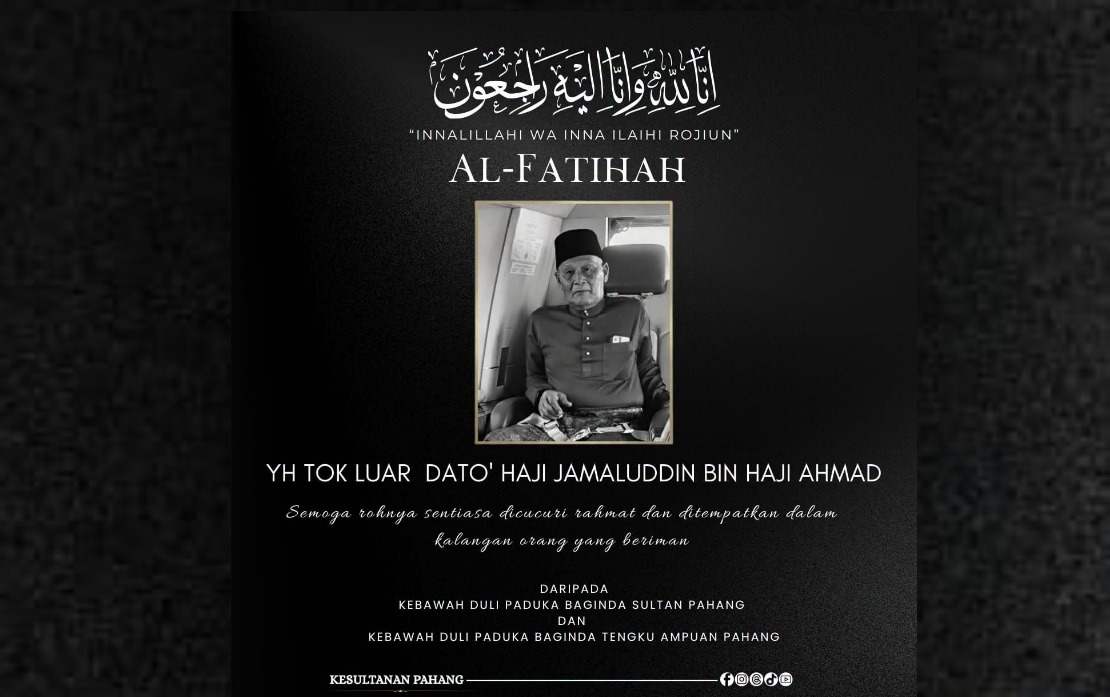
The Sultan of Pahang Al-Sultan Abdullah Ri'ayatuddin Al-Mustafa Billah Shah and Tengku Ampuan of Pahang Tunku Azizah Aminah Maimunah Iskandariah released a statement expressing their deep sorrow following the death of Tok Luar Datuk Jamaluddin Ahmad, who passed away early on Friday morning at Tengku Ampuan Afzan Hospital (HTAA) in Kuantan. The death marks the loss of a long-standing figure within Pahang's institutional and social landscape.
According to the official statement posted on the Kesultanan Pahang Facebook page, the royal household recognised Jamaluddin's steadfast commitment to the Pahang Sultanate institution over the years. His passing has prompted the royal family to extend formal condolences to his bereaved family members during this period of mourning. The timing of the announcement underscores the significance of acknowledging such losses within formal palace protocols and public communication channels.
In their message, the Sultan and Tengku Ampuan requested prayers for Jamaluddin's soul, seeking divine forgiveness for any transgressions and acceptance of his charitable works throughout his lifetime. The statement invoked Islamic prayers and traditions, asking that his spirit be granted mercy and positioned among the faithful and righteous servants of Allah. Such spiritual invocations reflect the deep religious dimensions embedded within Pahang's royal customs and the formal language used by the sultanate when addressing matters of mortality and remembrance.
The Pahang royal household extended their hopes that Jamaluddin's family would find strength and resilience as they navigate the immediate aftermath of bereavement. Beyond the ceremonial aspects of royal condolences, this expression of compassion serves to connect the institution with grieving families, reinforcing the traditional protective and pastoral role that sultanates maintain within their respective states. The message concluded with the Islamic phrase "Al-Fatihah," a customary invocation among Malaysian Muslims expressing wishes for the deceased's spiritual wellbeing.
Tok Luar Datuk Jamaluddin Ahmad's death at 6:48 am on Friday morning represents a significant passing within Pahang's institutional memory. The choice of Tengku Ampuan Afzan Hospital for his final days reflects both his personal circumstances and the centralised nature of healthcare services available to prominent figures within the state. The hospital, named after the current Tengku Ampuan, holds particular significance within Pahang's healthcare infrastructure and remains a flagship medical facility serving the region.
The royal statement's emphasis on Jamaluddin's loyalty to the sultanate institution suggests a relationship spanning considerable time and bearing witness to multiple administrative periods and political developments. In Malaysian context, individuals who receive such formal acknowledgment from reigning monarchs typically held positions of trust, served in advisory capacities, or maintained long-standing cultural and institutional connections. The bestowal of the "Datuk" title and "Tok Luar" honorific indicates recognition by the state for services rendered or position held within Pahang's social hierarchy.
The mode of announcement through social media reflects contemporary palace communication strategies, where official statements now reach audiences instantaneously through digital platforms rather than relying solely on traditional press releases or ceremonial announcements. This approach maintains formality and authenticity while ensuring broad dissemination of information, particularly among younger demographics and urban populations who primarily consume news through online channels. The Kesultanan Pahang Facebook page serves as an important institutional voice for state-level announcements and expressions of the royal household's positions on matters of public concern.
For Malaysian readers, the passing of established figures like Tok Luar Datuk Jamaluddin Ahmad carries broader implications regarding the gradual transition of institutional memory and leadership within state systems. Pahang, as one of Malaysia's most historically significant sultanates with deep roots in Malay-Muslim traditions, maintains careful attention to acknowledging departures of individuals who contributed to its continuity and cultural preservation. The royal family's public mourning demonstrates how traditional monarchical institutions continue adapting to modern communication methods while preserving ceremonial and spiritual dimensions.
The incident reflects the ongoing importance of the sultanate institution within Malaysian state governance and social cohesion, particularly in Pahang where the sultan maintains constitutionally defined roles and cultural authority. Public expressions of royal condolence serve multiple functions simultaneously: they honour the deceased and their contributions, provide closure mechanisms for grieving families through institutional recognition, and reinforce the sultanate's continued relevance as a stabilising force within state society. The timing and content of such announcements also signal the institution's attentiveness to significant passings within its purview.
In the broader Southeast Asian context, the practices demonstrated through Pahang's formal mourning processes reflect the region's ongoing engagement with traditional leadership structures alongside contemporary governance mechanisms. Malaysia's constitutional monarchy system, particularly at the state level, continues to demonstrate enduring relevance despite modernisation pressures. The Sultan and Tengku Ampuan's willingness to publicly acknowledge individual deaths through formal channels underscores the personal dimensions that persist within formal institutional relationships, even as these institutions navigate technological change and evolving public expectations regarding transparency and communication.

