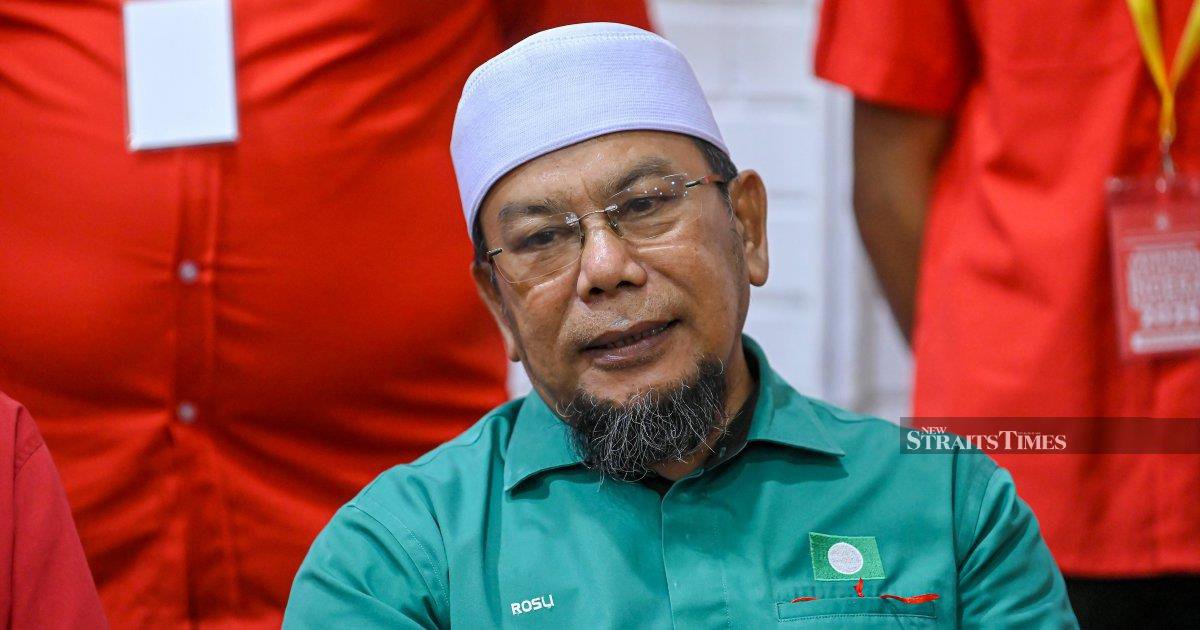
Political dynamics in Pahang remain unusually fluid as PAS leaders indicate a willingness to engage constructively with Umno, even as underlying fractures in Malaysia's coalition politics threaten to splinter traditional alliances. The development reflects broader uncertainty about how the nation's Islamist and nationalist conservative blocs will position themselves ahead of potential electoral contests, with Pahang—a state where both parties maintain substantial grassroots presence—emerging as a barometer for these shifting relationships.
The willingness expressed by PAS to explore common ground with Umno represents a notable departure from the confrontational posturing that has characterised recent months between the two parties. Both organisations share ideological grounding in Muslim-majority politics and have historically occupied overlapping constituencies, yet recent years have seen them compete fiercely for influence and voter loyalty. Pahang, where both parties command significant organisational capabilities and electoral support, naturally becomes a testing ground for whether productive coexistence is achievable or whether electoral competition will intensify.
PAS leadership in the state has framed the cooperation overture as pragmatic governance rather than ideological capitulation. The suggestion that dialogue remains possible suggests party strategists may be calculating that collaboration could yield tangible benefits—whether through seat allocations in future elections, policy influence, or institutional positioning. For Umno, similarly positioned in Pahang with substantial state and federal representation, the prospect of coordinated action rather than internal division presents obvious strategic advantages.
However, the caveat embedded in PAS's position—that electoral clash remains conceivable—acknowledges the fundamental reality of Malaysian politics: both parties ultimately answer to distinct voter bases with sometimes contradictory expectations. Umno's traditional support among Malay-Muslim professionals, civil servants, and rural constituencies differs meaningfully from PAS's appeal to more ideologically driven Islamic activists and younger voters seeking alternative leadership. These constituencies do not entirely overlap, creating inherent tension in any sustained coalition effort.
The historical context makes the current cooperative signals particularly significant. Umno and PAS have alternated between alliance and rivalry depending on broader political circumstances. The Pakatan Harapan government's collapse in 2020 initially saw both parties position themselves as alternatives to the reformist coalition, yet their relationship has remained fundamentally competitive. Each party views the other as a potential threat to its electoral viability and ideological consistency, even when tactical cooperation seems advantageous.
For Malaysian observers, particularly those in Pahang and surrounding states, these signals carry implications extending beyond intra-Umno Malay politics. The willingness or unwillingness of major Malay-Muslim parties to cooperate fundamentally shapes which coalition ultimately governs Malaysia and how federal-state relations function. Pahang's electoral trajectory could influence broader national outcomes, making internal party calculations here consequential far beyond state boundaries.
The economic dimension cannot be overlooked either. Pahang, as a state with significant development aspirations and resource-extraction industries, requires stable governance capable of attracting investment and managing complex federal-state fiscal relationships. Whether PAS and Umno can cooperate smoothly affects the state's capacity to implement development agendas that benefit constituents. Electoral uncertainty, by contrast, can paralyse decision-making and deter business confidence.
Yet beneath the diplomatic language about cooperation lies a fundamental strategic question: can both parties genuinely subordinate partisan ambitions to collaborative governance, or will cooperation remain transactional and brittle? The history of Malaysian coalition politics suggests that ideological differences and organisational rivalries eventually resurface, particularly when electoral opportunities seem favorable to one party or the other. The current opening may represent temporary tactical alignment rather than any fundamental reconciliation.
The role of younger party cadres in shaping this dynamic deserves attention. Umno and PAS both include ambitious younger leaders seeking to elevate their profiles and influence party direction. These individuals may have different calculations about cooperation than senior party elders, potentially destabilising any consensus for collaborative approaches. Internal party dynamics, therefore, will significantly determine whether cooperative rhetoric translates into actual coordinated action.
Regional factors also merit consideration. Neighbouring states' political developments—particularly those of Terengganu and Kelantan, where PAS commands stronger relative influence—could either reinforce or undermine Pahang cooperation initiatives. If either neighbouring state experiences significant political change or if federal-state relationships shift, this could reverberate across Pahang's political landscape.
For now, the open door PAS has extended to Umno represents an acknowledgment that both parties have incentives for stability and coordination. Yet the simultaneous signalling that electoral confrontation remains possible reveals underlying scepticism about sustainable cooperation. Pahang's political trajectory in coming months will clarify whether genuine partnership can emerge or whether these initial cooperative signals merely precede intensifying competition for voter affection and electoral dominance.

