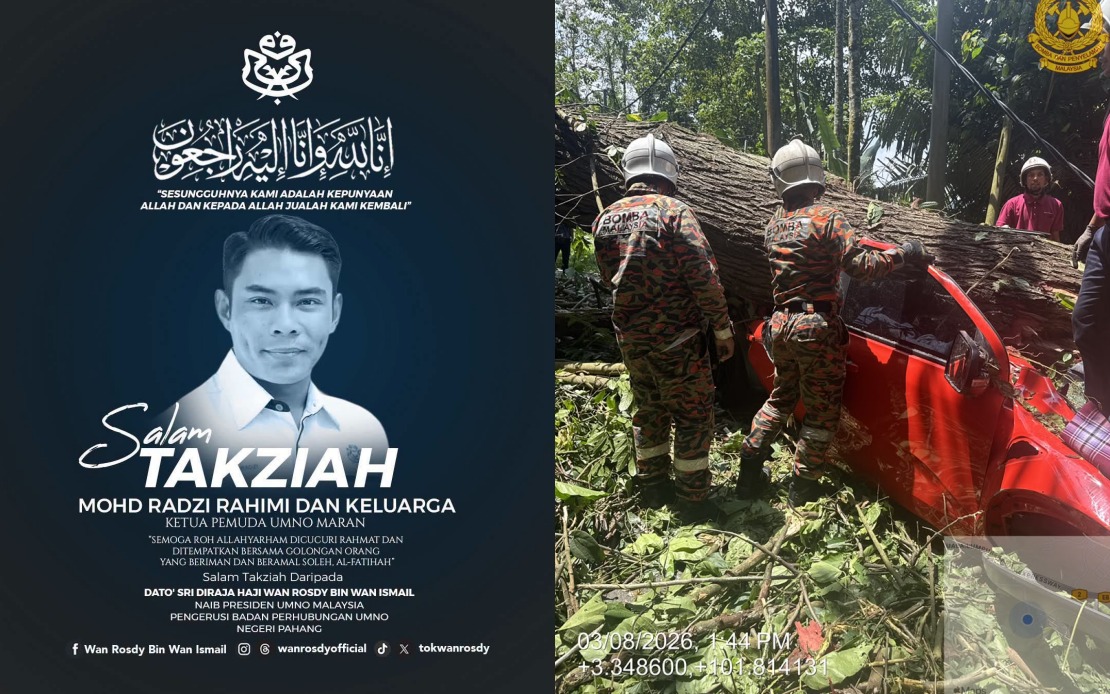
The Pahang political establishment is mourning the loss of Maran UMNO Youth chief Mohd Radzi Rahimi, widely known as Edy Radzi, following a devastating accident on the old Kuala Lumpur-Bentong road near Janda Baik this afternoon. The incident, which involved a four-wheel-drive vehicle being crushed by a falling tree, claimed four lives and injured a child, marking a significant tragedy for the state's UMNO ranks and the wider community.
Pahang Menteri Besar Datuk Seri Wan Rosdy Wan Ismail, who also chairs the Pahang UMNO Liaison Committee, characterised Radzi as a dedicated public servant whose commitment to grassroots engagement defined his tenure in youth politics. Speaking from Temerloh, Wan Rosdy reflected on Radzi's legacy as someone who consistently prioritised community welfare and demonstrated unwavering dedication to his constituents across the Maran division.
Beyond Radzi himself, the tragedy claimed the lives of Nuriani Mohammad Jafri, her son Muhammad Rizz Hazim, and her younger brother Mohammad Nizam. The loss of multiple members within family units compounds the human toll of the incident, leaving extended networks of relatives navigating simultaneous bereavements. One child sustained injuries in the collision, adding another dimension to the emergency response and recovery efforts in the immediate aftermath.
The impact of Radzi's death reverberates across multiple layers of Pahang's political architecture. His roles encompassed leadership within the Maran UMNO division, stewardship of the Pahang UMNO Youth movement, and representation on the broader Pahang UMNO Liaison Committee, positions that afforded him influence over party strategy and youth engagement initiatives across the state. The sudden loss creates a void in youth political mobilisation at a critical juncture when parties are preparing for electoral cycles and internal party strengthening.
Wan Rosdy's statement conveyed official condolences and solidarity with bereaved families, invoking religious sentiment appropriate to the Muslim-majority context. The emphasis on divine mercy and the families' need for spiritual fortitude reflects the cultural framework through which such tragedies are processed within Malaysian political circles and society at large. The Menteri Besar's direct acknowledgment of the loss underscores the gravity with which state leadership approaches the passing of mid-level party operatives.
UMNO Youth chief Datuk Dr Muhammad Akmal Saleh independently issued condolences to Radzi's family, reinforcing institutional acknowledgment of the tragedy at the national party level. The parallel expression from the youth movement's apex leadership signals that Radzi's contributions to UMNO Youth activities were sufficiently recognized to warrant direct engagement from the highest organizational echelon. This layered response demonstrates how the party mobilises multiple spokespersons to affirm commitment to affected families and communities.
The Bentong accident raises broader questions about road safety on regional routes connecting major urban centres. The old Kuala Lumpur-Bentong corridor has experienced various accidents over the years, many attributed to weather-related factors such as fallen trees during storms or periods of heavy rainfall. Environmental conditions, vegetation management, and road maintenance standards in rural and semi-rural corridors remain persistent challenges for Malaysian road infrastructure and safety planning.
For Malaysian readers, particularly those in Pahang and the Klang Valley region, such incidents underscore the risks inherent in traversing older rural routes during adverse weather conditions. The incident invites renewed examination of whether alternative routes are adequately promoted, whether warning systems function effectively, and whether emergency response capabilities are proportionate to accident frequency and severity along these corridors.
Radzi's trajectory as a youth leader reflects the typical career progression within UMNO's hierarchical structure. Youth division members who demonstrate organisational aptitude and political loyalty often ascend through divisional, state, and potentially national roles. At mid-career stages, individuals at Radzi's level frequently function as bridge-builders between grassroots members and senior leadership, translating party directives into community-level initiatives while surfacing constituent concerns to higher echelons.
The timing of this tragedy, occurring during a period when Malaysian political dynamics remain fluid and opposition coalitions continue testing UMNO's traditional support bases, adds another dimension to institutional reflection. The loss of promising mid-level leaders can temporarily disrupt party operations and succession planning, particularly in divisions where institutional knowledge concentrates within small numbers of senior cadres.
Families of the other victims will similarly require community and governmental support during their bereavement periods. While media coverage has appropriately focused on Radzi's political significance, recognition of the equal human dignity and community standing of co-victims remains essential to comprehensive understanding of the tragedy's social impact. This incident exemplifies how single accidents can simultaneously claim lives across different demographic profiles and family situations, touching various networks and communities.
Moving forward, state authorities will likely conduct formal investigations into contributing factors, potentially including tree trimming records along the corridor, weather conditions at the time, and vehicle conditions. Such investigations inform recommendations for preventive measures that might reduce similar incidents. For bereaved families, institutional memory of the deceased's contributions—particularly in political circles—offers some consolation and validation of their life's meaning, though such recognition cannot compensate for the finality and suddenness of accidental death.

