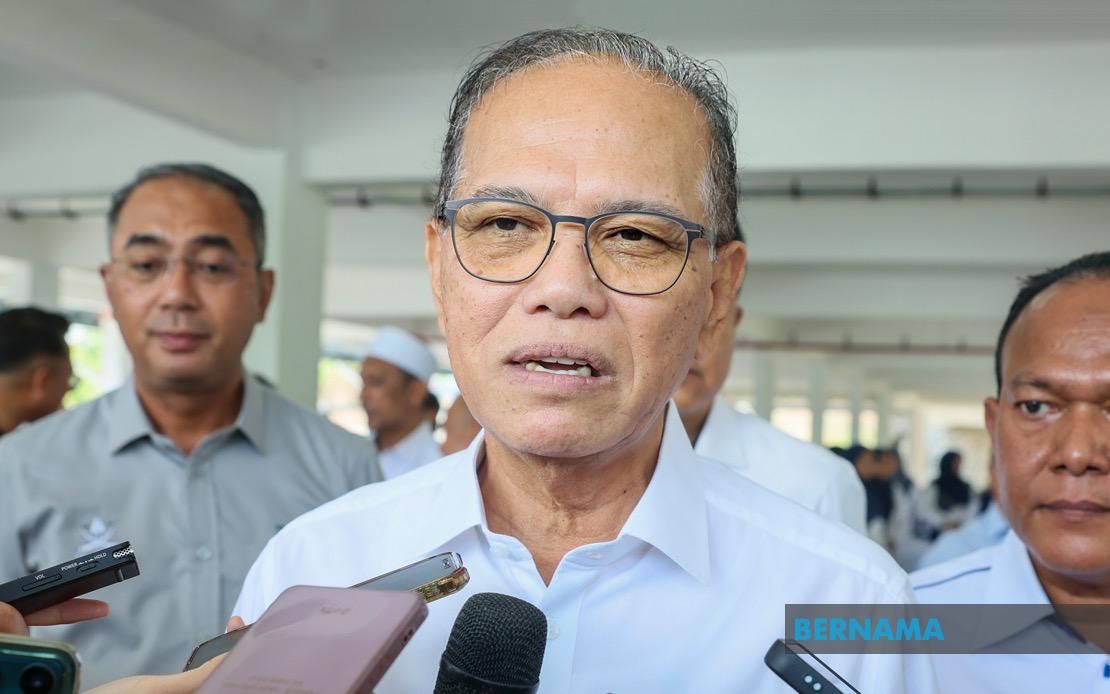
The Pahang state government has committed RM3.5 million to accelerate sports development across three disciplines, signalling an ambitious strategy to elevate the state's competitive standing in Malaysia's national sports landscape. The funding allocation was announced by Menteri Besar Datuk Seri Wan Rosdy Wan Ismail at the closing ceremony of the Pahang 1st Netball League Championship at the Pahang Sports Complex in Kuantan, underscoring the administration's determination to foster athletic excellence from the grassroots upward.
The financial commitment breaks down into distinct investments tailored to each sport's development needs. Football receives the largest share at RM2 million, reflecting its prominence in Malaysian sporting culture and the resource-intensive nature of developing competitive football programmes. Netball, increasingly popular among female athletes in the region, receives RM1 million in initial funding. Sepak takraw, a traditional Southeast Asian sport with deep cultural roots in Malaysia, obtains RM500,000, recognising its importance as both a cultural ambassador and pathway for identifying indigenous talent. This differentiated approach suggests the state government has conducted preliminary assessments of each sport's infrastructure and competitive gaps.
Wan Rosdy emphasised that the initiative transcends mere financial disbursement, framing it instead as part of a comprehensive vision to position Pahang alongside historically dominant states in Malaysia's sports ecosystem. His remarks reveal awareness that sporting dominance in Malaysia has concentrated among certain states, and that competitive parity requires sustained investment rather than ad-hoc support. The Menteri Besar stressed the importance of implementing programmes with rigour and commitment, cautioning against superficial engagement with sports development. This language suggests internal discussion about past underperformance and a determination to avoid repeating previous mistakes in resource allocation.
The grassroots development dimension carries particular significance for Malaysian sports policy. By deliberately targeting talent identification and nurturing at foundational levels, Pahang is acknowledging that elite athletic achievement depends on broad participation pipelines. This approach aligns with international best practices in sports development systems, where sustained success emerges from strong community engagement and early talent identification rather than focusing exclusively on established elite athletes. The state's commitment to building these foundations indicates a medium to long-term strategic horizon rather than expectations of immediate competitive breakthroughs.
Netball represents an intriguing focus for state investment, particularly given Malaysia's historical emphasis on football and badminton. The sport has expanded significantly across Southeast Asia, with growing participation among secondary school and university students. Pahang's decision to allocate substantial resources and commit to increasing netball funding by RM500,000 in the following year—bringing the total to RM1.5 million—suggests recognition of netball's growth trajectory and potential for developing female athletes who can represent the state and nation internationally. This gendered dimension of sports investment merits attention in a Malaysian context where women's sports often receives proportionally less funding than men's programmes.
Sepak takraw's inclusion underscores a different strategic consideration. As a traditional Southeast Asian sport with particularly strong roots in Malaysia, investing in sepak takraw serves dual purposes: developing competitive athletes while reinforcing cultural heritage and regional sporting identity. The sport has maintained a consistent presence in Southeast Asian Games and possesses a dedicated following, making it a pragmatic vehicle for delivering sporting success without requiring infrastructure investments comparable to those needed for football or athletics.
The Pahang 1st Netball League Championship that prompted this announcement showcased substantial participation, drawing 42 teams to compete in the tournament. Semambu's victory and RM10,000 prize allocation demonstrate that competitive netball infrastructure already exists in the state, suggesting the new investment can build upon existing momentum rather than establish programmes from zero. This contextual detail indicates the government has not allocated resources blindly but has responded to demonstrated demand and existing competitive activity.
From a Malaysian federalism perspective, Pahang's sports investment initiative reflects broader patterns of state-level competition in nation-building and soft power through athletics. Successful sports programmes enhance state pride and create positive associations with state governments. States that produce national champions gain reputational advantages in public perception. This political dimension, while not explicitly stated by the Menteri Besar, underlies why state governments consistently prioritise sports investment alongside education and healthcare spending.
The financial commitment, while significant in absolute terms, requires contextualisation within broader government budgets. RM3.5 million represents targeted investment rather than transformative funding, suggesting realistic expectations about outcomes. Comparable analysis of other Malaysian states' sports budgets and resulting competitive achievements would illuminate whether Pahang's allocation aligns with international benchmarks for producing competitive athletes. The stated intention to increase netball funding indicates flexibility within budget planning, though such increases depend on sustained political will and economic performance.
The emphasis on fostering unity, cooperation and discipline through sports reflects an understanding of athletics' social benefits beyond competitive achievement. In Malaysian society, sports serve as vehicles for multiethnic and multicommunal interaction, making sports development programmes inherently relevant to national cohesion objectives. This framing allows government investment in sports to be justified not purely on meritocratic or competitive grounds but as contributions to broader social policy goals.
Looking forward, the success of this initiative will depend on implementation capacity and sustained commitment. Translating financial allocations into functioning programmes requires capable management, competent coaching, adequate facilities and athlete recruitment mechanisms. Pahang's relatively smaller population compared to states like Selangor and Johor means the state must achieve efficient conversion of investment into competitive outcomes. The announcement's specificity regarding allocation amounts and implementation timelines suggests planners recognise these implementation challenges and have designed programmes accordingly.

