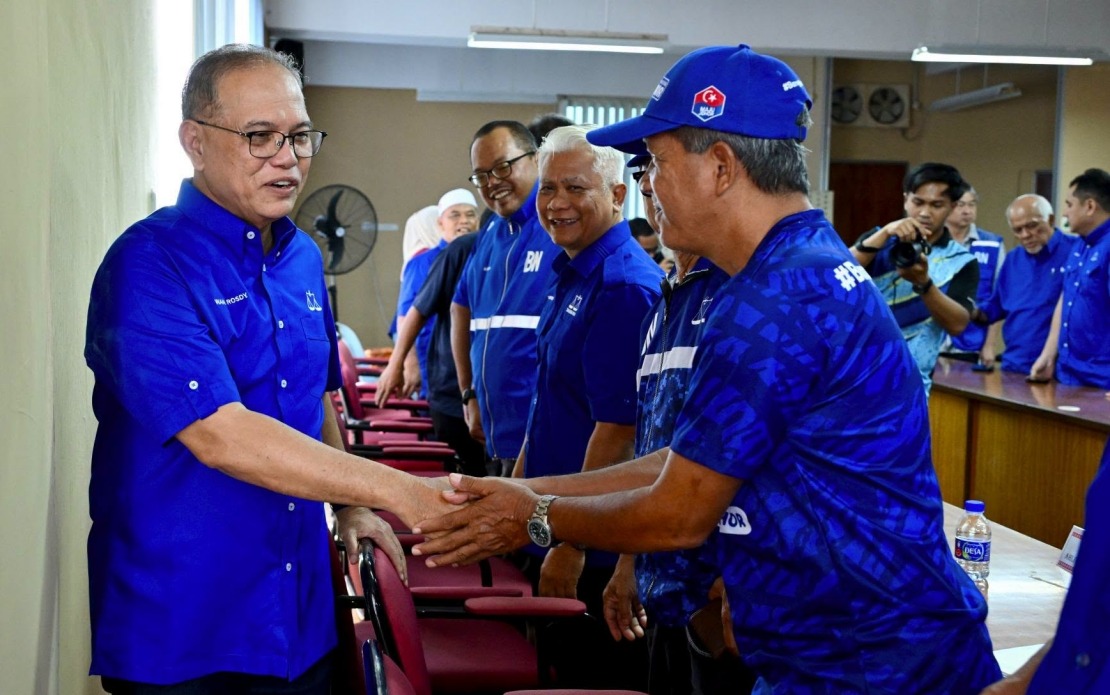
The Barisan Nasional coalition in Pahang has thrown its support behind the ongoing Johor state election campaign, dispatching experienced party operatives to bolster efforts in four critical state constituencies. Datuk Seri Wan Rosdy Wan Ismail, who serves as both Pahang's BN chairman and Menteri Besar, confirmed the cross-state mobilization effort on June 30, signalling the broader coalition's determination to maintain its grip on the southern state ahead of polling day.
The four targeted constituencies—Pekan Nanas, Pulai Sebatang, Benut, and Kukup—all fall within the boundaries of the Tanjung Piai parliamentary division, making this cluster of seats particularly significant for BN's overall strategy in Johor. By concentrating resources on a geographically defined area, the coalition appears to be adopting a focused territorial approach rather than spreading campaign efforts thinly across the state. This concentration suggests these seats are either considered competitive or strategically valuable to the party's post-election positioning in the state assembly.
Wan Rosdy's personal commitment to the campaign extends beyond rhetoric. He announced plans to travel to the FELDA settlement areas in Segamat that Thursday, demonstrating hands-on leadership and direct engagement with party machinery in rural constituencies. Such visits by senior figures typically serve dual purposes: energizing local volunteers and signalling to voters that the party leadership takes their concerns seriously. The mention of FELDA areas is particularly noteworthy, as these settlements represent traditional BN strongholds where rural and agricultural communities have historically provided reliable voting blocs.
The Pahang leader expressed considerable optimism about BN's prospects in the Johor election, anchoring his confidence in both the party's organizational capabilities and the reception candidates have received from voters during campaign activities. Having spent three days in Johor from the nomination period, Wan Rosdy observed what he characterized as strong momentum within BN's campaign machinery and high motivation among the party's candidates. This direct observation from a fellow coalition member carries weight within party circles, as it suggests peer-level assessment rather than central party propaganda.
The broader context reveals a competitive electoral environment. A total of 172 candidates are contesting the 56 state assembly seats across Johor, indicating an average of approximately three candidates per seat. This density of candidates typically reflects genuine multi-party competition, with Opposition parties mounting serious challenges to the long-ruling coalition. The involvement of Pahang's BN organization underscores how Malaysian state elections often become de facto national contests, with parties mobilizing resources across state boundaries to influence outcomes they deem strategically important.
From a Malaysian and regional perspective, the Johor state election carries implications beyond the southern state itself. Johor remains one of the country's most economically significant states, with major industrial zones, port facilities, and cross-border economic ties with Singapore that influence national economic policy. An election result could affect how Johor's resources and political influence are deployed within federal-level coalitions, potentially influencing national policy directions on economic development, infrastructure investment, and inter-state coordination.
The timing of the campaign intensification also matters. With polling day set for July 11 and early voting scheduled for July 7, the mid-year timing ensures the election occurs before the second half of the year, which typically brings heightened federal legislative activity. This positioning allows the winning state government to consolidate power and establish policy priorities with adequate time before the annual budget cycle.
The cross-state nature of BN's campaign coordination reveals how Malaysia's political system operates as an interconnected network rather than isolated state-level contests. Senior leaders from one state traveling to assist campaigns in another demonstrates the coalition's institutional capacity for resource-sharing and coordinated strategy. Such arrangements would be impossible without effective central coordination, suggesting BN's organizational apparatus remains relatively robust despite periodic internal tensions over power-sharing and seat allocations.
For voters in Johor, this external support represents both an opportunity and a potential concern. Viewed positively, it indicates commitment from the broader coalition to serve the state's interests. Viewed skeptically, it might suggest the state government requires external propping up to maintain electoral competitiveness. How voters interpret this assistance likely depends on their existing perceptions of BN's performance in Johor and their assessments of Opposition alternatives. The engagement of cross-state party machinery could either reinforce BN's image as a well-organized, established force or reinforce Opposition messaging about entrenched, out-of-touch incumbents.

