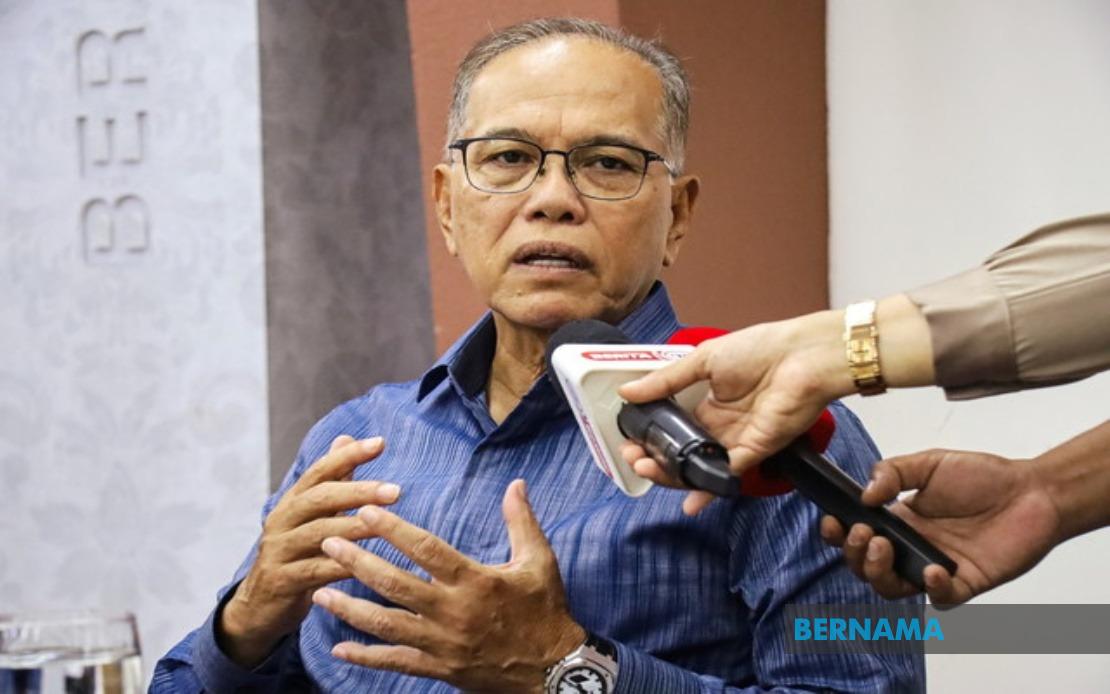
Pahang Barisan Nasional has signalled its intention to preserve the Unity Government arrangement with Pakatan Harapan until the 16th General Election, according to the state's Menteri Besar Datuk Seri Wan Rosdy Wan Ismail. Speaking in Kuantan on Wednesday, the BN chairman emphasised that the governing coalition would remain focused on serving the people of Pahang, with discussions ongoing regarding the partnership's continuation. His remarks suggest that despite the inherent complexities of maintaining a multi-party government, the state-level BN machinery views the current political settlement as beneficial to sustaining governance stability through the electoral cycle.
The political composition of Pahang's state assembly reflects the fractured national landscape that emerged from the 2022 general election results. In the 42-seat Dewan Undangan Negeri, both BN and Perikatan Nasional secured 17 seats each, while PH obtained eight seats. This arithmetic necessitated the formation of a coalition government, which came to fruition in November 2022 when the Pahang Regent consented to bringing BN and PH together to form the state administration, with Wan Rosdy appointed to lead the executive council. The arrangement represented a pragmatic accommodation of electoral realities rather than ideological alignment, reflecting the broader national trend of coalition-building that has characterised Malaysian politics since 2022.
Wan Rosdy's statement indicating openness toward cooperation with other parties in preparation for the next general election introduces an element of flexibility into the coalition's strategic calculus. This measured approach suggests that while the current BN-PH partnership at state level remains the preferred configuration, Pahang's BN leadership is not precluding alternative political arrangements should circumstances shift. The positioning is characteristic of contemporary Malaysian political pragmatism, where state-level coalitions increasingly operate according to localised considerations rather than remaining strictly bound to national party directives. For voters and observers in Pahang, this signals that the current government's lifespan may extend to GE16, providing a window of relative political certainty for policy implementation and development planning.
Beyond coalition politics, Wan Rosdy used the occasion of the 2026 Makmur Pahang Initiative Presentation Ceremony to highlight the state government's commitment to educational advancement. The programme allocated RM118,000 to support 118 students from higher education institutions preparing for overseas studies in Egypt and New Zealand during August. This targeted investment reflects a deliberate policy focus on developing human capital, particularly through exposure to international academic environments. By directing scholarship support toward students in Islamic-majority countries alongside developed economies, the Pahang state government is signalling an educational philosophy that balances religious and cultural values with technical and professional competency development.
The scholarship initiative extends beyond simple financial assistance, encompassing advisory guidance on navigating the psychological and physical challenges inherent in studying abroad. Wan Rosdy's counsel to recipients to maintain strong mental and physical health whilst abroad, coupled with exhortations to uphold Pahang's reputation, underscores the state leadership's conception of overseas scholars as ambassadors for the state and nation. This framing transforms individual educational pursuits into collective endeavours with broader implications for Pahang's standing in international spheres. The emphasis on character development alongside academic excellence reflects a holistic approach to educational investment that extends beyond mere credential acquisition.
The Pahang state government has additionally committed resources through Yayasan Pahang to support students in Jordan and Morocco, providing USD1,000 in assistance. This geographical diversification of scholarship destinations—encompassing North Africa, the Middle East, Southeast Asia, and Oceania—suggests a deliberate strategy to expose Pahang's youth to varied cultural, academic, and economic environments. The selection of study destinations incorporating Islamic elements demonstrates governmental consciousness of the predominantly Muslim composition of Pahang's population, whilst the inclusion of secular, developed economies signals an intent to prepare students for participation in the globalised knowledge economy. Such a balanced approach reflects contemporary recognition that genuine competitiveness requires engagement across multiple civilisational and economic frameworks.
The Makmur Pahang Initiative itself represents an ongoing commitment to programme expansion and enhancement, with state leadership signalling responsiveness to evolving student needs and emerging field opportunities. Wan Rosdy's acknowledgment that the curriculum review process considers Islamic content alongside vocational relevance indicates that the state government views education as a space where religious identity and professional development need not conflict. This integrative perspective stands as a potential model for other Malaysian states grappling with similar considerations regarding educational philosophy and national values transmission.
For Malaysian readers, particularly those in Pahang and other states harbouring similar political coalitions, the BN chairman's remarks offer modest assurance regarding governmental continuity through the election cycle. However, the qualifier regarding openness to cooperation with other parties suggests that this stability remains contingent and subject to negotiation. In the broader Southeast Asian context, where coalition governments have become increasingly common across the region—from Thailand's complex parliamentary arrangements to Indonesia's multi-party cabinets—Pahang's approach exemplifies the pragmatic flexibility that contemporary democratic governance frequently demands. The state's approach reflects recognition that electoral mathematics often preclude single-party dominance, necessitating cross-ideological partnerships grounded in programmatic rather than ideological consensus.
The investment in overseas education, meanwhile, positions Pahang within broader Malaysian and regional conversations regarding talent development and international competitiveness. As Southeast Asian nations compete to develop high-skilled workforces capable of competing in knowledge-intensive industries, Pahang's scholarship allocations signal recognition that sustained economic advancement requires cultivating human capital through exposure to world-class educational institutions. The geographical diversity of destination countries reflects appreciation for the reality that excellence in various fields—engineering, medicine, Islamic jurisprudence, agricultural science—exists across multiple political systems and geographic contexts.
Looking forward to GE16, the trajectory of Pahang's Unity Government will constitute an important test case for whether cross-party coalitions can deliver sustained governance effectiveness whilst maintaining political legitimacy with voters. The state's current arrangement suggests that ordinary governance functions—education, infrastructure, public service delivery—can proceed across ideological divides when parties commit to shared programmatic objectives. However, as the general election approaches, electoral pressures may intensify tensions within the coalition, potentially transforming the collaborative arrangement into a competitive environment. Whether the unity framework endures through the electoral period or fragments into renewed competition will carry implications not merely for Pahang but for Malaysian electoral politics more broadly.

