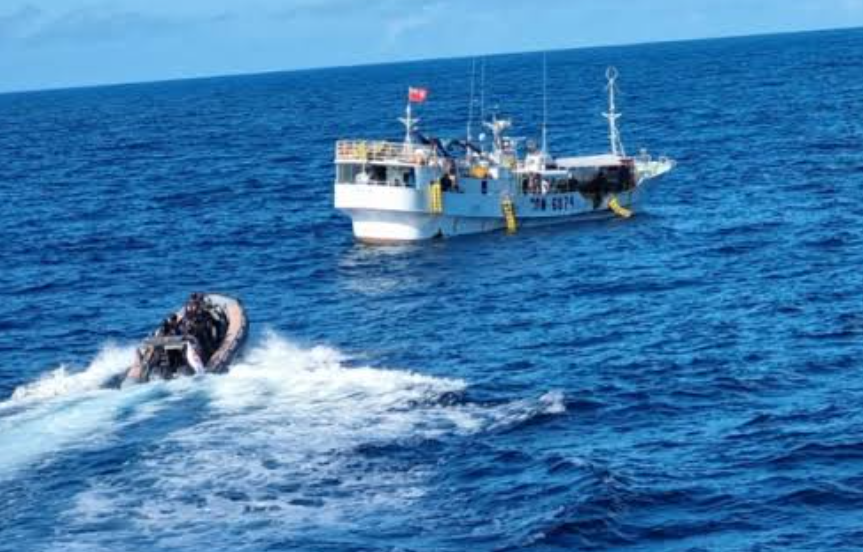
Authorities across the Pacific have moved decisively against illegal fishing operations, with multiple Chinese and Indonesian vessels detained or brought into port by enforcement agencies in Kiribati, Palau and Papua New Guinea this month. The detentions represent part of a broader coordinated crackdown led by the Pacific Islands Forum Fisheries Agency, reflecting growing concern among island nations about the protection of their marine resources and the revenues they generate.
The scale of the enforcement operation underscores the strategic importance of fishing rights in the region. Between August 3 and 14, maritime authorities from 11 Pacific island nations boarded more than 100 vessels across 28 million square kilometres of ocean during Operation Island Chief. The two-week surveillance campaign utilised advanced resources, including aerial reconnaissance provided by an Australian military aircraft alongside patrols conducted by a United States Coast Guard vessel and Pacific maritime police units. Despite these extensive efforts, authorities have remained circumspect about identifying all vessels involved, with the FFA declining to provide specific details about 16 additional boats flagged as worthy of investigation.
The economic stakes underpinning these enforcement actions are substantial. Pacific island nations collectively earn approximately US$500 million annually through fishing access fees, supplemented by US$1.2 billion in export revenues. These financial flows support the livelihoods of roughly one-third of all Pacific households, making fisheries management integral to regional economic stability. The tuna industry's significance becomes even more apparent when considering that the Pacific supplies approximately half of the world's total tuna catch, yet processing and handling of this catch remains concentrated outside the region, with Pacific Island countries managing only 15 per cent of the value-added work.
The geographic and commercial dynamics of Pacific fishing create both opportunity and vulnerability. Most tuna caught in Pacific waters is destined for Asian markets, transported by long-distance fishing fleets that operate within the exclusive economic zones of small island states under licensing arrangements. This dependency on foreign vessels operating within their waters leaves island nations in a complex negotiating position. Chinese companies operate extensive long-distance fleets across the region and maintain fisheries joint ventures with multiple Pacific island governments, making the naming of Chinese vessels suspected of illegal activity politically delicate in several quarters.
Recent incidents illustrate the persistent enforcement challenges facing island authorities. Last month, Tuvalu maritime police apprehended a Chinese fishing vessel operating illegally within Tuvalu's waters while transmitting false location data to obscure its position. The vessel remained in detention for 24 days before being fined and released, according to Peter Hammarstedt, captain of the conservation vessel Sea Shepherd, which assisted Tuvalu authorities during maritime patrols. That Tuvalu holds diplomatic recognition of Taiwan rather than the People's Republic of China adds diplomatic sensitivity to such enforcement actions.
The historical record of enforcement actions provides context for current concerns about compliance. Between 2008 and 2026, the Western and Central Pacific Fisheries Commission issued 278 penalty notices to Chinese fishing boats for violations, representing the second-largest tally of infringements in the region. Taiwan vessels accumulated 319 penalty notices during the same period, indicating that illegal fishing operations span multiple flag states and reflect systemic challenges in monitoring vast ocean territories.
The upcoming Pacific Islands Forum meeting, scheduled to commence August 30 in Palau with participation from 18 Pacific Island leaders, is expected to prioritise discussion of new strategies addressing fisheries protection and revenue maximisation. These conversations arrive at a moment when climate change poses increasing threats to fish stocks, compounding the urgency of effective resource management. Island leaders face pressure to develop frameworks that simultaneously protect fish populations for long-term sustainability while maximising the economic returns that current catches generate.
The regional enforcement coordination represents a significant escalation in maritime policing capacity, yet gaps persist in information sharing and consistency. Palau and Papua New Guinea authorities declined to provide comment on Operation Island Chief, while Kiribati's maritime police similarly refrained from discussing the operation's specifics. This reticence may reflect diplomatic sensitivities or operational security considerations, but it also highlights the challenge of maintaining public accountability in enforcement efforts that touch on sensitive diplomatic relationships.
For Malaysia and other Southeast Asian nations engaged in fisheries or shipping within Pacific regions, the enforcement actions signal intensifying scrutiny of vessel compliance and licensing protocols. The operation demonstrates that Pacific island governments, despite limited individual resources, can mobilise coordinated surveillance and enforcement capacity when unified through regional mechanisms. As climate change pressures fish stocks and island economies face growing financial pressures, Pacific nations appear increasingly willing to prioritise revenue protection and resource sustainability over traditional commercial relationships, suggesting a shifting balance in how fishing access rights will be negotiated and enforced across the region.

