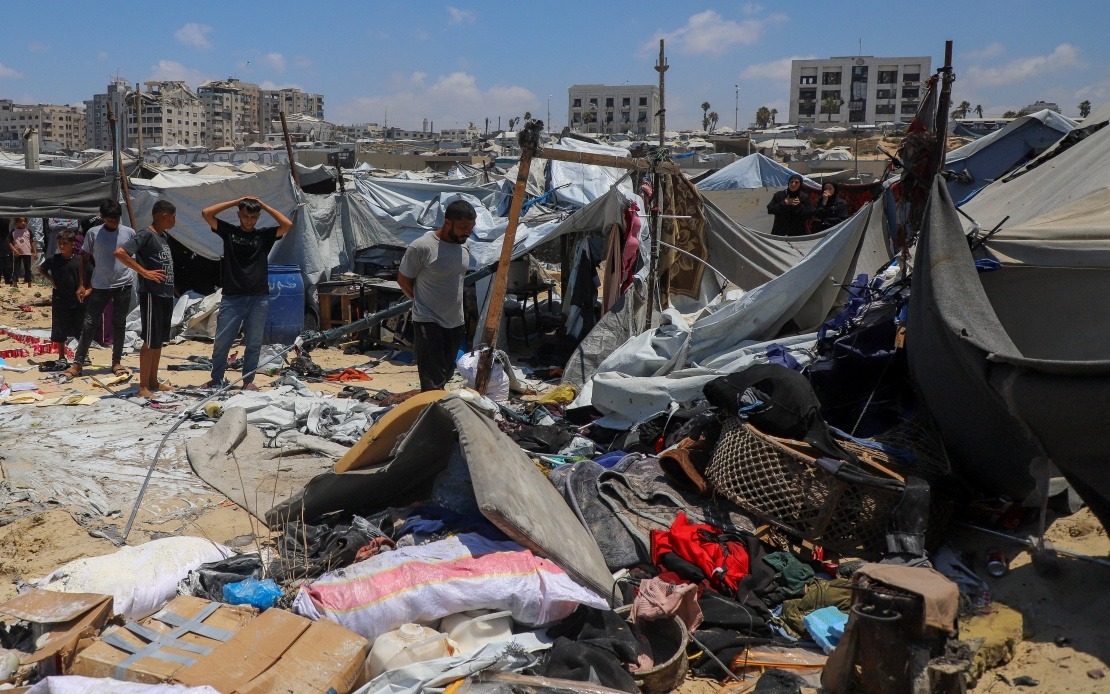
The scale of devastation in Gaza has reached extraordinary levels, according to documentation released by the Palestinian Government Communication Centre this week. The assessment, which draws on local intelligence and ground-level observations, indicates that Israeli military destruction now encompasses more than nine-tenths of the coastal enclave's built environment. Simultaneously, occupation forces maintain direct control over roughly four-fifths of the war-affected region, presenting a picture of comprehensive military dominance and widespread civilian displacement across one of the world's most densely populated areas.
The intensity of military operations intensified considerably during the final week of June and opening days of July, with renewed bombardment and ground operations concentrated in three major population centres. Khan Younis in the southern Gaza Strip, the border town of Rafah, and Gaza City in the north all experienced elevated military activity during this seven-day window. Medical facilities documenting casualties reported eight Palestinian deaths directly resulting from these operations, though independent verification of such figures remains challenging given the restricted information environment within the territory.
Beyond the immediate toll in lives and physical destruction, Palestinian accounts describe a systematic pattern of residential targeting and forced displacement. The demolition of homes has continued alongside artillery and air strikes, creating a cascading humanitarian crisis as families lose shelter and are compelled to relocate repeatedly. This practice has drawn international scrutiny regarding compliance with international humanitarian law, though responses from the Israeli government have emphasised operational necessity and civilian protection measures.
The military pressure extends well beyond Gaza's borders into the occupied West Bank, where Israeli security forces have maintained an extensive operational tempo throughout the reporting period. Raids across multiple Palestinian population centres including Ramallah, Nablus, Hebron, and Jenin have involved forced entries into residential properties, detention operations, and restrictions on freedom of movement. Road closures and checkpoint expansion further constrain Palestinian civilian mobility and economic activity across the territory.
Israeli settler militias have complemented official military operations with what Palestinian authorities characterise as vigilante attacks against Palestinian communities and property. The documented incidents span from arson targeting civilian infrastructure such as the cafeteria in al-Lubban ash-Sharqiya to harassment of pastoral communities east of Bethlehem and attempts to seize livestock. Such actions, which the Palestinian government links to colonial settlement expansion, add a layer of communal tension and insecurity beyond formal military operations.
The agricultural sector has borne particular strain under this environment of military and settler pressure. The Palestinian Ministry of Agriculture documented a significant upward trajectory in hostile actions targeting farming communities and productive land across the West Bank during the same weekly reporting period. The scale of documented damage reveals both the deliberateness of targeting agricultural resources and the systematic nature of the disruption to Palestinian livelihoods.
Olive cultivation, foundational to Palestinian rural economy and cultural identity, has suffered specific and concentrated damage. Over 2,500 olive trees were destroyed across the West Bank through uprooting, burning, or other means of damage during this single week. The losses concentrated in three key agricultural governorates—Salfit, Jenin, and Nablus—where olive production traditionally forms the backbone of farming families' annual income and subsistence. The Ministry's assessment indicates that at least 125 farming households experienced direct losses from these incidents alone.
The cumulative financial impact of agricultural destruction extends well beyond individual farmer losses to broader regional economic consequences. The documented direct economic losses from this week's agricultural targeting alone reached approximately US$11.78 million, a figure that captures only property damage and does not account for lost future production, reduced income security, or multiplier effects through rural economies dependent on agricultural trade and processing. When extrapolated across months of similar operations, such figures illustrate the systematic economic dimension of the conflict affecting Palestinian civilian populations.
These developments carry significant implications for regional stability and humanitarian conditions in the Middle East. For Malaysia and Southeast Asian nations, the situation reflects broader concerns about civilian protection, displaced populations, and the humanitarian dimensions of protracted conflicts. Malaysian policymakers and civil society have traditionally emphasised principles of international humanitarian law and civilian protection, making these reports relevant to ongoing regional diplomatic engagement and humanitarian response coordination through bodies such as the United Nations and Non-Aligned Movement forums.
The combination of massive infrastructure destruction, military occupation control, and targeted disruption of civilian economic activity creates what analysts characterise as a deepening humanitarian emergency. The restriction of Palestinian movement, the targeting of agricultural livelihoods, and the systematic demolition of civilian infrastructure collectively constrain the capacity for economic recovery, civilian governance, and basic service provision. Such conditions typically generate long-term displacement, refugee flows to neighbouring countries, and destabilisation effects that extend across international borders and regional security arrangements.
The Palestinian government documentation represents one attempt to create an institutional record of claims regarding military operations and their civilian effects. International humanitarian organisations, journalists, and investigative bodies continue independent assessment of conditions within both Gaza and the West Bank, though access restrictions and security concerns complicate comprehensive verification. The divergence between Palestinian accounts and Israeli military statements regarding casualty figures, targeting criteria, and destruction scale reflects deeper disagreements about the conflict's character and trajectory.
As the operational situation continues evolving, humanitarian agencies remain focused on providing emergency assistance to displaced populations, documenting alleged violations for potential future accountability processes, and advocating for protection of civilians according to international law. The agricultural losses documented by the Palestinian Ministry underscore how protracted conflicts affect not only immediate security but also long-term development prospects and food security for civilian populations dependent on land-based livelihoods.

