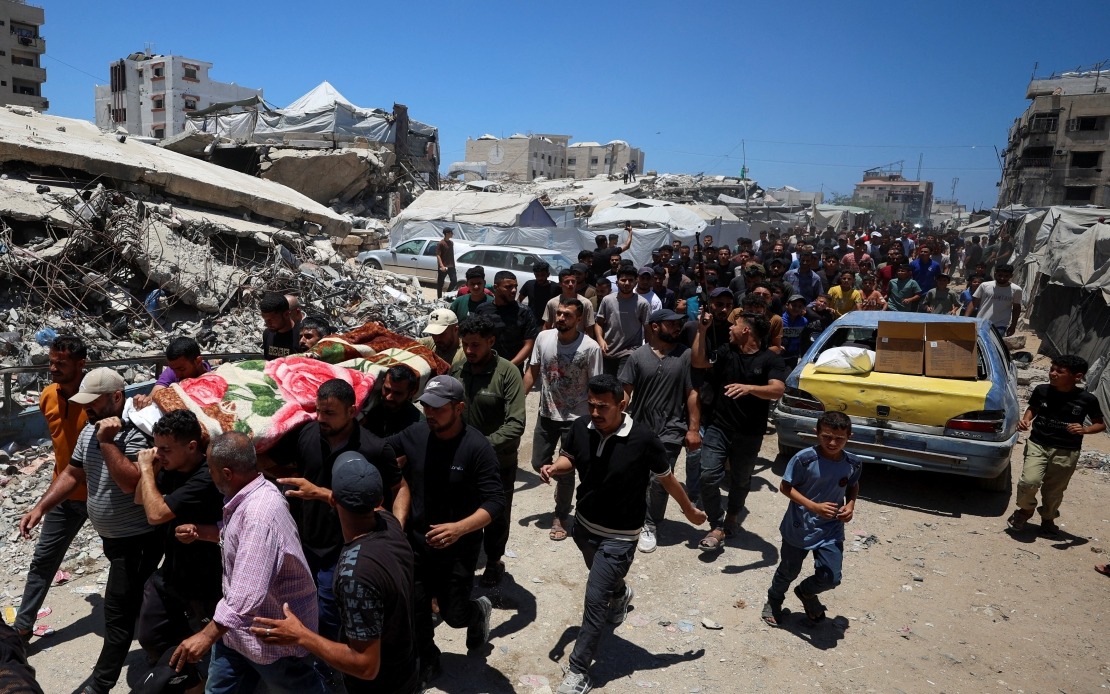
The humanitarian crisis unfolding in Gaza has reached devastating proportions, with the Palestinian Prime Minister's Office documenting a cumulative death toll of 73,032 since the conflict's outbreak in October 2023. Of particular concern is the continuation of hostilities even after ceasefire arrangements took effect—Israeli military operations have claimed an additional 1,021 Palestinian lives since the truce commenced, according to a situation report released by the Government Communication Centre this week. For Malaysian observers monitoring the Middle East conflict, these figures underscore the fragility of diplomatic arrangements in the region and raise questions about enforcement mechanisms designed to protect civilian populations.
The persistence of military operations despite formal ceasefire agreements reflects a troubling pattern of violence that extends beyond direct combat. The Government Communication Centre's assessment indicates that Israeli bombardments have continued throughout the supposed truce period, targeting areas including Nuseirat, Al-Mawasi, Khan Younis and Gaza City. These attacks have generated fresh civilian casualties and deepened the deterioration of already precarious living standards throughout the enclave, suggesting that the ceasefire exists primarily on paper rather than on the ground where Palestinians endure daily hardship.
The physical destruction wrought upon Gaza's infrastructure has created an unprecedented displacement crisis. Official data reveals that Israeli military operations have destroyed or damaged three-quarters of the Gaza territory's housing stock, leaving nearly one million Palestinians living in temporary tent settlements. This scale of homelessness exceeds the entire population of several Malaysian towns and demonstrates the comprehensiveness of the destruction. The shortage of adequate shelter compounds severe scarcities of clean drinking water, forcing the vast majority of residents to depend entirely on the limited humanitarian supplies trickling into the enclave.
Restrictions on humanitarian access have become a critical factor exacerbating the crisis. Aid organizations including Oxfam have raised alarms before the United Nations Security Council about Israeli control mechanisms that systematically obstruct the delivery of life-saving assistance. These logistical barriers prevent food, medicine, and other essential supplies from reaching vulnerable populations at the pace and volume required to address acute needs. The combined effect of infrastructure destruction and access restrictions creates a humanitarian situation that international observers characterize as increasingly dire.
Children have borne a disproportionate toll throughout the conflict. According to United Nations Children's Fund data compiled since the ceasefire announcement, 265 Palestinian children have perished while more than 400 others have sustained injuries. The concentration of casualties among the youngest population segment raises developmental and psychological concerns that will extend far beyond the immediate conflict period. These figures carry particular resonance for Malaysian readers, a nation with strong cultural emphasis on child welfare and education.
The displacement crisis extends beyond Gaza into the occupied West Bank territories. The United Nations High Commissioner for Human Rights office has documented a marked escalation in forced Palestinian displacement across the West Bank, including East Jerusalem, driven by settler violence, systematic home demolitions, movement restrictions, and forced evictions. This territorial pressure suggests a broader strategic pattern aimed at altering demographic compositions and land control arrangements across occupied Palestinian territories.
Agricultural destruction adds economic devastation to the immediate humanitarian emergency. The Palestinian Ministry of Agriculture has documented the systematic destruction of over 7,200 trees, including more than 1,200 olive trees of significant cultural and economic value, alongside estimated losses reaching approximately $5.17 million USD. Beyond statistical loss, this destruction targets a cornerstone of Palestinian rural livelihoods and cultural heritage. Arson attacks have simultaneously targeted religious sites, including two mosques in the villages of Jiljilya and Mazra' al-Nubani, adding religious and cultural dimensions to the broader conflict.
Displacement within refugee camps has accelerated during 2025. Israeli military operations concentrated in Jenin, Tulkarem and Nour Shams refugee camps have displaced more than 33,000 Palestinians since January alone. These historically vulnerable populations, already living in confined spaces following earlier conflicts, face repeated cycles of displacement that prevent any accumulation of stability or recovery capacity. The compounding nature of these displacements raises questions about the feasibility of long-term Palestinian population concentration in already overstretched facilities.
Detention conditions within Israeli facilities have deteriorated significantly. Palestinian institutions monitoring prisoner welfare report overcrowding, inadequate sanitation, and disease proliferation within detention centres holding Palestinian detainees. International humanitarian law frameworks establish clear obligations regarding humane detention conditions, yet reports indicate systematic deterioration in compliance with these standards. The combination of detention abuses and external displacement creates a comprehensive pressure environment affecting Palestinian communities through multiple channels simultaneously.
Despite the extraordinary challenges confronting education systems, Palestinian authorities have maintained administrative commitment to formal schooling. The Palestinian government completed preparations for this year's General Secondary Education Examination, an annual assessment involving approximately 91,000 students across Palestinian territories. Notably, roughly 37,000 students in Gaza are completing examinations electronically for the third consecutive year, demonstrating adaptation to extraordinary circumstances. This educational continuity effort, pursued despite active conflict conditions, reflects institutional determination to preserve normalcy and long-term human development investment.
For Malaysia and the broader Southeast Asian region, the Gaza situation presents several strategic implications. The continuation of violence despite formal ceasefire arrangements underscores the limitations of international diplomatic instruments without enforcement mechanisms. The scale of civilian casualties and displacement creates ongoing refugee pressures that extend beyond Palestinian territories. Understanding the complete humanitarian picture becomes essential for Malaysian policymakers engaging with Middle Eastern issues in international forums, particularly in bodies like the United Nations where Malaysia maintains active diplomatic participation on humanitarian and human rights questions.