The Federal Territories of Kuala Lumpur, Putrajaya and Labuan have deployed 62,386 Jalur Gemilang flags throughout their jurisdictions since the start of August as part of preparations for the 2026 National Day and Malaysia Day festivities. The widespread distribution reflects official efforts to reinvigorate patriotic sentiment across urban centres and residential neighbourhoods, with flags prominently positioned along main thoroughfares designated for protocol purposes as well as community spaces.
Hannah Yeoh, the Minister in the Prime Minister's Department overseeing Federal Territories affairs, spearheaded the campaign with an emphasis on fostering genuine national pride among Malaysians. She articulated a vision where citizens actively participate in flag displays both in physical spaces and digital platforms, framing the gesture as a meaningful expression of gratitude for the freedoms the nation has achieved since independence. The initiative transcends mere ceremonial protocol, instead serving as a canvas for engaging ordinary Malaysians in a collective reflection on national identity.
A significant dimension of Yeoh's messaging centred on demystifying flag protocol and removing psychological barriers that might inhibit public participation. She acknowledged that many citizens harbour anxiety about displaying the Jalur Gemilang incorrectly, and sought to address this concern directly by assuring the public that comprehensive guidance materials exist online. This approach recognises a genuine gap between public enthusiasm and practical confidence, transforming what could be a source of embarrassment into an opportunity for education and engagement.
The minister advocated strongly for instilling flag consciousness from an early age, arguing that patriotic habits should take root during formative schooling years rather than emerging sporadically during commemorative periods. Such foundational conditioning, she suggested, would normalise flag displays and integrate them naturally into the social fabric rather than treating them as exceptional acts reserved for official occasions. This developmental framework acknowledges that national identity formation operates across generational timescales.
Businesses and corporate entities received specific guidance regarding their responsibilities in maintaining flag standards. Yeoh directed company management to ensure staff members tasked with flag installation possess adequate knowledge of proper protocols and urged supervisory oversight to catch and prevent procedural mistakes before they occur. This delegation of responsibility recognises that much public-facing flag display happens through commercial actors rather than purely governmental channels, necessitating a collaborative approach to maintaining national standards.
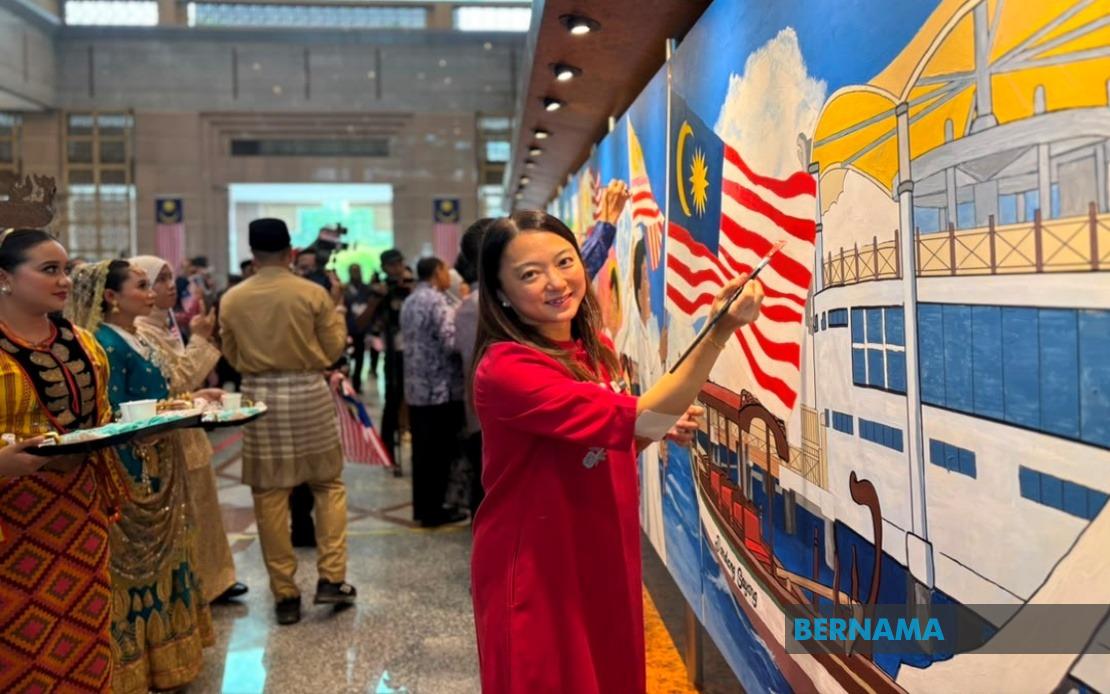
The mural project unveiled during the campaign added an artistic dimension to the patriotic drive. A 25.40-metre Independence Mural was completed at Menara Seri Wilayah, featuring visual representations of iconic landmarks from Kuala Lumpur, Putrajaya and Labuan alongside the national flag. This artistic intervention serves multiple purposes: it provides a tangible focal point for public celebration, creates Instagram-worthy content likely to generate organic social media amplification, and symbolically affirms that national pride transcends political and administrative divisions between the three territories.
For Malaysia's diverse and increasingly urbanised population, such visual campaigns carry particular significance. They provide non-verbal language through which citizens from different linguistic, religious and cultural backgrounds can express shared national commitment. The murals and widespread flags transform urban landscapes into galleries of patriotic expression, making national sentiment visible in everyday environments where citizens shop, work and transit.
The scale of distribution across three distinct administrative units demonstrates coordination between the Federal Territories Department and Putrajaya Corporation, the statutory bodies responsible for territorial governance. This institutional coordination reflects recognition that National Day observances require sustained administrative machinery rather than improvised responses. The involvement of senior officials including Datuk Muhammad Azmi Mohd Zain and Datuk Mohd Sakeri Abdul Kadir signals that flag distribution receives priority treatment within government hierarchies.
For Malaysian readers particularly, this campaign arrives during a period of intensifying focus on national cohesion. The emphasis on proper flag etiquette and widespread participation speaks to concerns that patriotic expression should be inclusive rather than exclusive or prescriptive. By positioning flag displays as democratic acts available to all citizens rather than privileges restricted to particular groups, the initiative frames nationalism as fundamentally pluralistic.
The 2026 National Day observances occur within a broader Southeast Asian context where several nations simultaneously navigate questions about national identity and patriotic expression. Malaysia's emphasis on accessible, widely distributed flag campaigns positions it within regional conversations about how multiethnic democracies cultivate shared national consciousness. The approach privileges inclusivity and provides clear technical guidance rather than imposing abstract patriotic demands.

