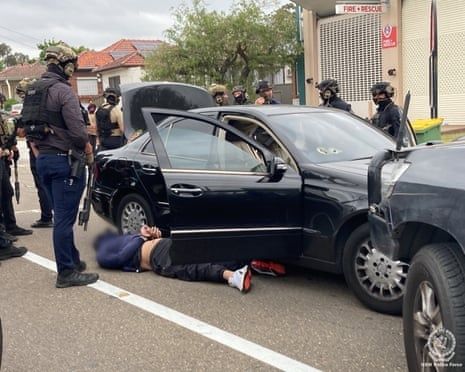
New South Wales police have announced the arrest of 356 people following an intensive three-day operation targeting violent and sexual offences across the state's public transport network. The NSW Police Force revealed that the latest phase of Operation Waratah, conducted between Thursday and Saturday, deployed more than 400 officers daily across trains, light rail trams, buses and ferries throughout the state. The operation represents a significant escalation in law enforcement's commitment to making public transport safer for commuters.
Operation Waratah, established in 2024, has become the cornerstone of NSW's strategy to combat crime on public transport. The sixth and most recent phase has brought the cumulative arrest tally under the operation to more than 1,800 individuals since its inception. This sustained enforcement approach reflects growing concern among authorities about passenger safety and the prevalence of violent crime in transit environments. The operation's continued expansion signals that police consider public transport security a priority requiring persistent, coordinated intervention.
During the three-day enforcement period, officers patrolled an extensive network that included 539 trains, 127 buses and 29 light rail trams across NSW. This geographic spread demonstrates the comprehensive nature of the operation, targeting multiple transport modes simultaneously rather than focusing on isolated routes or regions. The breadth of coverage indicates that police have adopted a holistic approach to public transport security, recognising that offences occur across diverse transit environments and that comprehensive surveillance increases both deterrence and apprehension rates.
The charges laid against those arrested reflect the serious nature of offences being targeted. The 356 people arrested faced combined charges totalling 645 offences, indicating that many individuals were charged with multiple counts. This suggests that rather than apprehending first-time offenders, the operation frequently identified repeat perpetrators or individuals engaged in systematic criminal behaviour. The multiplicity of charges per arrest provides insight into the pattern of criminality that police are attempting to disrupt on public transport.
Weapon seizures formed a notable component of the operation's results. Officers recovered 28 knives or weapons during the three-day period, underscoring the security risks passengers face during their commute. The presence of armed individuals on public transport presents acute safety concerns, as confined spaces with limited escape routes intensify the danger posed by weapons. These seizures may prevent potential violent incidents and suggest that some individuals are deliberately boarding public transport while carrying weapons, indicating premeditation rather than spontaneous confrontation.
Drug-related detections also featured prominently in the operation's outcomes. Police made 137 drug detections during the phase, indicating that substance-related offences constitute a significant problem on NSW public transport. The connection between drug use and violent crime on transit systems is well established in criminological literature, as intoxication can impair judgment and lower inhibition thresholds. Addressing drug-related crime on public transport therefore potentially reduces associated violent incidents.
For Malaysian readers and Southeast Asian observers, NSW's Operation Waratah offers relevant lessons regarding public transport safety management in densely populated urban environments. Many Malaysian cities including Kuala Lumpur rely on extensive public transport networks that, like NSW, face sporadic security challenges. The intensive patrol strategy employed by NSW police—deploying substantial numbers of officers across multiple transport modes simultaneously—provides a model that Malaysian authorities could adapt to local conditions. The emphasis on sustained, coordinated enforcement rather than sporadic reactive responses has proven effective in Australian contexts.
The operation also highlights how data-driven policing, reflected in the specific targeting of known offence patterns and suspect profiles, can improve resource efficiency. By concentrating officers during peak offence periods and on routes with higher incident rates, police achieve greater detection rates than would be possible through uniformly distributed patrols. This intelligence-led approach resonates with contemporary policing philosophy adopted throughout the region.
However, the continuing need for such large-scale operations raises questions about whether enforcement alone suffices to ensure public transport safety. While arrests and weapon seizures produce immediate tangible results, longer-term solutions likely require complementary strategies including improved station design, enhanced CCTV monitoring, victim support services, and community education initiatives. NSW's sustained commitment to Operation Waratah, now in its sixth phase, suggests that despite the high arrest numbers, authorities perceive ongoing threats requiring continuous intervention.
The operation's impact on passenger confidence in public transport usage remains an important but unmeasured consequence. Visible police presence can both reassure commuters and create the impression that danger is prevalent, potentially deterring some individuals from using public transport. Balancing the deterrent effect of policing with the need to maintain an inviting public transport environment represents an ongoing challenge for authorities seeking to encourage transit use while addressing legitimate safety concerns.
Looking forward, the NSW Police Force's strategy of periodic intensive operations interspersed with baseline patrol coverage reflects a resource-conscious approach that Australian authorities will likely continue refining. The success metrics—arrests, weapons seized, drug detections—provide quantifiable benchmarks, though measuring reductions in unreported crimes or improvements in passenger perceptions would provide fuller assessment of the operation's effectiveness.

