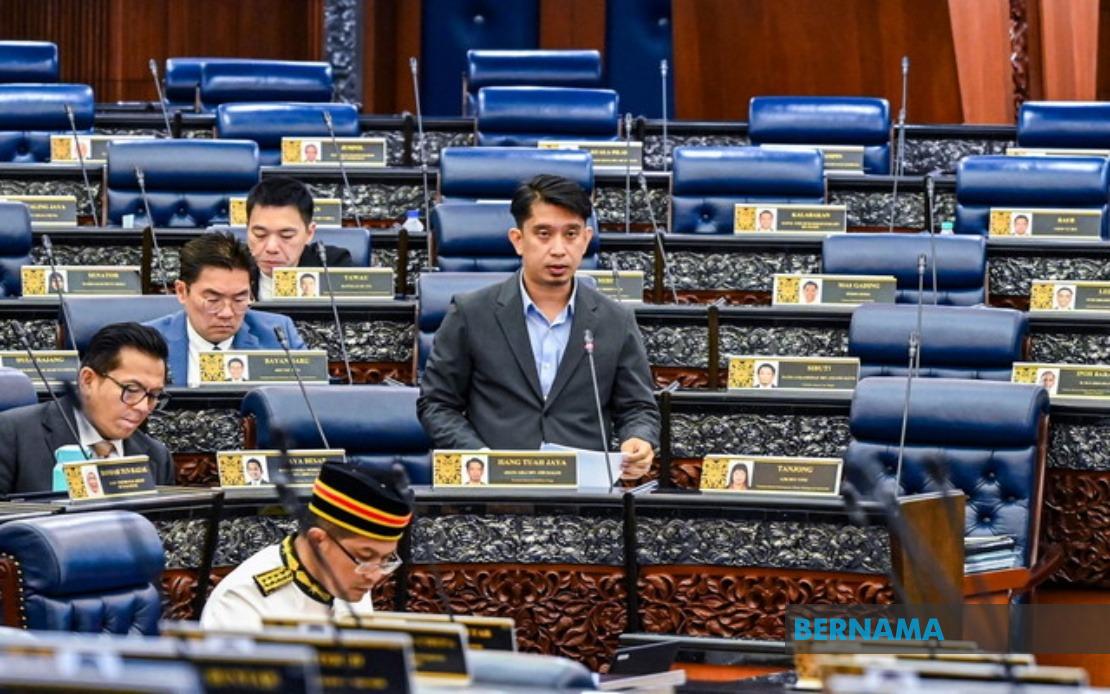
Malaysia's commitment to developing science and technology expertise is reflected in enrolment numbers at public universities, with the Dewan Rakyat hearing that over half of all diploma and first degree students are pursuing STEM-related courses. Between 2023 and March 2026, a total of 326,419 students from an overall cohort of 556,556 chose disciplines in Science, Technology, Engineering and Mathematics, according to data presented by Deputy Minister of Higher Education Adam Adli Abd Halim. This concentration underscores the government's strategic prioritisation of building a workforce capable of driving innovation in critical sectors.
The remaining 230,137 students, accounting for approximately 41 percent of enrolments, pursued non-STEM disciplines across the country's public institutions of higher learning (IPTA). The ministry's MyMOHES system provided the foundation for these figures, which were presented during Question Time in response to parliamentary queries about student distribution across academic fields. The data reflects deliberate policy choices to ensure that Malaysia's university system remains aligned with evolving economic realities and the skill requirements of emerging industries.
Deputy Minister Adam Adli framed these statistics within the context of national priorities and the anticipated talent needs of knowledge-intensive sectors. He highlighted that the emphasis on STEM education serves to prepare graduates for positions in artificial intelligence, semiconductor manufacturing, automation, digitalisation and green technology—fields that are reshaping regional economic landscapes and attracting significant foreign investment. The strategic concentration on these disciplines positions Malaysian graduates to compete in global talent markets while simultaneously addressing domestic skill shortages that have long challenged rapid industrial upgrading.
The parliamentary exchange arose from Datuk Dr Ku Abd Rahman Ku Ismail (PN–Kubang Pasu), who sought comprehensive details on enrolment ratios in both public and private institutions. His inquiry extended beyond current numbers to inquire about future demand projections, specifically seeking clarification on engineering requirements outlined in the National Science, Technology and Innovation Policy (DSTIN) 2021–2030. This line of questioning reflects broader parliamentary scrutiny of whether Malaysia's human capital development strategies are adequately calibrated to meet medium-term industry demands.
The government's approach to workforce planning operates through a comprehensive framework rather than rigid numerical targets for specific engineering disciplines. The DSTIN 2021–2030, overseen by the Ministry of Science, Technology and Innovation, conceptualises talent development through the lens of an integrated Researchers, Scientists, Engineers and Technologists (RSET) ecosystem. Rather than prescribing precise numbers of civil engineers, electrical engineers or other specialisations, this policy architecture allows flexibility for institutions and industry to respond dynamically to shifting technological priorities and market conditions.
Central to Malaysia's workforce strategy is a specific target ratio: 200 RSET professionals for every 10,000 workers by 2030. Applied against Malaysia's projected workforce of approximately 17.06 million people, this translates to a requirement for approximately 341,200 RSET professionals within the decade. The figure represents a substantial expansion from current levels and underscores the scale of educational and training effort required to achieve the nation's aspirations in high-technology sectors. Achieving this target demands sustained investment in institutional capacity, faculty development and research infrastructure across the higher education system.
The deputy minister provided assurances that Malaysia's higher education ecosystem would continue evolving to meet these benchmarks. He committed to ensuring that programme offerings across institutions remain responsive to industry needs, that physical and human infrastructure keeps pace with demand, and that talent development pathways create clear routes from university training into professional roles. This commitment extends beyond simply increasing enrolment numbers; it encompasses quality considerations, relevance of curricula and alignment between what universities teach and what employers require.
A supplementary question from Onn Abu Bakar (PH–Batu Pahat) directed attention to the practical enabling factors necessary for STEM expansion. He specifically inquired about efforts to recruit expert lecturers, establish modern research laboratories and deploy high-technology facilities that would support growing demand in emerging fields such as artificial intelligence, semiconductors and digital engineering. These infrastructural and human resource questions touch on a persistent challenge in Malaysian higher education: converting policy ambitions into institutional realities where facilities and expertise actually exist.
In response, the deputy minister identified the Malaysian Technical University Network (MTUN) as the focal point of current infrastructure development efforts. Four universities operate within this network, receiving targeted support and investment to strengthen their capacity in technology-intensive disciplines. This selective approach concentrates resources where they can achieve maximum impact, though it raises questions about whether institutions outside the MTUN framework receive equivalent support for STEM programme development. The strategy reflects pragmatic resource allocation but also reflects the reality that not all public institutions can simultaneously achieve research university status.
For Malaysian policymakers and institutions, these enrolment figures and forward projections establish clear baseline expectations. The 59 percent concentration in STEM reflects not merely individual student preferences but deliberate steering through university admissions processes and scholarship allocation. Maintaining or increasing this ratio will require sustained effort as universities compete for talented students, some of whom may prefer social sciences, humanities or professional fields such as law and medicine. The challenge intensifies when considering that neighbouring Singapore, South Korea and increasingly Indonesia are competing for similar talent pools.
Regionally, Malaysia's STEM focus positions the country as a significant source of technical professionals for Southeast Asia's technology sectors. The projected 341,200 RSET professionals by 2030 could support not only Malaysia's domestic ambitions but also fill skill gaps across the region as businesses expand operations. However, this benefit materialises only if Malaysian graduates remain engaged in regional development rather than migrating to higher-income economies offering superior compensation and career prospects. Brain drain considerations thus underpin the urgency of creating attractive professional opportunities in Malaysia's high-technology sectors.
The government's commitment to strengthening higher education infrastructure addresses a legitimate concern among educators and employers: that current capacity constraints limit both the quantity and quality of STEM graduates entering the workforce. Expert faculty members command global demand, modern laboratories require sustained capital and maintenance investment, and high-technology equipment depreciates rapidly as innovation accelerates. These material realities mean that policy targets, however clearly articulated, remain aspirational until institutions receive the actual resources required to implement them effectively.

