Singapore's nascent support ecosystem for community-led initiatives is gaining momentum, with more than 200 organisations and individuals applying for grants under a newly launched S$50 million fund designed to nurture grassroots solutions to social challenges. The SG Partnerships Fund, announced by Prime Minister Lawrence Wong during his February 2026 Budget speech and operationalised four months later, represents a significant policy pivot towards empowering citizens to identify and address community needs outside traditional government channels. The breadth of applications underscores growing appetite among Singaporeans to translate civic concerns into tangible action, though the fund's tiered structure reveals telling patterns about how communities perceive barriers to social entrepreneurship.
The fund operates across three distinct funding tiers, each calibrated to support initiatives at different stages of development and scale. At the foundation level, the seed tier provides grants of up to S$5,000 for individuals, grassroots groups, and newly registered organisations piloting innovative ideas within their neighbourhoods. Moving upward, the sprout tier offers grants reaching S$50,000 for established organisations aiming to create sector-wide impact, while the newly launched scale tier—unveiled in July 2026—provides grants of up to S$1 million for mature organisations seeking to deepen and broaden their community influence. According to Hasliza Ahmad, director of the Singapore Government Partnerships Office (SGPO), which administers the fund, the seed tier has proven remarkably popular despite offering the smallest financial support, suggesting that many potential change-makers perceive even modest funding as transformative when coupled with guidance and network access.
The decision to prioritise the seed tier reflects a deliberate design philosophy grounded in accessibility and low barriers to entry. Hasliza noted that the popularity of the smallest grant category reveals something fundamental about community engagement: citizens are willing to step forward when they believe their initiatives need not be grandiose to merit support. This democratisation of social problem-solving aligns with Singapore's broader policy direction of fostering distributed responsibility for community wellbeing, moving beyond the traditional model where government or large established charities serve as primary solution providers. The SGPO's explicit role in offering mentorship, strategic guidance, and network connections alongside funding addresses a critical gap that often limits grassroots initiatives—not merely financial constraint, but access to expertise, operational knowledge, and institutional linkages.
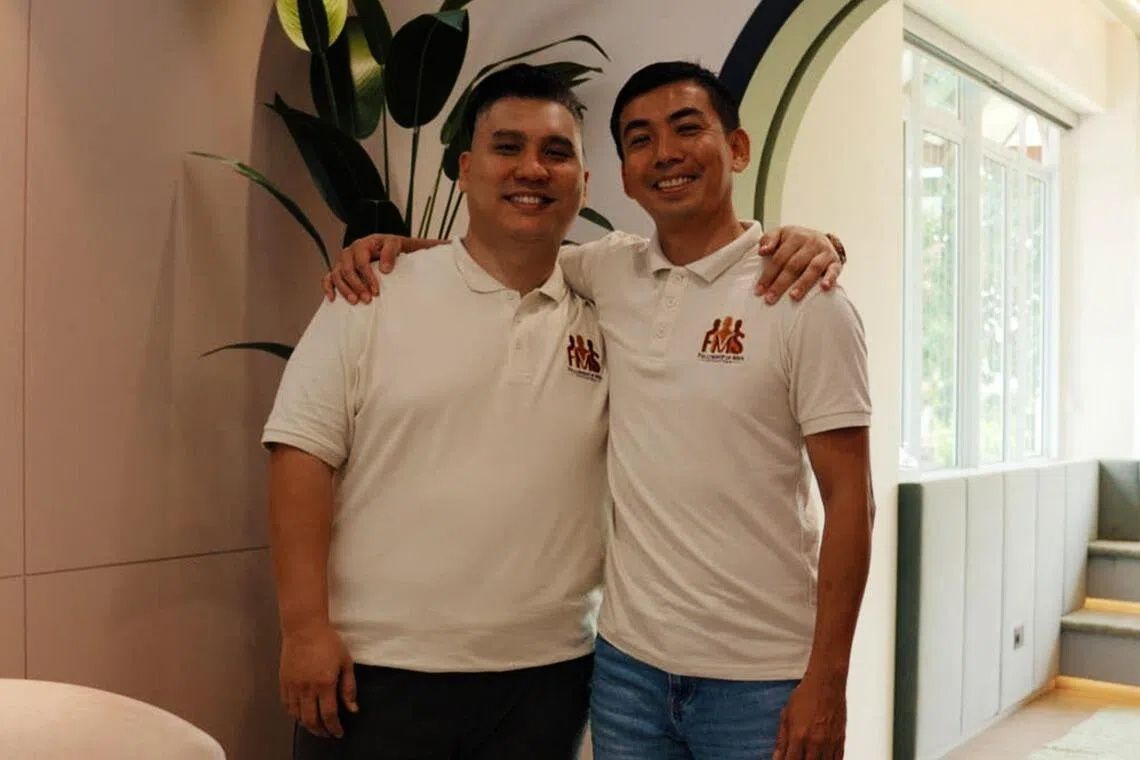
One exemplary application emerged from Fellows for Movement Singapore, a non-profit co-founded by Ben Ang, 45, and Ismail Didih Ibrahim, 41, both of whom transitioned from conventional employment to pursue their shared vision of addressing men's mental health and violence prevention. The two met at a family service centre five years earlier while working on violence intervention programmes, but gradually recognised that prevention merited greater focus than crisis response. Didih's background operating food service businesses alongside his community work, and Ang's experience directing family services, positioned them to craft an intervention model centred on practical, relatable engagement rather than clinical mental health framing. Launching formally in January 2026, their initiative recognised that many men resist conventional therapeutic support, necessitating creative entry points into conversations about emotional wellbeing, masculinity, and help-seeking behaviour.
Their programmes blend hands-on activities with guided dialogue, deliberately constructed to make introspection feel natural rather than confrontational. A seed tier grant of S$5,000 enabled them to conduct a three-hour engagement session at a professional culinary school in Geylang, bringing together 24 men and family members for simultaneous cooking and structured conversation touching on self-care, relationships, masculinity, and seeking support. The grant proved decisive in legitimising and professionalising what might otherwise have occurred informally in Ang's home kitchen, demonstrating how even modest public funding can transform community initiatives from hobbyist endeavours into credible programmes. Both founders aspire to scale their work substantially, viewing their current effort as proof of concept for a broader movement normalising help-seeking among Singaporean men—a demographic consistently underrepresented in mental health and social support service uptake.
Equally instructive is the experience of Loke Wai Yee, a 21-year-old LASALLE College of the Arts student whose Little Wishes platform addresses equity in charitable giving. Observing the annual angel tree initiative—wherein children from disadvantaged families hang Christmas wish lists in shopping malls—Loke recognised structural limitations: the programme existed only in certain affluent shopping precincts, and the cost of expensive gifts deterred younger or budget-conscious donors from participating. She convened a team of twelve peers to develop an online platform enabling donors to select gifts within their financial comfort zone and match them directly to child beneficiaries, thereby democratising access to giving while maintaining dignity and choice for recipients. The S$5,000 seed grant proved crucial not for the platform's conceptual development but for its technical execution, enabling the team to engage professional web developers rather than attempting self-taught design that might have compromised user experience and accessibility.
What emerged from Loke's experience was equally important as the financial support itself: the SGPO functioned as a bridge between ideation and implementation. Beyond the grant, the office connected Little Wishes with established social service agencies, signposted additional funding sources the initiative could eventually access, and provided sustained mentorship navigating the practical dimensions of running a charitable programme. This brokerage function—connecting emerging initiatives with institutional resources, regulatory pathways, and sector expertise—arguably matters as much as the capital itself. Loke credited this comprehensive support framework with transforming what began as a passion project into a sustainable intervention poised to support approximately 80 beneficiaries in its initial phase.
The geographic and sectoral diversity implicit in 200 applications suggests the fund is successfully reaching beyond traditional philanthropic networks and established non-profit sectors. For Malaysian observers, Singapore's model offers instructive lessons about structuring public-private partnerships around community innovation. The tiered funding approach acknowledges that not all social problems require multimillion-dollar interventions; many neighbourhood-level challenges yield to well-executed small initiatives backed by thoughtful mentorship and sector connections. The emphasis on SGPO guidance and network brokerage—functions that cost substantially less than grants themselves—suggests that resource-constrained governments can amplify social investment impact through strategic infrastructure supporting initiative maturation rather than blanket funding distribution.
The implications extend beyond Singapore's borders. Across Southeast Asia, governments face pressure to address persistent social challenges—mental health, social inequality, community cohesion—whilst managing constrained public budgets and sometimes limited civil society capacity in smaller municipalities. Singapore's SG Partnerships Fund model demonstrates that strategic, tiered public investment in citizen-led solutions, coupled with institutional mentorship and network access, can catalyse broad participation in social problem-solving. Rather than concentrating resources among established large organisations, this approach invites distributed innovation, recognising that communities themselves often possess the contextual knowledge and relational authority to design interventions more effectively than externally imposed programmes.
The fund's first cohort also illuminates emerging priority areas within Singapore's social policy landscape. The prominence of mental health and emotional wellbeing initiatives, particularly those addressing traditionally underserved demographics like working-class men, suggests citizen-led identification of genuine gaps in service provision or social acceptance. Similarly, initiatives addressing inequality—whether in access to charitable giving or in family service delivery—indicate that ground-level communities perceive structural fairness issues that macro-level policy discussions might overlook. The SGPO's role in amplifying these locally-identified priorities through institutional support represents a significant epistemological shift, treating community members not as passive service recipients but as architects of social solutions.
As applications continue processing and the first funded initiatives move toward implementation and measurement, the fund will face evaluative questions about efficacy and scalability. Can S$5,000 interventions meaningfully alter health behaviours or community wellbeing at neighbourhood scale? Will initiatives supported through the seed tier demonstrate sufficient results to warrant elevation to higher tiers and expanded resources? How will the SGPO measure success when many applications address qualitative social outcomes—masculine identity reform, charitable accessibility, family connection—that resist easy quantification? These questions, however, should not diminish the innovative architecture the fund represents: a deliberate institutional mechanism acknowledging that solutions to community challenges often originate at grassroots level, and that government's role includes facilitating and resourcing those solutions rather than exclusively designing and delivering them.
Singapore's S$50 million commitment, distributed across over 200 potential initiatives, represents an experiment in participatory social policy at scale. Whether measured by applications processed, community members engaged, or social outcomes achieved, the early uptake suggests genuine demand among Singaporeans for legitimised pathways to civic action. For Malaysia and other Southeast Asian neighbours, this model invites reflection on how to structure public resources and institutional support to unlock the substantial social entrepreneurship potential resident within communities themselves, particularly among younger cohorts like Loke's generation increasingly motivated by social equity concerns and equipped with digital tools for solution design.

