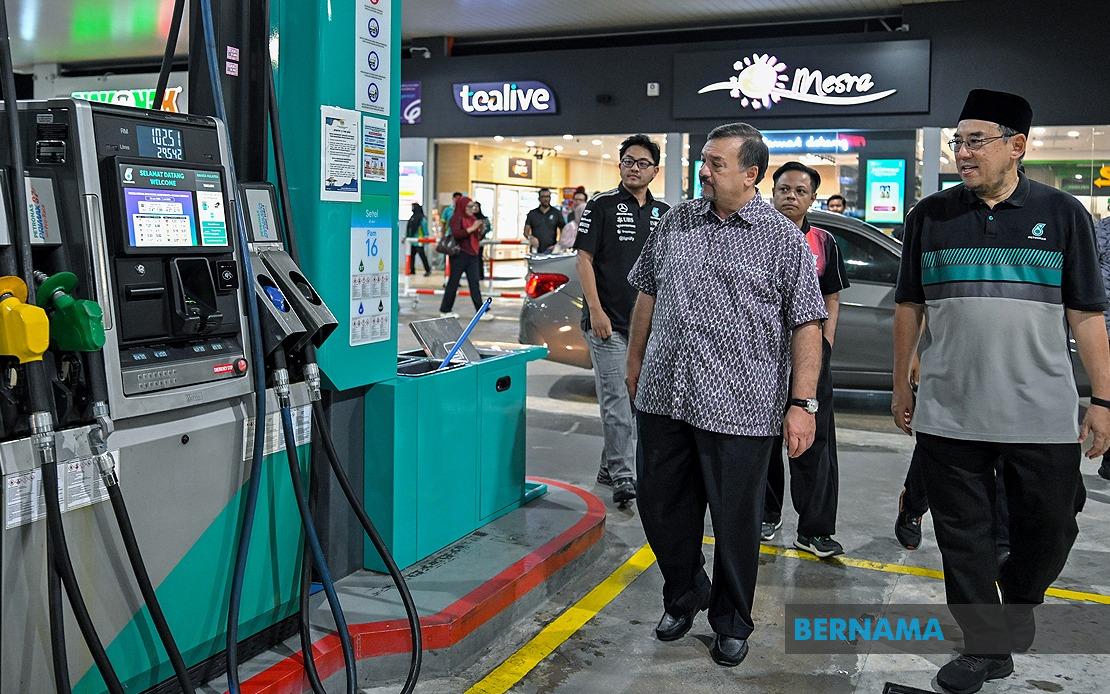
The government's diesel subsidy initiative has garnered significant uptake during its early implementation phase, with the BUDI MADANI portal recording more than 18,000 applications for supplementary diesel allocations by late June. According to Second Finance Minister Datuk Seri Amir Hamzah Azizan, the programme—now entering its second operational day—has demonstrated robust capacity without encountering any system glitches, suggesting that the digital infrastructure established to manage the scheme is functioning as intended. The swift response from eligible owners of diesel-powered pickup trucks and sport utility vehicles underscores strong demand for the expanded fuel subsidy, which provides an additional 100 litres of heavily discounted diesel each month to qualifying motorists.
Transaction volumes have exceeded initial expectations, with administrators recording more than 40,000 fuel purchasing transactions since the rollout commenced. This figure reveals not only brisk application activity but also immediate consumer engagement with the programme's mechanics at the pump level. The velocity of uptake suggests that the target demographic—primarily commercial vehicle operators and tradespersons who depend heavily on diesel fuel—have been adequately informed about the initiative and are readily mobilising to claim their entitlements. For Malaysia's logistics and transport sectors, which operate on tight margins, access to subsidised fuel at RM2.15 per litre represents meaningful cost relief that can translate directly to improved operational viability.
Accessibility has been engineered into the programme's design, with multiple channels established to accommodate applicants across different demographic and technological profiles. The dedicated BUDI MADANI online portal serves as the primary submission gateway for those comfortable navigating digital systems, while in-person support is available at Inland Revenue Board offices, Urban Transformation Centres, and service counters operated by partner petroleum retailers. This layered approach reflects recognition that Malaysia's eligible vehicle operators span a spectrum of digital literacy levels and geographic dispersion. By furnishing assistance through established government and private sector touchpoints, the administration has minimised barriers to programme participation and reduced the risk of eligible applicants being excluded due to navigational complexity.
A notable innovation within the framework is the quota transfer mechanism, which addresses a real-world operational challenge. In commercial transport and agricultural sectors, registered vehicle ownership frequently diverges from actual operational control; a company may hold the formal vehicle registration whilst employees or contractors constitute the genuine users. The transfer facility allows the registered proprietor to designate a different individual as the quota beneficiary, with subsequent verification occurring through identity card linkage at fuel stations. Once approved, the system tags the quota to the designated user's identity card number rather than maintaining a loose registration-to-user relationship. This technical refinement prevents quota diversion and fraud whilst accommodating legitimate operational structures common in Malaysia's small and medium enterprise landscape.
Implementation began across Peninsular Malaysia on June 27, with eligible participants accessing diesel at the introductory subsidised rate of RM2.15 per litre under a variable quota system permitting monthly allocations of up to 200 litres. The flexibility embedded in the quota structure—distinguishing it from rigidly fixed allocations—allows motorists to adjust purchasing patterns based on operational demand, providing genuine utility rather than forcing consumption profiles into predetermined brackets. Price adjustments form part of the roadmap, with the subsidised rate scheduled to decline further to RM2.10 per litre from June 30, demonstrating the government's commitment to maintaining affordability even as the scheme scales.
No operational disruptions have surfaced during the initial deployment phase, with Amir Hamzah affirming that neither systemic problems nor logistical complications at retail petrol stations have materialised. This absence of reported friction at the point of sale is particularly significant given Malaysia's geographically dispersed network of fuel retailers and the potential for coordination failures across such infrastructure. The smooth technical performance reflects adequate preparation and testing prior to public rollout, as well as effective communication with petroleum station operators regarding procedural requirements and system navigation. However, maintaining this operational stability becomes increasingly critical as application volumes continue to rise and the programme approaches its July 1 nationwide transition date.
The financial implications of the scheme warrant careful scrutiny, particularly regarding fiscal sustainability and potential market distortions. By anchoring diesel prices for eligible commercial users substantially below prevailing market rates, the government creates a protected purchasing segment whilst non-qualifying motorists face unsubsidised costs. This bifurcation could incentivise strategic application strategies or boundary-testing behaviour. The subsidy's magnitude—potentially RM800 annually per eligible vehicle—represents direct fiscal expenditure that must be absorbed within budget allocations or offset through efficiency gains elsewhere in the transportation or energy portfolios.
For Malaysia's broader economic positioning, subsidised fuel for commercial vehicle operators addresses competitiveness concerns in logistics-dependent sectors. Transportation costs significantly influence the final pricing of goods and services across the economy; reducing fuel burdens for commercial operators theoretically creates downward pressure on supply chain expenses. This mechanism may indirectly benefit consumers through moderated inflation in goods transported by truck. However, the scheme's success in achieving these outcomes depends on whether operational savings translate into consumer benefits or are retained as margin expansion by transport operators.
The administrative infrastructure required to administer the programme—encompassing application processing, quota allocation, transfer approvals, verification at point of sale, and fraud prevention—represents substantial organisational effort. The involvement of multiple agencies including the Treasury, Inland Revenue Board, and petroleum retailers necessitates coordination protocols and inter-agency data sharing arrangements. The apparent absence of technical difficulties suggests these coordination mechanisms have been adequately designed, though longer-term sustainability will depend on maintaining operational discipline and preventing quota leakage through fraudulent claims or system manipulation.
As the programme enters its transitional phase ahead of nationwide implementation, monitoring and evaluation will determine whether the early momentum can be sustained without degradation in service quality or system security. The 18,000 applications filed represent merely the initial cohort of claimants; subsequent waves of applications are anticipated as programme awareness spreads and eligible motorists who missed early periods seek to enrol. The government's confidence in the system's robustness, reflected in Amir Hamzah's statements regarding readiness, will be tested during higher-volume periods when system capacity faces more demanding loads and edge cases become statistically significant.
The diesel subsidy scheme, ultimately, represents a targeted intervention in Malaysia's fuel market designed to support specified constituencies whilst managing fiscal exposure. Its trajectory over coming months—particularly whether application volumes stabilise at predictable levels, whether fraud incidents emerge, and whether operational costs remain within projection—will inform assessments of whether this model can be extended to other fuel categories or vehicle types. The early implementation period has established a foundation of operational competence and user familiarity that positions the scheme for sustainable scaling, contingent on continued administrative vigilance and system refinement as real-world usage patterns reveal themselves.

