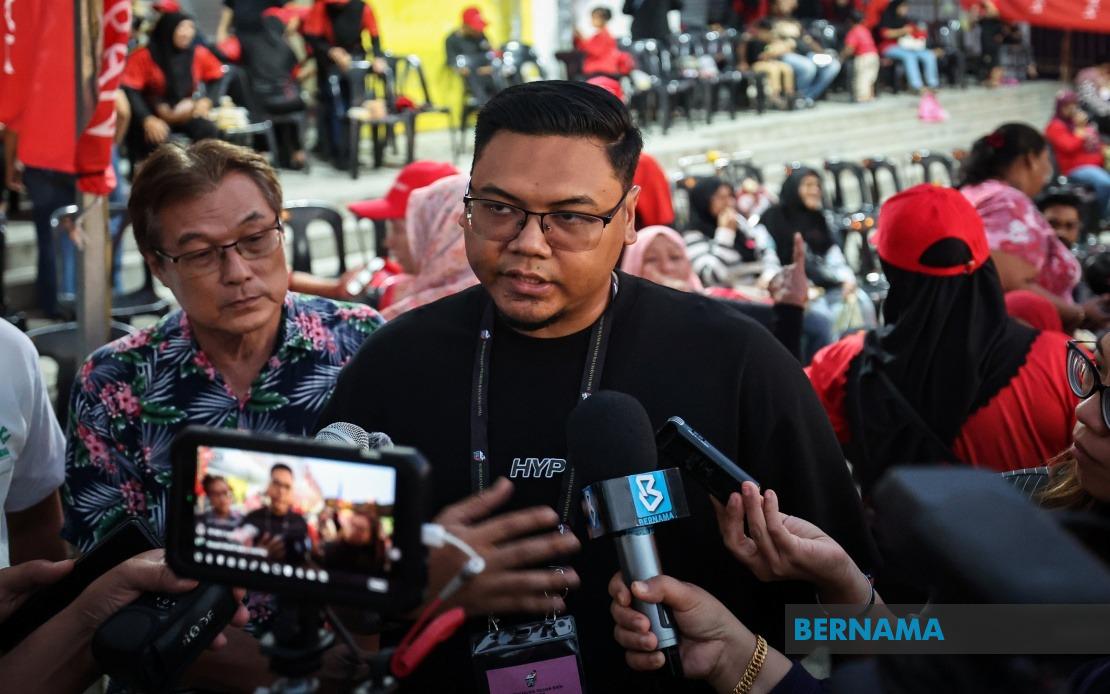
A significant defection has unfolded in Johor's political landscape as more than 120 former members and leaders from Bersatu's Pulai division publicly declared their backing for Pakatan Harapan during a press conference in Johor Bahru on July 8. The announcement, made by Muhammad Faezuddin Mohd Puad, the PH candidate contesting the Kempas state seat, signals a notable shift in party allegiances ahead of the 16th Johor state election scheduled for July 11.
Although these former Bersatu members had privately informed the party hierarchy of their intentions considerably earlier, they strategically chose to make their public declaration just days before polling day. Among the prominent defectors were figures including Rafidah Ani, former information chief of Pulai Bersatu Srikandi; Noriah Mat Daud, former secretary of Pulai Srikandi; and Mohd Suhimi Abdul Rahman, who previously led the Bukit Mewah Bersatu branch. The group also comprised various divisional and branch-level functionaries whose collective departure underscores deeper fractures within Bersatu's organisational structure in the state.
Muhammad Faezuddin, who simultaneously holds the position of head of Johor Angkatan Muda Keadilan (AMK), articulated PH's fundamental political philosophy as the rationale behind attracting these newcomers. He emphasised that the coalition's commitment to serving constituencies irrespective of partisan affiliation stands as a crucial differentiator from traditional patronage politics. According to him, PH's government and representatives extend assistance to residents regardless of whether they previously voted for Bersatu, UMNO, PKR, DAP, or any other party. This universalist approach, he suggested, represents a deliberate departure from the zero-sum political culture that historically characterised Malaysian electoral cycles, where resources and development projects were disproportionately allocated to government-aligned communities.
Rafidah Ani's own account of her disillusionment with Bersatu leadership provides crucial insight into the grievances motivating these departures. She articulated profound disappointment with what she perceived as the party's systemic neglect of community needs, particularly affecting vulnerable demographics such as single mothers. Throughout her tenure within the party structure, she maintained that her commitment remained focused on grassroots welfare, yet consistently encountered institutional obstacles in securing the necessary support to translate intentions into tangible assistance. Rafidah's critique extends beyond mere policy disagreements; she explicitly condemned what she characterised as the second-class treatment afforded to Srikandi members—the party's women's wing—suggesting that structural gender-based hierarchies within Bersatu contributed to her decision to realign politically.
Mohd Suhimi Abdul Rahman's rationale for switching allegiance complements and reinforces the narrative of institutional inadequacy. His dissatisfaction originated from two interconnected sources: first, his personal experience of unsatisfactory treatment within the party apparatus; second, the broader failure of Bersatu's structures to secure meaningful assistance and development resources for residents in his locality. Having effectively departed Bersatu following the 2022 Johor state election, Mohd Suhimi evidently spent the intervening period reassessing his political options. His current positioning represents not an impulsive reaction but rather a measured decision taken after extended reflection on where his political energies could generate maximum positive impact for constituents.
The economic and healthcare dimensions Mohd Suhimi emphasises align with pressing concerns across Malaysian society. In his public remarks, he specifically articulated hopes that PH's Kempas candidate would catalyse meaningful advancement in economic development and healthcare infrastructure within the constituency. This focus reflects broader anxieties among ordinary Malaysians regarding cost-of-living pressures, employment opportunities, and access to quality medical services. The fact that these concerns motivated a seasoned political operative to abandon his previous party affiliation suggests that bread-and-butter governance issues remain powerful forces in local electoral mathematics, potentially superseding loyalty to specific party brands.
The Kempas state seat has witnessed considerable competitive dynamism. In the 2022 Johor election, Datuk Ramlee Bohani, representing the BN-UMNO combination, secured the seat with a majority of 3,514 votes—a relatively slender margin that indicated vulnerability to organised opposition challenges. This year's contest has intensified, with Muhammad Faezuddin facing a three-cornered battle against candidates fielded by both Barisan Nasional and Parti Bersama Malaysia. Such fragmented competitions often reward well-organised campaigns with strong grassroots mobilisation capabilities. The public declaration by over 120 Bersatu defectors potentially augments PH's organisational infrastructure in the constituency, potentially translating into volunteer capacity, voter outreach, and community mobilisation advantages.
The broader context of Johor's political realignment cannot be overlooked. The 16th state election encompasses 56 assembly seats across the state, with 172 candidates contesting for these positions. Approximately 2.7 million eligible voters across Johor will determine the outcome, representing a substantial electoral exercise that reverberates beyond the state's borders given Johor's traditional significance as a political bellwether. Any substantial shifts in party support patterns in Johor frequently foreshadow broader national trends, making developments within constituencies such as Kempas worthy of careful scrutiny.
From a peninsular political economy perspective, these defections illuminate ongoing tensions within Bersatu's coalition positioning and internal governance. Bersatu emerged as an ostensibly reformist force following the 2018 electoral upheaval, yet the party has faced persistent criticism regarding its actual commitment to grassroots empowerment versus elite accommodation. The Johor defections suggest that ordinary party members increasingly distinguish between reformist rhetoric and substantive institutional practice. When party structures fail to deliver tangible benefits or demonstrate basic recognition of members' contributions, particularly among women and lower-ranking cadres, such members become susceptible to alternative political homes—a dynamic Malaysian parties ignore at their electoral peril.
Muhammad Faezuddin's strategic emphasis on PH's inclusive governance model presents a deliberate counter-narrative to accusations that the coalition represents merely another iteration of patronage politics. Whether this messaging resonates beyond the immediate campaign period depends substantially on whether future PH governance in Kempas—should electoral outcomes favour the coalition—demonstrates genuine commitment to the universalist principles articulated during this announcement phase. The credibility of such pledges will be tested through concrete developmental outcomes, resource allocation decisions, and the degree to which representatives genuinely engage all constituent segments rather than privileging supporters.
These defections arrive at a critical juncture when Johor voters face binary choices between competing visions of governance and development priorities. The public declaration by over 120 former Bersatu members adds substantive weight to PH's campaign narrative in Kempas and potentially influences floating voters contemplating their electoral choices. In Malaysian electoral contexts where swing voters frequently determine outcomes in closely contested constituencies, the symbolic and practical significance of such organised party switching should not be underestimated. The Kempas result on July 11 may well vindicate or challenge the strategic calculations underlying these timely public declarations.

