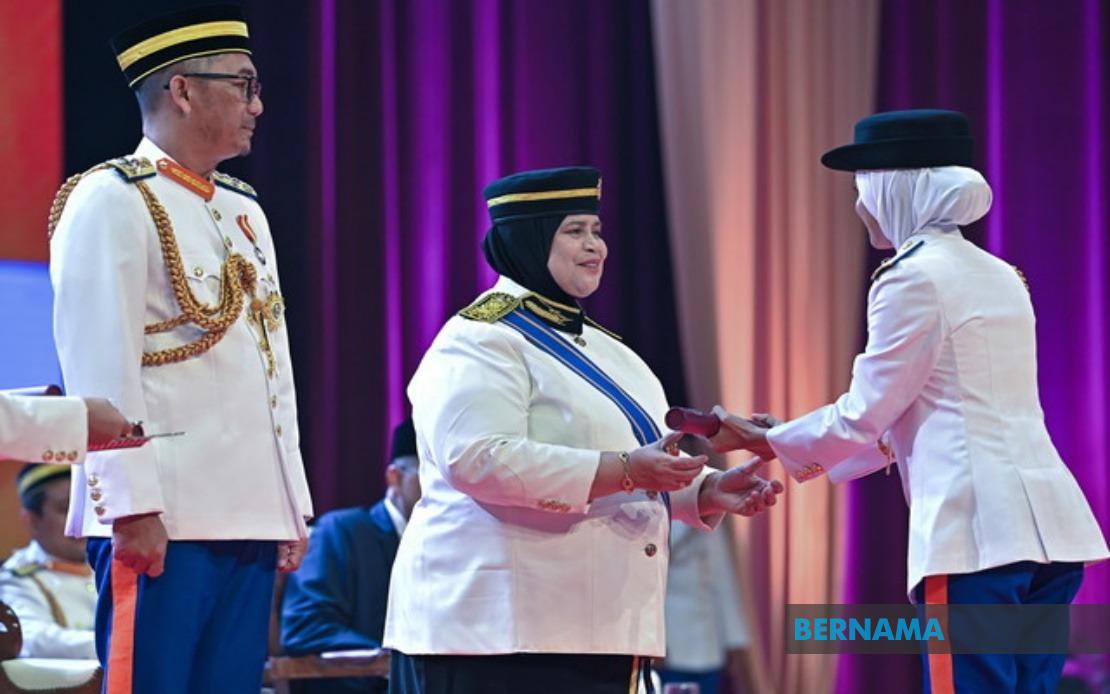
A significant milestone has been reached in supporting Malaysia's Civil Defence Student Corps (Kor SISPA) as over 1,100 cadets from institutions across the country prepare to receive a newly approved allowance scheme. The initiative, unveiled at the 17th National Kor SISPA Commissioning Ceremony held at Universiti Pendidikan Sultan Idris in Tanjong Malim, marks a tangible commitment by the government to enhance welfare provisions for student volunteers engaged in civil defence activities. Approximately 1,107 cadets from 36 higher learning institutions will be among the first beneficiaries, with disbursements commencing this month through a phased implementation approach.
Deputy Minister of Rural and Regional Development Datuk Rubiah Wang, representing Deputy Prime Minister Datuk Seri Dr Ahmad Zahid Hamidi at the ceremony, described the development as a watershed moment for the voluntary corps. She emphasised that the allowance scheme represents a transition from preliminary discussions into concrete action, demonstrating governmental willingness to translate welfare promises into measurable benefits for young citizen-defenders. The initial phase of the rollout carries a financial commitment of approximately RM500,000, establishing a foundation upon which the programme may be expanded in subsequent tranches as budgetary circumstances permit.
The remuneration structure has been carefully calibrated to reflect educational attainment among the cadet membership. Members holding bachelor's degrees will receive RM9.80 per hour for their civil defence duties, whilst diploma-qualified cadets will be compensated at RM8.00 per hour. This hourly rate framework ensures that the allowance functions as a direct acknowledgment of time and effort invested rather than a fixed stipend, thereby creating accountability and encouraging sustained participation among student volunteers. The calculation methodology also preserves fiscal flexibility, permitting the government to scale commitments as additional funding becomes available without requiring fundamental restructuring of the compensation framework.
Rubiah, who also serves as the Civil Defence honorary commissioner, articulated the broader strategic rationale underpinning the allowance initiative. Beyond immediate financial incentives, the scheme aims to cultivate deeper engagement among tertiary institution students with Kor SISPA's mandate and objectives. By providing material recognition of their contributions, the government seeks to motivate greater participation in civil defence programmes and to signal that volunteer service commands institutional respect and support. This approach acknowledges that financial constraints often deter university and college students from committing extensive hours to extracurricular activities, particularly those involving operational responsibilities and training demands.
Civil Defence operations extend considerably beyond the dramatic response to natural disasters and emergencies. Datuk Rubiah highlighted that Kor SISPA members contribute throughout the calendar year, providing logistical and personnel support at university events, community programmes, and institutional activities on and off campus. This continuous engagement creates multiple touchpoints for civil defence visibility within the student population and builds institutional capacity for emergency preparedness. The allowance scheme effectively recognises this year-round commitment rather than compensating only disaster-response activities, thereby reflecting the operational reality of modern civil defence organisations.
The Kor SISPA programme itself has demonstrated substantial growth and institutional entrenchment since its establishment in 2010. Initially launched within university systems, the initiative expanded to encompass polytechnics, community colleges, and teacher education institutes nationwide. To date, the programme has produced and graduated 11,802 trained cadets who have dispersed into various professional and civic roles. This alumni base represents both a validation of the programme's educational value and a potential constituency for advocating expanded support and recognition of civil defence volunteer contributions within Malaysian society.
For Malaysian higher learning institutions, the allowance scheme carries implications beyond individual student finances. Universities and colleges investing in Kor SISPA programmes can now point to tangible government recognition of these activities, strengthening institutional arguments for continued participation and resource allocation. The allowance essentially converts an institution-supported activity into a government-recognised programme, elevating its profile and potentially attracting students who might otherwise overlook voluntary civil defence engagement. This shift in status recognition reflects broader recognition of civil defence's importance to national resilience and public safety infrastructure.
The phased implementation approach outlined by Datuk Rubiah suggests that policymakers anticipate expanding the scheme progressively. By establishing the initial cohort of beneficiaries and establishing operational procedures, the government creates a template for scaling the programme as additional allocations materialise. This incremental methodology also permits assessment of programme effectiveness and cadet retention rates before committing to system-wide expansion. The approach balances fiscal prudence with demonstrable forward momentum, allowing the government to deliver immediate benefits while maintaining flexibility for future enhancements.
Looking ahead, the next Kor SISPA commissioning ceremony is scheduled to occur at Universiti Sultan Zainal Abidin in Terengganu during 2025, indicating continued geographic expansion of the programme's formal recognition infrastructure. This rotation of ceremony locations across Malaysian universities serves both ceremonial and practical purposes, raising awareness of Kor SISPA activities across different regional institutions and demonstrating government commitment to distributed participation across the nation's higher education system. Each commissioning venue strengthens local institutional connections and potentially recruits new cadet cohorts from host universities and surrounding institutions.
The allowance initiative ultimately reflects evolving governmental perspectives on civil defence volunteerism. Rather than treating student participation as purely altruistic civic contribution, the new scheme recognises the genuine labour and commitment involved in maintaining volunteer emergency preparedness capacity. This recognition carries particular significance within Southeast Asian contexts where civil defence organisations often operate with constrained budgets and rely heavily on volunteer participation. Malaysia's approach of introducing targeted allowances for student-level volunteers may establish a precedent influencing regional peer institutions considering similar welfare enhancements for their own civil defence programmes.

