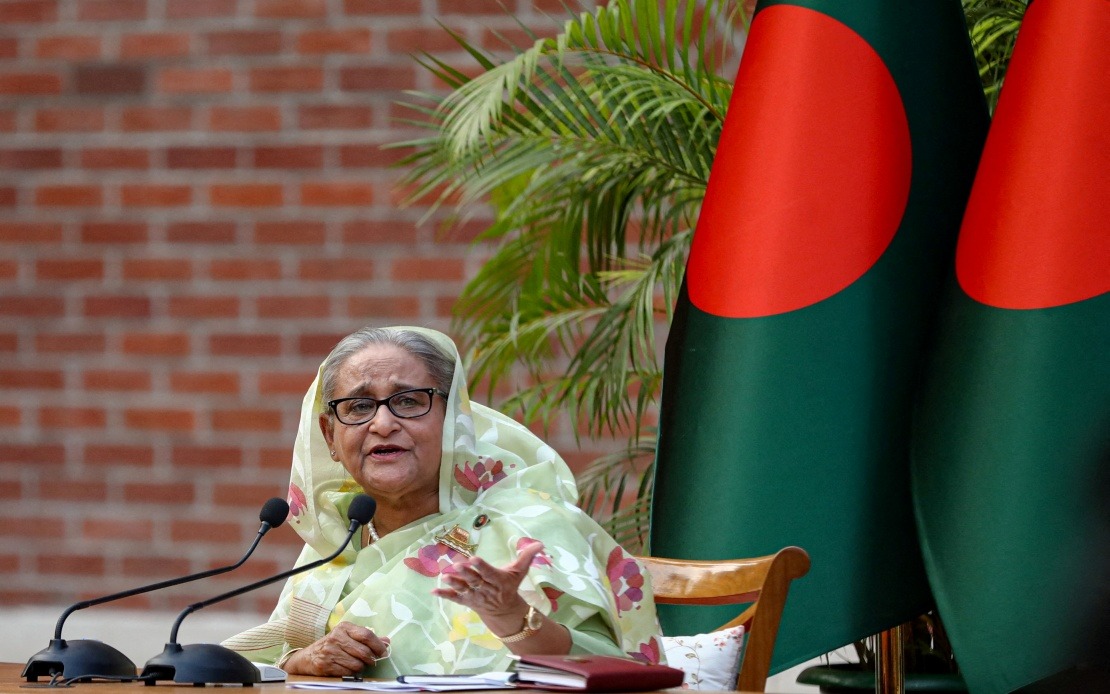
Sheikh Hasina, the 78-year-old former Prime Minister of Bangladesh, has declared her determination to return to her homeland and appear in court, even as she faces a death sentence and the real possibility of imprisonment or execution. Speaking in a written interview with Kyodo News, Hasina expressed her willingness to face the judiciary head-on, though she stopped short of specifying which court she would address. Her statement carries significant weight given the gravity of the charges she faces and the hostile political environment in Bangladesh since her ouster in August 2024.
Hasina's conviction stems from her government's handling of widespread protests that erupted in 2024, initially triggered by a court decision to reinstate a 30 percent job quota for descendants of veterans from Bangladesh's 1971 independence war. What began as student-led demonstrations rapidly evolved into a broader anti-government movement that pitted protesters against both security forces and supporters of Hasina's then-ruling Awami League party. The unrest resulted in extraordinary loss of life, with United Nations estimates suggesting as many as 1,400 people were killed, predominantly by security personnel.
In November 2025, Bangladesh's war crimes tribunal sentenced Hasina to death in absentia, finding her culpable for crimes against humanity related to the crackdown. This proceeding took place without her physical presence in the courtroom, a fact that has drawn scrutiny from international human rights organizations. Human Rights Watch has questioned the fairness of conducting such a significant trial without the defendant present, while simultaneously acknowledging that those responsible for abuses during Hasina's administration must ultimately be held accountable. The tribunal's decision has added another layer of complexity to Bangladesh's political situation, as the government in Dhaka has formally requested that India extradite Hasina.
India's response to the extradition request remains cautiously measured. The Ministry of External Affairs confirmed receipt of Bangladesh's formal request and indicated that New Delhi is carefully evaluating the matter within the framework of existing legal and judicial processes. India's measured stance reflects the delicate balancing act required when dealing with extradition requests involving neighbouring countries, particularly when fundamental questions about judicial fairness and due process remain contested. For Malaysia and other Southeast Asian nations closely observing developments in South Asia, India's handling of this matter carries implications for regional stability and interstate cooperation.
Hasina, who is the daughter of Bangladesh's founding father Sheikh Mujibur Rahman, has maintained that the charges against her are politically motivated rather than grounded in legitimate accountability. She has consistently denied ordering or condoning the killings that occurred during the 2024 unrest, and has instead suggested that the protest movement was deliberately manipulated by political opponents seeking to destabilize her government. In her recent comments, she called for independent international forensic examination of the deaths, proposing that external experts could determine precisely how each person died and what weapons were involved. Such an investigation, she argued, could establish the factual record more convincingly than the current tribunal proceedings.
The political landscape in Bangladesh has transformed dramatically since Hasina's departure. Following her flight to India, an interim government was established under Muhammad Yunus, the Nobel Peace Prize laureate who was nominated for the position by student protest leaders. This transitional administration paved the way for general elections held in February 2026, which resulted in victory for the opposition Bangladesh Nationalist Party. Tarique Rahman, the party leader, subsequently assumed office as Prime Minister. Additionally, all activities of Hasina's Awami League party have been banned since May 2025, effectively removing it from Bangladesh's political landscape.
Rahman's government has made clear its commitment to prosecuting Hasina. During a press briefing in mid-July, Zahed Ur Rahman, serving as information adviser to Prime Minister Rahman, stated that the government was actively working to bring Hasina back to face trial. He emphasized that the government would ensure she received a fair opportunity to present her defense, suggesting a commitment to proper legal procedures even as the authorities pursue her return. This framing attempts to distinguish the new government's actions from purely political revenge, though international observers remain cautious about the fairness of judicial proceedings in the current political context.
Hasina's tenure as Prime Minister, spanning five separate terms across two periods—from June 1996 to July 2001 and then from January 2009 until her August 2024 departure—witnessed Bangladesh's development into a significant regional economy. During her final extended period in office, she oversaw major infrastructure projects and maintained close relationships with international partners, particularly Japan. However, her administration also faced serious security challenges, notably the July 2016 attack on Holey Artisan Bakery in Dhaka, where militants killed 20 hostages including citizens of Italy, Japan, Bangladesh, India, and the United States. Seven Islamist militants were initially sentenced to death for this attack in 2019, though their sentences were later commuted to life imprisonment.
Looking forward, Hasina has articulated a vision for Bangladesh's regional significance that extends beyond her personal political fate. She emphasized that a stable Bangladesh matters not merely for its own citizens but for the broader South Asian region, the Bay of Bengal area, and development partners including Japan that have invested resources, trust, and cooperation in Bangladesh's growth trajectory. This perspective underscores how internal instability in Bangladesh can ripple across the region, affecting trade, security, and diplomatic relations. For Malaysian policymakers and observers, Bangladesh's political trajectory holds implications for the broader stability of South Asia and maritime Southeast Asia.
Regarding reconciliation and accountability, Hasina has adopted a nuanced position that rejects impunity while acknowledging Bangladesh's need for healing. She contends that those responsible for crimes must face proper legal processes, but has stopped short of accepting the tribunal's verdict as legitimate justice. This stance reflects the fundamental tension facing post-conflict societies: the need to address past wrongs while simultaneously creating conditions for national recovery and democratic restoration. Her assertion that democracy must be restored and citizens allowed to determine their own future suggests she views the current political dispensation as illegitimate or at minimum incomplete.
The coming period will prove crucial for determining whether Hasina's stated intentions to return actually materialize. India's decision on the extradition request could prove determinative, as could any shift in Bangladesh's domestic political circumstances. The case has drawn international attention from human rights organizations, development partners, and regional observers who maintain concerns about judicial fairness, due process, and whether the proceedings against Hasina represent genuine accountability or political retribution. For Southeast Asia, this unfolding drama in Bangladesh serves as a cautionary tale about the complexities of post-protest political transitions and the enduring tensions between justice and stability in deeply polarized societies.

